2026. 5. 19. 01:17ㆍArt/각양각색(Varieties) Series

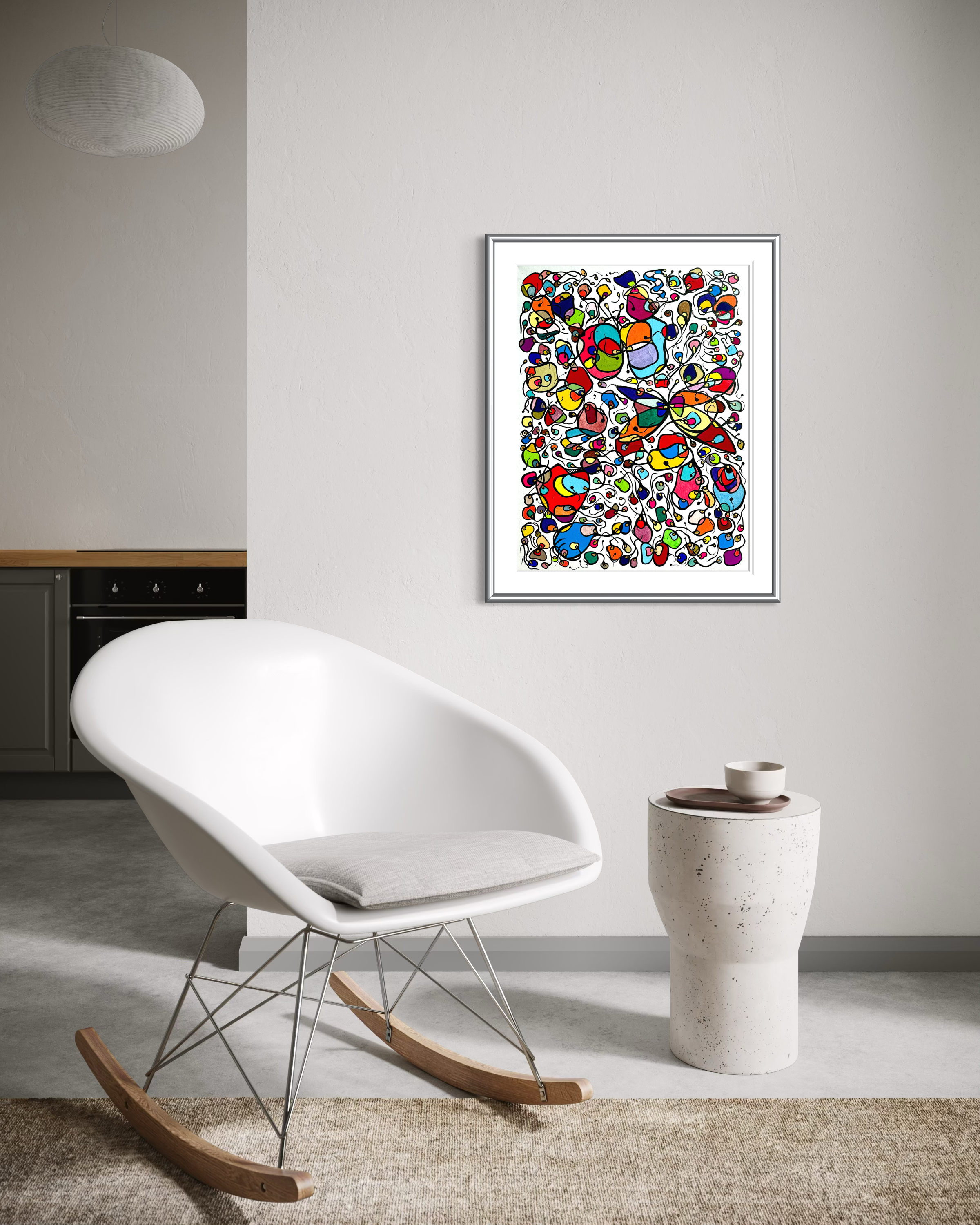
Let’s All Fly Freely. 01 / 모두 자유롭게 날아다니자! - Varieties series
60.6 × 45.5 ×1.7 P 12
Oriental Pigments on Hanji Canvas
https://jonathank.tistory.com
https://www.singulart.com/en/artworks/kim-jun-sung-let-s-all-fly-freely-01-2639491
Let’s All Fly Freely..
This painting gives the same sky to all.
Not as symbols.
Not as categories.
But as living forms moving through space.
Colors collide and scatter.
Shapes open, drift, multiply, disappear, and return again.
Nothing remains fixed for long.
I wanted each presence to keep its own rhythm, temperature, direction, and form,
and simply exist or act exactly as it desires.
Not to be carelessly defined or classified by anyone,
but to remain as singular beings —
existing and moving in whatever way, and to whatever extent, they choose.
모두 자유롭게 날아다니자!
이 그림은 모두에게 같은 하늘을 내어준다.
상징으로서도,
범주로서도 아니라.
그저 공간을 지나가는 살아 있는 형태들로서.
색들은 충돌하고 흩어진다.
형태들은 열리고, 떠돌고, 증식하고, 사라졌다가 다시 돌아온다.
어떤 것도 오래 고정되지 않는다.
나는 각각의 존재들이
자기만의 리듬과 온도, 방향과 형태를 잃지 않은 채
그야말로 자기 원하는대로 존재하거나 행위하기를 바란다.
누구에게도 함부로 정의되거나 분류될 수 없는
원하는 만큼과 방식으로 존재하고 행위하는 각각이기를 바랄뿐이다.
Let’s All Fly Freely.. does not arrange its forms into hierarchy or conclusion.
Nothing here exists to become a model answer for something else.
The painting unfolds as a shared atmosphere where different presences move according to their own conditions. Small seed-like forms, fully grown figures, drifting fragments, unfinished organisms, and fleeting gestures all occupy the same field without being forced into a single order. Some gather densely. Others remain isolated in open white space. Certain forms appear momentary, while others hold the weight of permanence. Yet none are treated as more correct, complete, or necessary than the others.
The work refuses fixed classification. Shapes continuously open and dissolve. Colors collide, scatter, and regroup before the eye can stabilize them into certainty. Black contours no longer function as rigid borders but as temporary traces of movement — marks that allow forms to pass near one another without collapsing into sameness.
Even the butterfly-like figure near the center is not elevated into symbol or authority. It exists only as one living presence among many, moving through the same air.
What emerges is not a utopian order, but a proposition for coexistence: a space wide enough for every existence to retain its own rhythm, temperature, direction, and desire without being reduced into explanation.
Perhaps freedom begins there.
《Let’s All Fly Freely..》는 형태들을 하나의 위계나 결론 안으로 정렬하지 않는다.
이곳에서 어떤 존재도 다른 무엇의 모범답안이 되기 위해 존재하지 않는다.
이 그림은 서로 다른 존재들이 각자의 조건대로 움직이는 하나의 공기층처럼 펼쳐진다. 작은 씨앗 같은 형상들, 이미 성장한 존재들, 떠도는 파편들, 아직 끝나지 않은 생명체들, 스쳐가는 흔적들까지 모두 같은 화면 안에 머문다. 어떤 것들은 밀집하고, 어떤 것들은 넓은 흰 공간 안에 홀로 남겨진다. 어떤 형상은 순간처럼 보이고, 어떤 형상은 오래 지속될 것 같은 무게를 가진다. 그러나 그 어느 것도 더 올바르거나, 완성되었거나, 더 중요한 존재로 다뤄지지 않는다.
이 작업은 고정된 분류를 거부한다. 형태들은 끊임없이 열리고 해체된다. 색들은 충돌하고 흩어지고 다시 모이며, 시선이 그것들을 하나의 확정된 의미로 붙잡기 전에 계속 변화한다. 검은 윤곽선 역시 더 이상 단단한 경계로 기능하지 않는다. 그것은 서로 다른 존재들이 같은 공간 가까이를 지나가면서도 하나로 환원되지 않도록 남겨진 움직임의 흔적에 가깝다.
중앙의 나비 형상조차 상징이나 권위로 세워지지 않는다.
그 역시 같은 공기를 지나가는 수많은 존재들 중 하나일 뿐이다.
이 그림이 말하는 것은 이상적인 질서가 아니다.
서로를 함부로 규정하지 않은 채, 각자의 리듬과 방향과 욕망을 끝까지 지닌 채 살아갈 수 있는 공간의 가능성이다.
어쩌면 자유는 바로 거기서 시작된다.
(This text is written in the form of a critical essay.)
There are paintings that attempt to organize the world, and there are paintings that allow the world to remain unresolved. Let’s All Fly Freely.. belongs decisively to the latter.
Across Kim Jun Sung’s Varieties series, difference has never functioned as ornament or visual variation alone. It has operated as a structural principle — a refusal to reduce existence into singularity, hierarchy, or fixed identity. Earlier works in the series often carried the pressure of that proposition visibly within their surfaces. Forms gathered densely. Boundaries tightened. Small biomorphic presences seemed to press against one another as though negotiating the terms of survival itself. In the Counting the Pieces works especially, the act of seeing became inseparable from the act of acknowledging. To count was to refuse erasure.
But Let’s All Fly Freely.. shifts the emotional and philosophical temperature of the series in a significant way. The work no longer argues for the right to exist. It behaves as though that right should never have required permission in the first place.
This distinction changes everything.
The painting unfolds less like a composition than an atmosphere. Forms do not appear arranged according to a dominant logic. They circulate. Drift. Separate. Return. Some remain embryonic, seed-like, unresolved. Others feel fully expanded, almost winged in their maturity. Certain presences barely hold together as coherent figures before dissolving back into surrounding movement. Yet the work refuses to divide these conditions into stages of value. Nothing here is presented as more complete than anything else. The unfinished does not apologize for itself. The fully formed does not govern the rest.
Even the butterfly-like figure near the center — the image most easily tempted toward symbolic authority — is denied that privilege. It does not preside over the composition as metaphor, destination, or climax. It simply moves within the same atmosphere as every other form on the surface. The painting resists the human impulse to elevate singular figures into systems of meaning. What matters is not transcendence, but coexistence.
This refusal gives the work its unusual ethical clarity.
The canvas offers what contemporary life increasingly withholds: spatial permission. Permission not in the institutional sense, but in the existential one. The forms are not forced toward visual consensus. They are not disciplined into harmony. They are not corrected into resemblance. Instead, each presence retains its own rhythm, density, scale, velocity, and emotional temperature. Some hover lightly at the edge of disappearance. Others burst outward with almost excessive saturation. Some remain isolated in open white intervals. Others cluster together in unstable constellations. The painting does not resolve these differences. It allows them to remain active.
That openness is inseparable from the material intelligence of the work itself.
Kim’s use of oriental pigments on Hanji produces a surface that behaves differently from acrylic or oil painting. Pigment does not merely sit on top of the support. It enters the fibers of the paper, diffusing slightly into the skin of the material. As a result, even highly saturated reds, yellows, blues, and pinks resist becoming hard-edged spectacle. Their intensity is absorbed inward rather than projected aggressively outward. The colors vibrate, but they breathe. This breathing quality becomes central to the experience of the painting because the work’s primary subject is not shape, but permission — the permission for forms to remain in motion without being frozen into final definition.
The black contour lines reinforce this condition. In many modernist traditions, line stabilizes form. Here, line destabilizes certainty. The contours wobble, extend, hesitate, fragment, and reopen. They behave less like borders than temporary negotiations between proximity and separation. Some nearly connect before diverting away. Others dissolve before closure can occur. The line no longer functions as a tool of containment. It functions as evidence of movement.
This distinction matters because Let’s All Fly Freely.. is fundamentally a painting about irreducibility.
Not individuality in the simplified liberal sense of self-expression, but something more difficult: the refusal of total categorization. The forms in this work cannot fully settle into symbolic language. They remain stubbornly alive beyond explanation. They resist becoming pure metaphor. Seed, organism, wing, fragment, cell, creature — every reading briefly appears before dissolving back into instability. The painting continuously approaches recognizability without surrendering to it completely.
That resistance creates a peculiar emotional effect. The viewer is denied the comfort of final interpretation, yet the work never becomes alienating. Instead, the eye begins adapting to multiplicity itself. One stops searching for a singular center of meaning and starts experiencing the painting as a field of simultaneous permissions. The experience becomes strangely physical. Breathing slows. Attention loosens. Vision wanders rather than conquers.
Importantly, the painting does not romanticize freedom into chaos. There is structure here — but it is elastic rather than authoritarian. Distances matter. Open white intervals matter. The forms coexist not because they merge into sameness, but because enough space remains for difference to survive without immediate correction. The painting proposes neither utopia nor rebellion in any simplistic sense. It proposes coexistence without forced resolution.
This is what gives the work its quiet radicalism.
Contemporary visual culture is saturated with systems of classification. Everything is named, optimized, sorted, corrected, polarized, branded, or reduced into legible identity. Under such conditions, ambiguity itself becomes politically charged. Kim’s painting refuses that pressure. It does not ask what these forms should become. It asks whether existence must justify itself through fixed definition at all.
The title becomes crucial in this regard.
Let’s All Fly Freely..
The phrase carries a deceptive lightness. At first encounter, it almost risks innocence. But within the logic of the painting, “flying freely” does not describe escape from reality. It describes release from compulsory sameness. The freedom proposed here is not transcendence above others, nor liberation achieved through domination. It is the possibility that every presence might continue moving according to its own condition without being forcibly absorbed into someone else’s system of meaning.
The painting gives them the same sky.
Not equality through sameness, but coexistence without erasure.
And perhaps that is why the work lingers. Not because it resolves anything, but because it refuses to reduce life into a single authorized shape. The forms remain unfinished, excessive, drifting, contradictory, unresolved — gloriously various.
Let’s All Fly Freely.. ultimately does not depict freedom as victory.
It depicts freedom as air.
LONG — 한국어
(이 글은 비평 에세이의 형식으로 쓰여졌다.)
세계를 정리하려는 그림들이 있다. 반대로, 세계가 끝내 하나로 정리되지 않도록 남겨두는 그림들도 있다. 《Let’s All Fly Freely..》는 분명 후자에 속한다.
김준성의 《각양각색》 시리즈에서 ‘다름’은 단순한 시각적 변주나 장식적 요소로 기능한 적이 없다. 그것은 존재를 하나의 동일성이나 위계, 고정된 정체성으로 환원하지 않으려는 구조적 태도에 가까웠다. 이전 작업들에서는 그 문제의식이 화면 안에서 비교적 직접적인 긴장으로 드러났다. 형태들은 밀집했고, 경계는 팽팽했으며, 작은 유기체적 형상들은 서로의 가까이에서 살아남기 위한 조건을 협상하는 듯 보였다. 특히 《낱낱의 셈》 연작에서 ‘셈한다’는 행위는 단순한 시각적 인식이 아니라 존재를 지워버리지 않겠다는 윤리적 태도와 연결되어 있었다. 본다는 것은 곧 인정한다는 뜻이었다.
그러나 《Let’s All Fly Freely..》는 그 철학의 정서적 온도를 분명하게 바꿔놓는다. 이 그림은 더 이상 존재의 권리를 주장하지 않는다. 오히려 애초에 그 권리가 누구에게 허락받아야 하는 것이었냐고 되묻는 듯하다.
바로 그 차이가 이 작업을 특별하게 만든다.
이 그림은 하나의 완결된 구성이라기보다 공기층처럼 펼쳐진다. 형태들은 어떤 중심 논리 아래 정렬되지 않는다. 떠돌고, 흩어지고, 다시 돌아온다. 어떤 존재들은 아직 씨앗처럼 미완의 상태에 머물고 있고, 어떤 존재들은 이미 날개를 얻은 듯 충분히 성장한 상태에 도달해 있다. 또 어떤 형상들은 막 하나의 생명처럼 응집되려는 순간 다시 주변의 흐름 속으로 스며들어 버린다. 그러나 이 그림은 그 차이를 발전 단계나 가치의 위계로 바꾸지 않는다. 미완은 스스로를 변명하지 않는다. 완성된 존재 역시 다른 것들을 이끌거나 대표하지 않는다.
중앙의 나비 형상조차 마찬가지다. 가장 쉽게 상징이 될 수 있는 그 존재마저 이 그림 안에서는 특별한 권위를 부여받지 않는다. 그것은 화면 전체를 대표하거나 결론짓는 기호가 아니다. 그저 다른 수많은 존재들과 마찬가지로 같은 공기 안을 지나가는 하나의 생명일 뿐이다. 이 그림은 단 하나의 존재를 중심 서사로 끌어올리려는 인간의 습관 자체를 거부한다. 중요한 것은 초월이 아니라 공존이다.
바로 그 지점에서 이 작업의 윤리적 선명함이 발생한다.
이 화면은 오늘날의 삶이 점점 잃어가는 어떤 감각을 제공한다. 그것은 존재를 위한 ‘공간의 허용’이다. 제도적 의미의 허용이 아니라 실존적 의미의 허용. 화면 속 존재들은 하나의 합의된 형태로 정렬되기를 강요받지 않는다. 조화를 위해 교정되지도 않는다. 서로 닮아가도록 압박받지도 않는다. 대신 각각의 존재는 자기만의 속도와 밀도, 스케일과 온도를 유지한 채 머문다. 어떤 것은 거의 사라질 듯 가볍게 떠 있고, 어떤 것은 지나칠 정도의 강렬함으로 팽창한다. 어떤 존재들은 넓은 흰 공간 안에 홀로 남겨져 있고, 또 다른 존재들은 불안정한 군집을 이룬다. 그러나 그림은 그 차이를 해결하려 하지 않는다. 오히려 계속 살아 움직이도록 내버려둔다.
이 개방감은 재료적 특성과도 깊게 연결되어 있다.
김준성이 사용하는 동양화 안료와 한지는 일반적인 유화나 아크릴과 전혀 다른 표면 감각을 만든다. 안료는 단순히 표면 위에 얹히지 않는다. 종이의 섬유 안으로 스며들며 물질 자체의 피부 속에 흡수된다. 그 결과 강렬한 빨강과 노랑, 파랑과 분홍조차 단단한 시각적 소음으로 굳어지지 않는다. 색은 외부를 향해 공격적으로 돌출되기보다 안쪽에서 은은하게 진동한다. 이 숨 쉬는 듯한 색의 감각은 중요하다. 왜냐하면 이 그림의 핵심은 형태 자체보다도, 형태들이 끝내 하나의 정의로 고정되지 않은 채 움직일 수 있도록 남겨두는 데 있기 때문이다.
검은 윤곽선 역시 마찬가지다. 많은 근대 회화에서 선은 형태를 안정시키고 규정하는 역할을 한다. 그러나 여기서 선은 오히려 확정을 흔든다. 윤곽은 흔들리고, 뻗고, 끊기고, 다시 열린다. 그것은 단단한 경계라기보다 서로 다른 존재들이 가까워졌다가 멀어지는 순간의 흔적처럼 보인다. 어떤 선들은 연결될 듯하다가 비껴나고, 어떤 선들은 끝맺음 없이 사라진다. 선은 더 이상 통제의 도구가 아니다. 움직임의 흔적이다.
그리고 바로 이 지점에서 《Let’s All Fly Freely..》의 핵심이 드러난다.
이 그림은 ‘환원될 수 없음’에 대한 작업이다.
단순한 의미의 개성이나 자기표현이 아니다. 오히려 존재를 끝내 하나의 정의 안으로 가둘 수 없다는 감각에 가깝다. 화면 속 형상들은 끝내 완전히 해석되지 않는다. 씨앗 같기도 하고, 세포 같기도 하고, 날개 같기도 하고, 어떤 생명체의 파편 같기도 하다. 하나의 해석이 가능해지는 순간, 그림은 다시 그것을 흩뜨려버린다. 형태들은 인식 가능성 가까이까지 다가오지만 완전히 기호로 굳어지지는 않는다.
그렇기에 이 그림은 관람자에게 독특한 경험을 남긴다. 하나의 중심 의미를 찾으려던 시선은 점점 느슨해지고, 대신 수많은 존재들이 동시에 살아 움직이는 상태 자체를 받아들이게 된다. 감상은 해석보다 감각에 가까워진다. 눈은 화면을 정복하기보다 천천히 떠돌기 시작한다.
중요한 것은, 이 그림이 자유를 혼란이나 무질서로 낭만화하지 않는다는 점이다. 여기에도 분명 구조는 존재한다. 다만 그것은 권위적인 구조가 아니라 유동적인 구조다. 거리와 간격은 중요하다. 서로가 서로를 완전히 삼켜버리지 않을 만큼의 공간이 남아 있어야만 차이는 살아남을 수 있기 때문이다. 이 그림은 이상향을 말하지 않는다. 그렇다고 단순한 저항의 선언도 아니다. 그것은 서로를 함부로 규정하지 않은 채 함께 존재할 수 있는 가능성에 더 가깝다.
바로 그 점이 이 작업의 조용한 급진성이다.
오늘날의 시각문화는 끊임없는 분류와 규정 위에서 작동한다. 모든 것은 이름 붙여지고, 정리되고, 최적화되고, 교정되고, 소비 가능한 정체성으로 환원된다. 그런 시대 안에서 애매함과 비결정성은 오히려 급진적인 태도가 된다. 김준성의 그림은 바로 그 압력에 저항한다. 이 존재들이 무엇이 되어야 하는지를 묻지 않는다. 애초에 존재가 왜 고정된 정의를 통해서만 정당화되어야 하는지를 되묻는다.
그런 의미에서 제목은 결정적이다.
《Let’s All Fly Freely.. / 모두 자유롭게 날아다니자!》
이 문장은 얼핏 가볍고 순진하게 들릴 수도 있다. 그러나 이 그림 안에서 ‘자유롭게 난다’는 것은 현실로부터의 도피를 뜻하지 않는다. 그것은 강요된 동일성으로부터의 이탈에 가깝다. 여기서 자유란 누군가 위로 올라서는 일이 아니다. 누군가를 지배하거나 이겨내는 것도 아니다. 각자의 존재가 끝내 자기 조건과 방향대로 움직일 수 있는 상태, 바로 그것이다.
이 그림은 모두에게 같은 하늘을 내어준다.
같아지기 위한 평등이 아니라,
지워지지 않은 채 함께 존재할 수 있는 상태로서의 공존.
그리고 아마도 이 그림이 오래 남는 이유도 거기에 있을 것이다.
삶을 하나의 정답으로 축소하지 않기 때문이다.
형태들은 끝내 미완이고, 과잉이고, 흔들리고, 흩어지고, 다시 돌아온다.
끝내 제각각인 채로.




'Art > 각양각색(Varieties) Series' 카테고리의 다른 글
| Let’s All Fly Freely. 02 (0) | 2026.05.20 |
|---|---|
| Counting the Pieces (낱낱의셈) #02 (0) | 2026.05.16 |
| Counting the Pieces (낱낱의셈) #01 (0) | 2026.05.13 |
| Please Just Let Them Live (0) | 2026.04.12 |
| 각문각성각상(各文各聲各想) 05 (0) | 2025.12.26 |