2025. 11. 24. 17:18ㆍArt/Ag(e)ing Series
ONGOJISIN (溫故知新 / To Incubate the Old to Illuminate the New)
온고지신 : 오래된 것을 품어 새로운 것을 밝히다
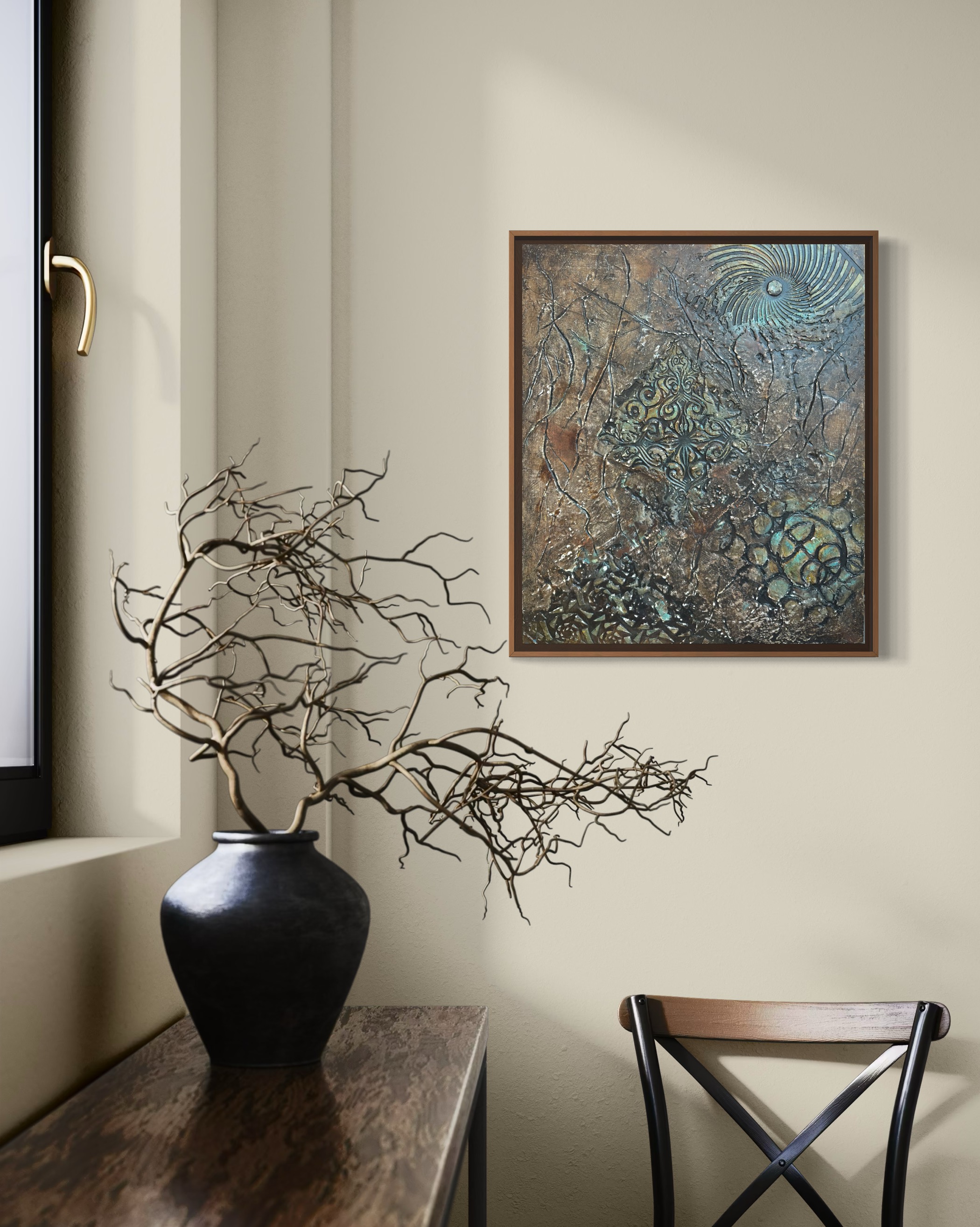
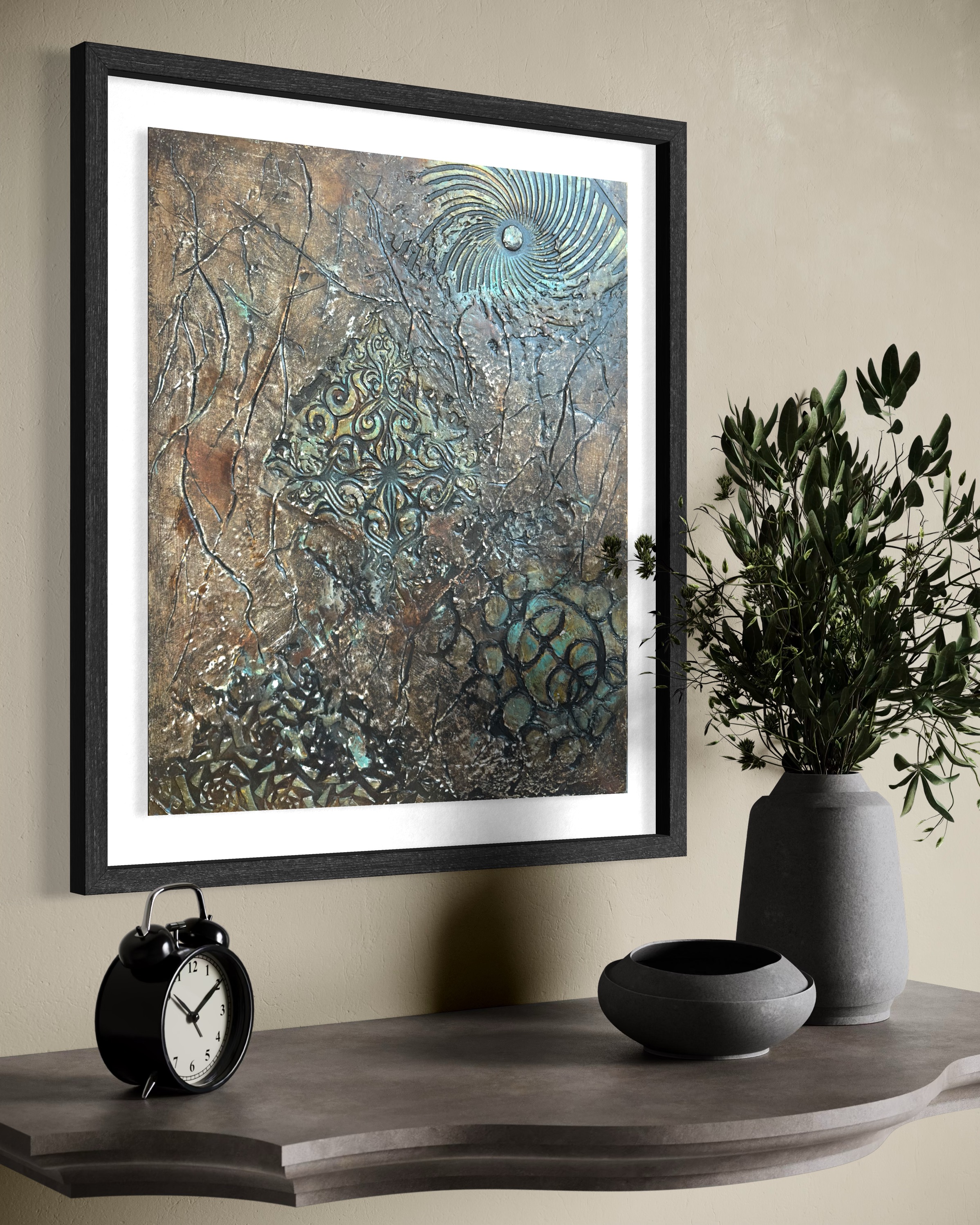
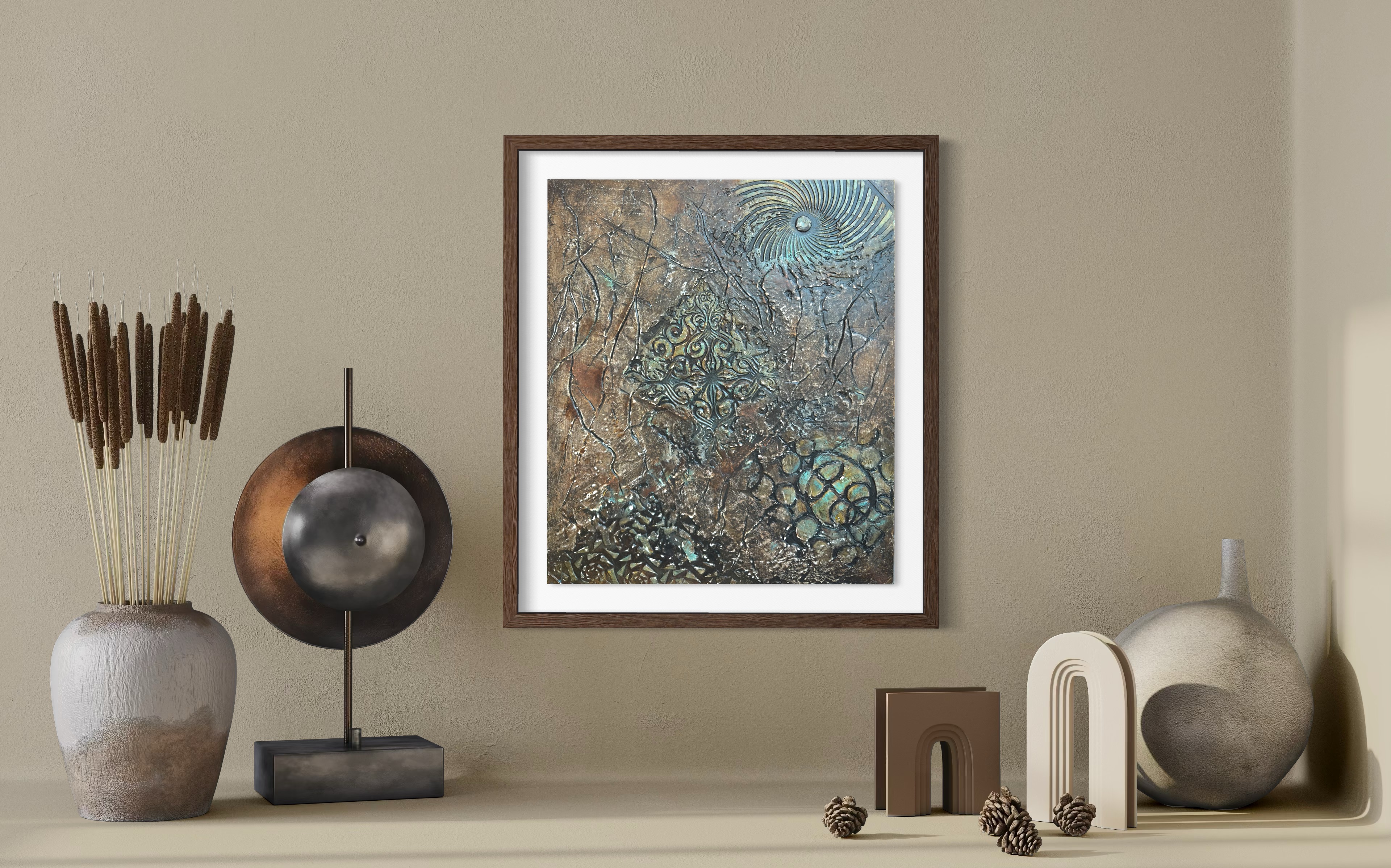
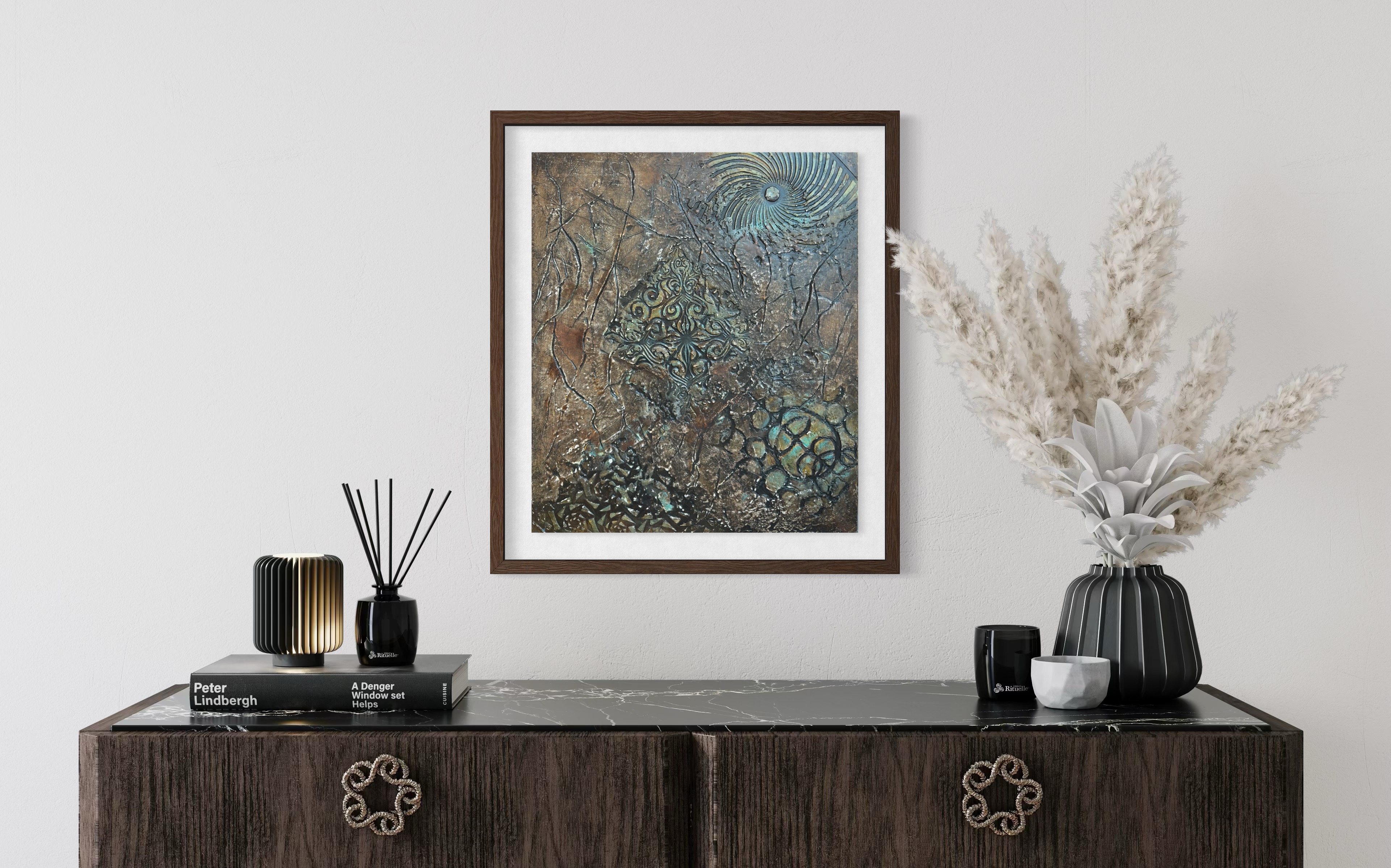
Ageing Series #8 - 2023 (Inception) – 2025 (Completion)
Mixed media on canvas (stencil, modeling paste, acrylics, varnish)
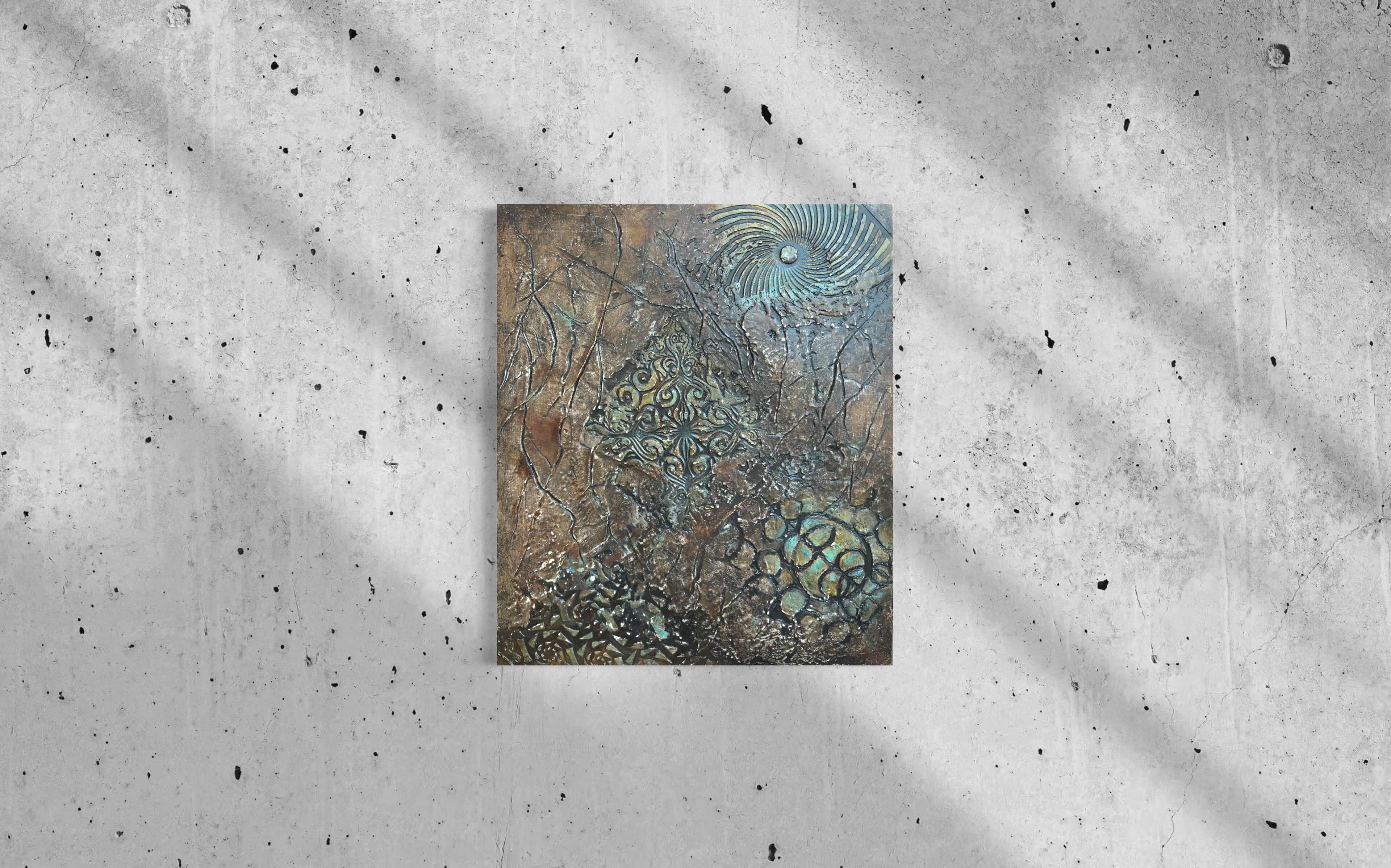
53.0 × 45.5 cm (F10)
https://www.singulart.com/en/artworks/kim-jun-sung-ongojisin-2488649
"Ongojisin: Back to when everyone knew the line. Back to when everyone kept it."
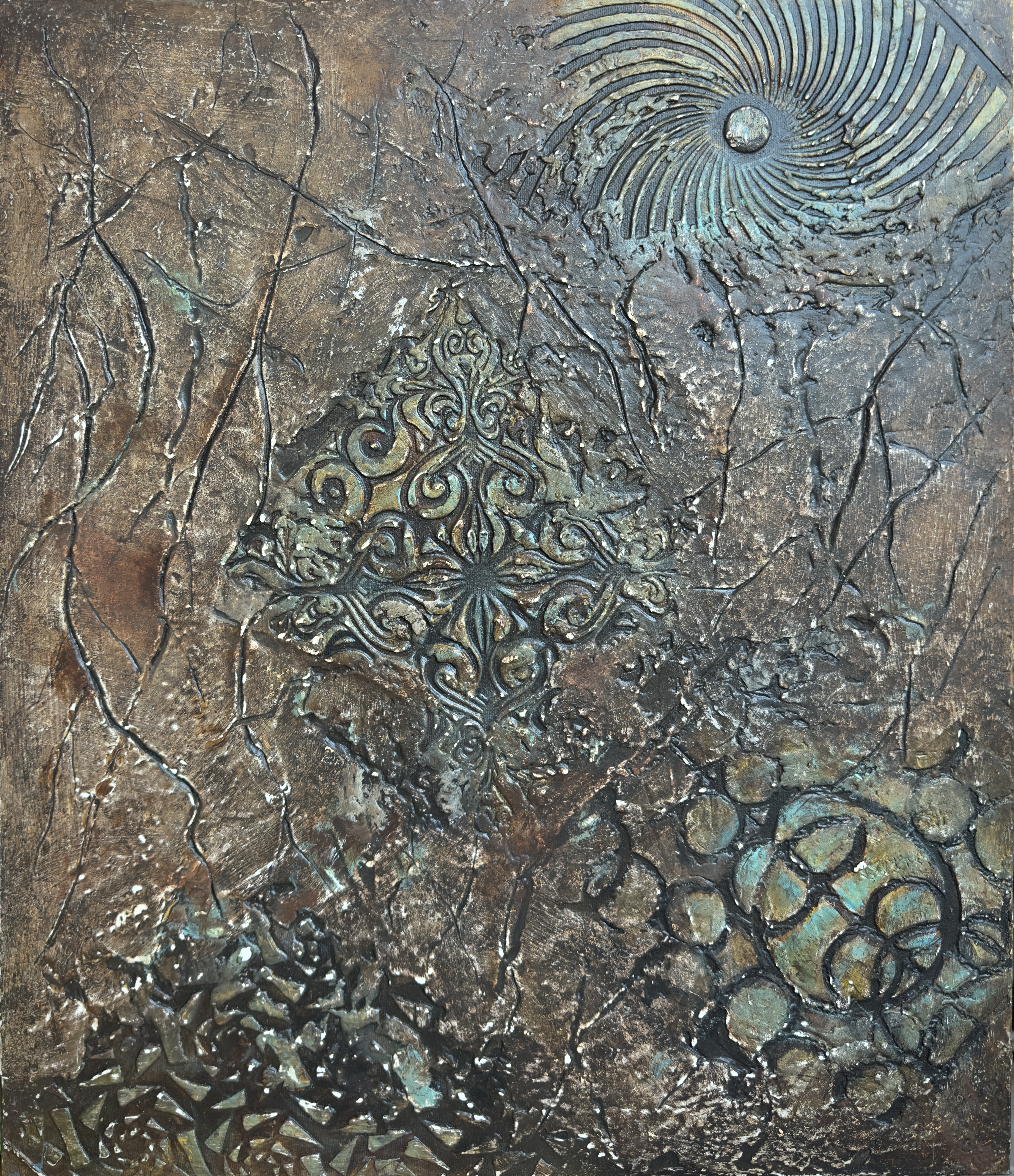
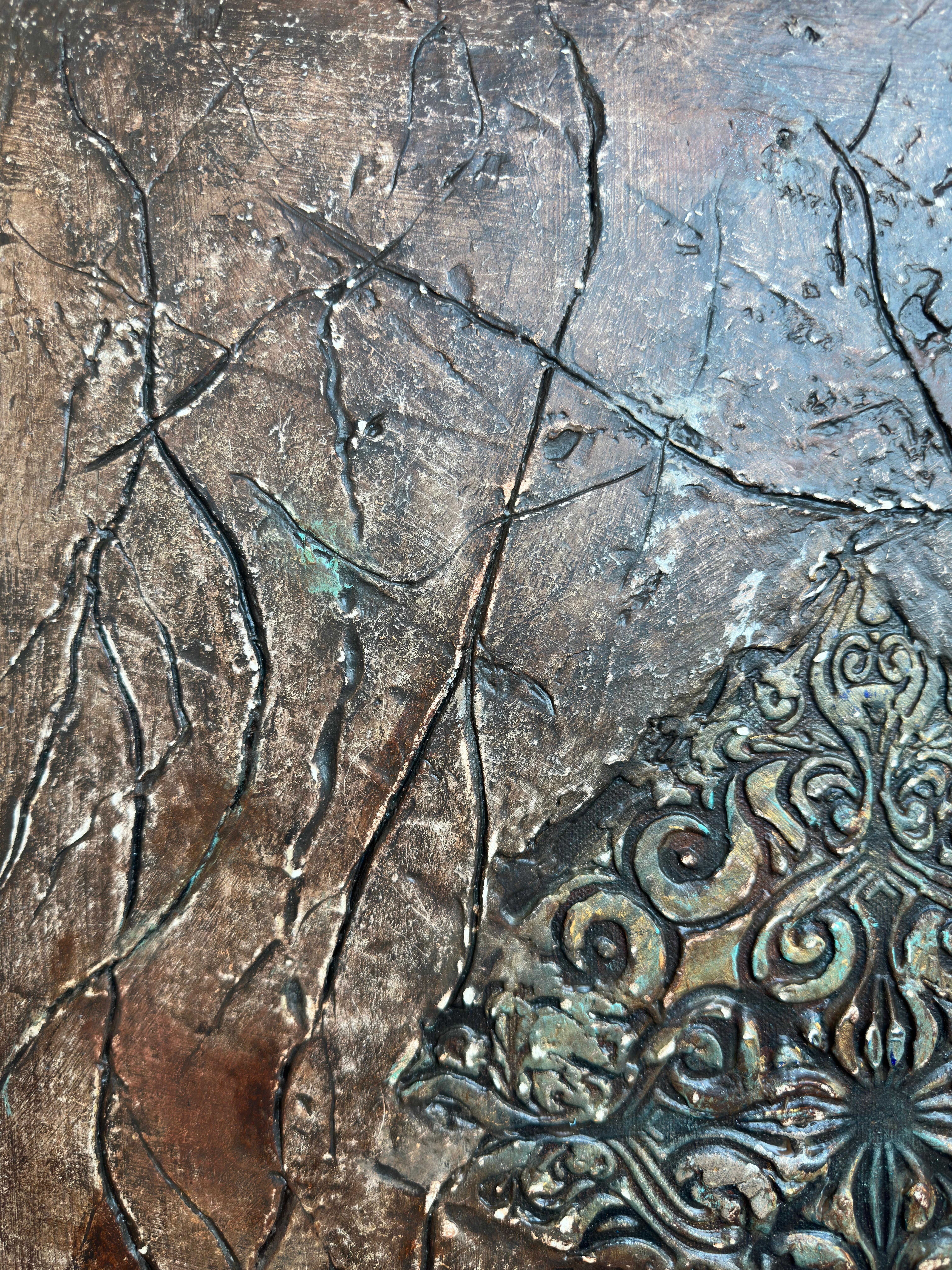
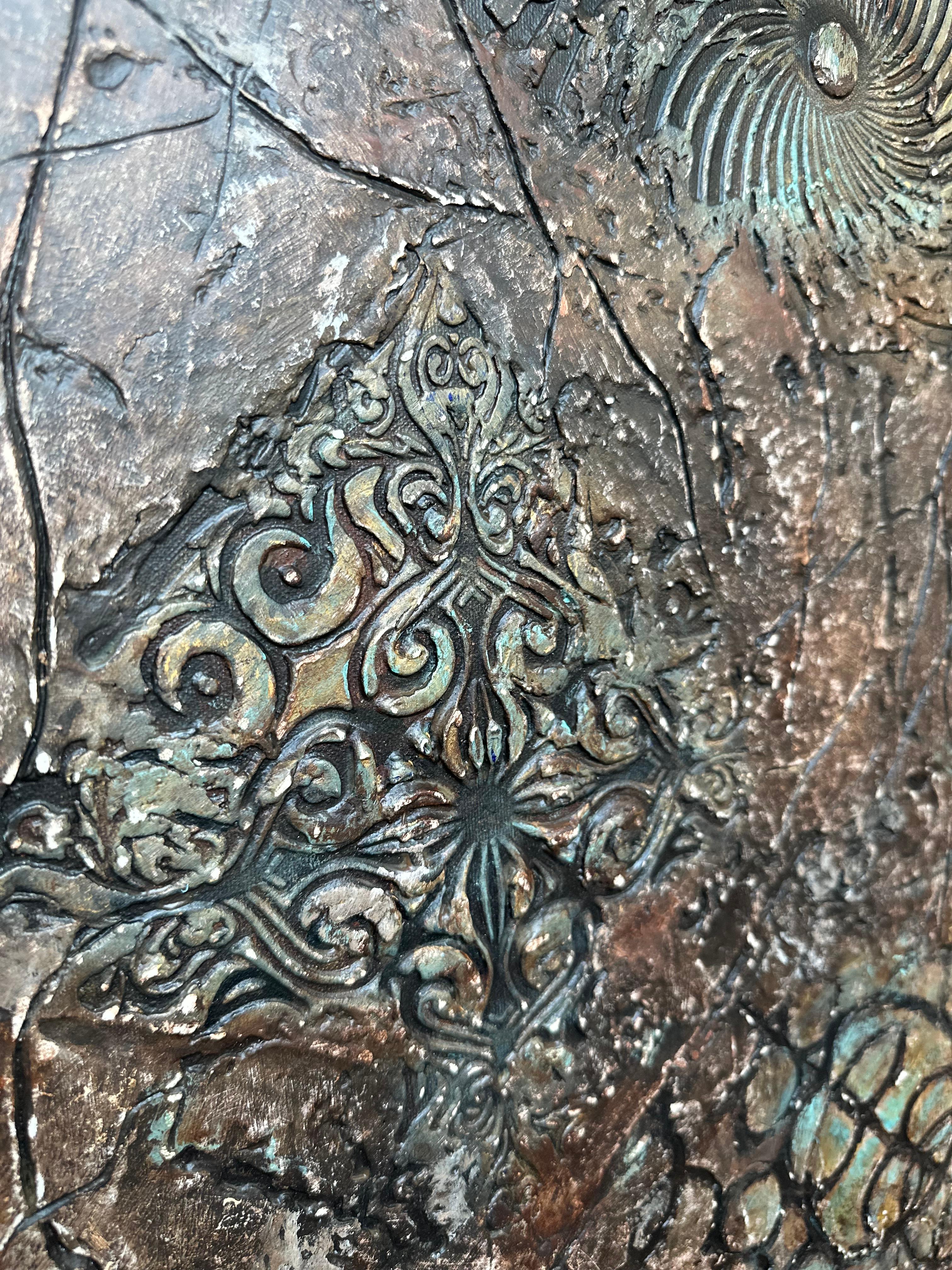
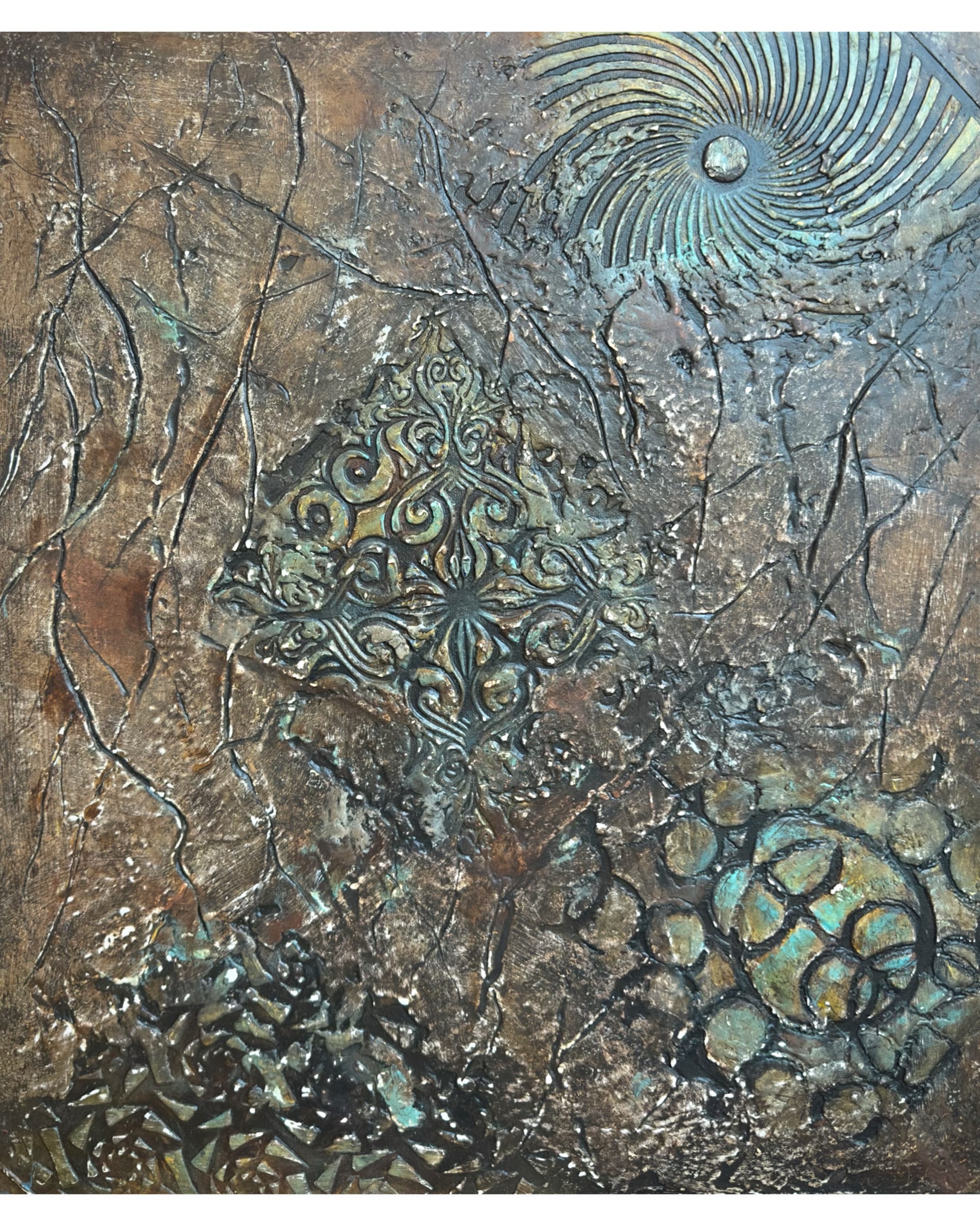
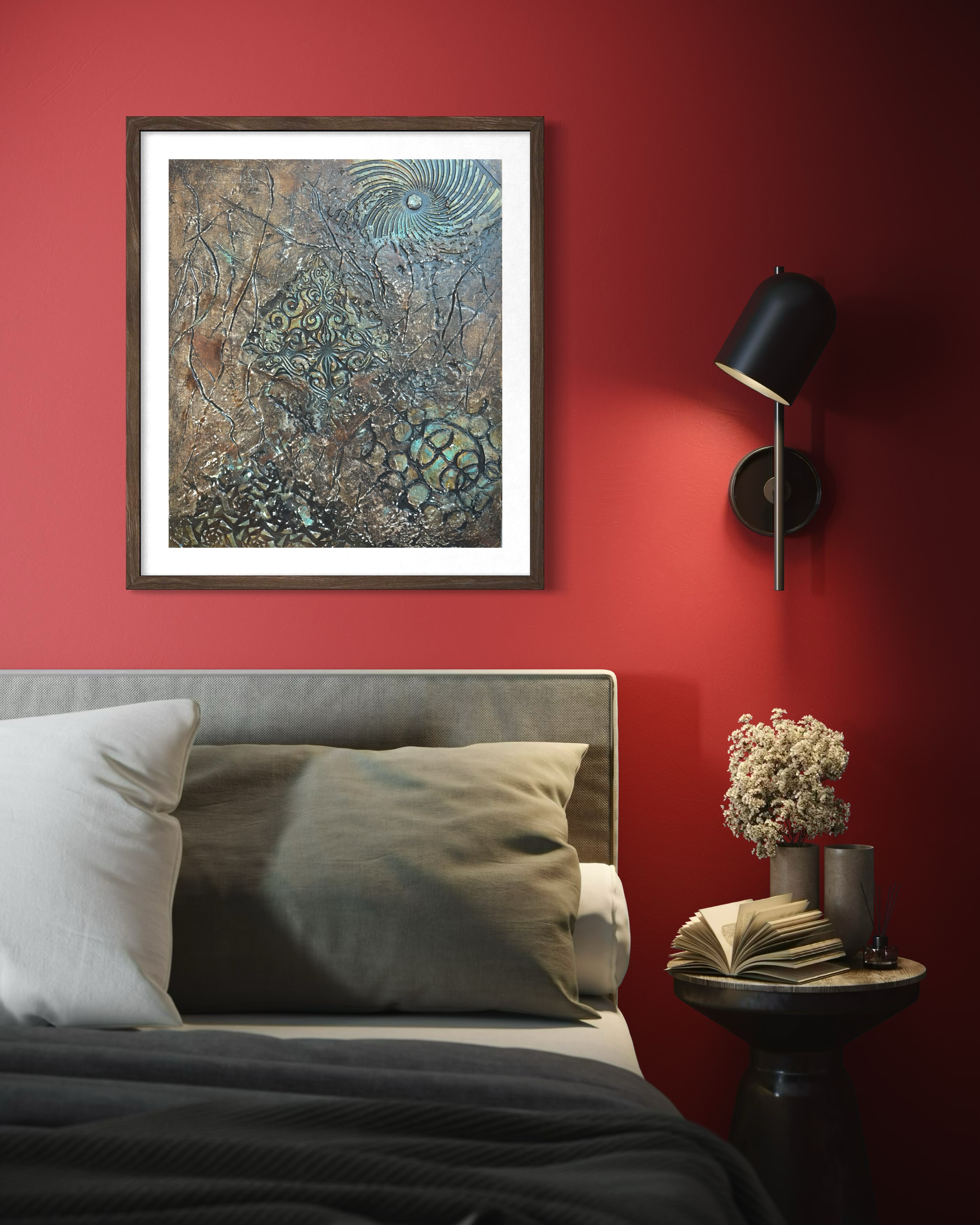
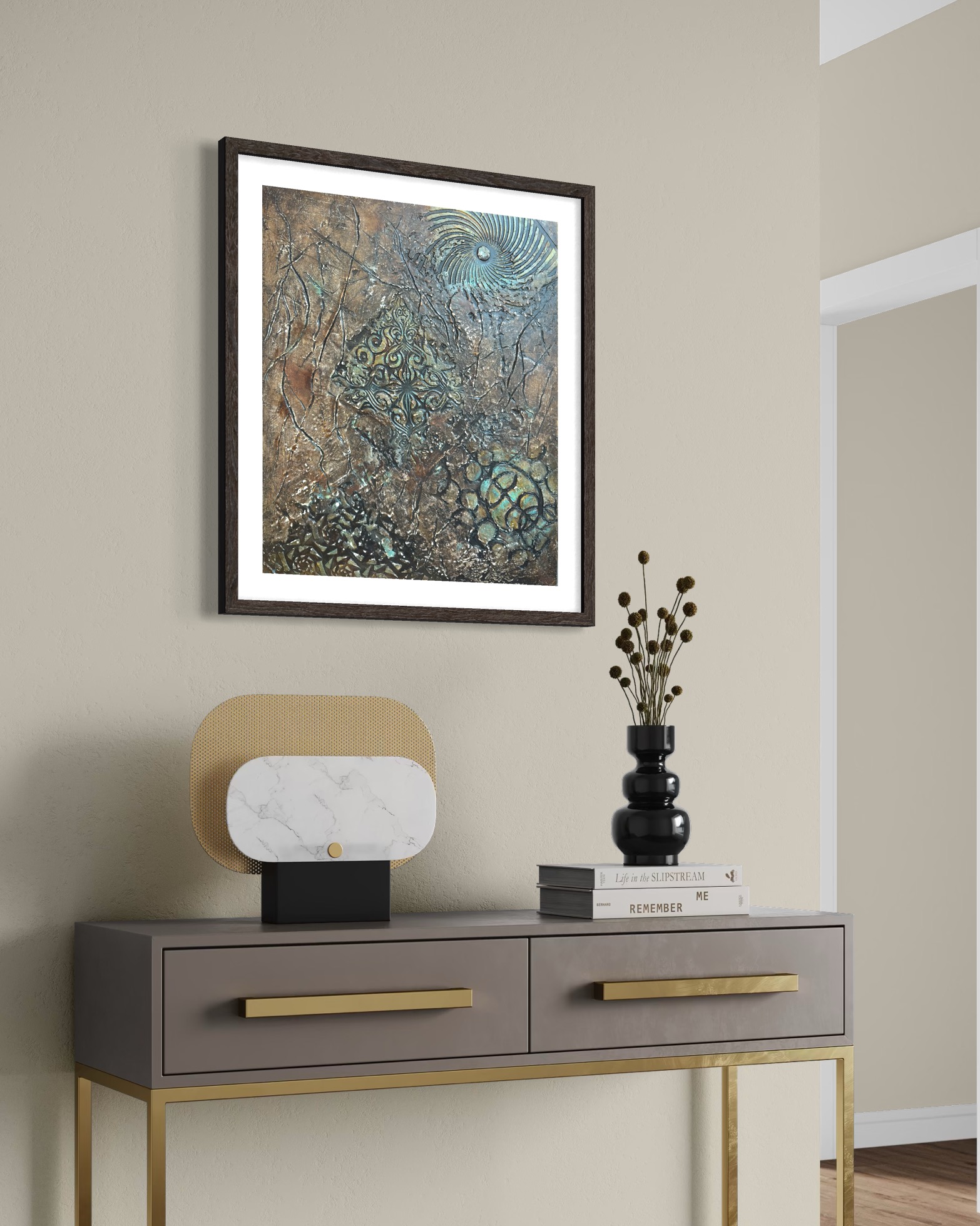
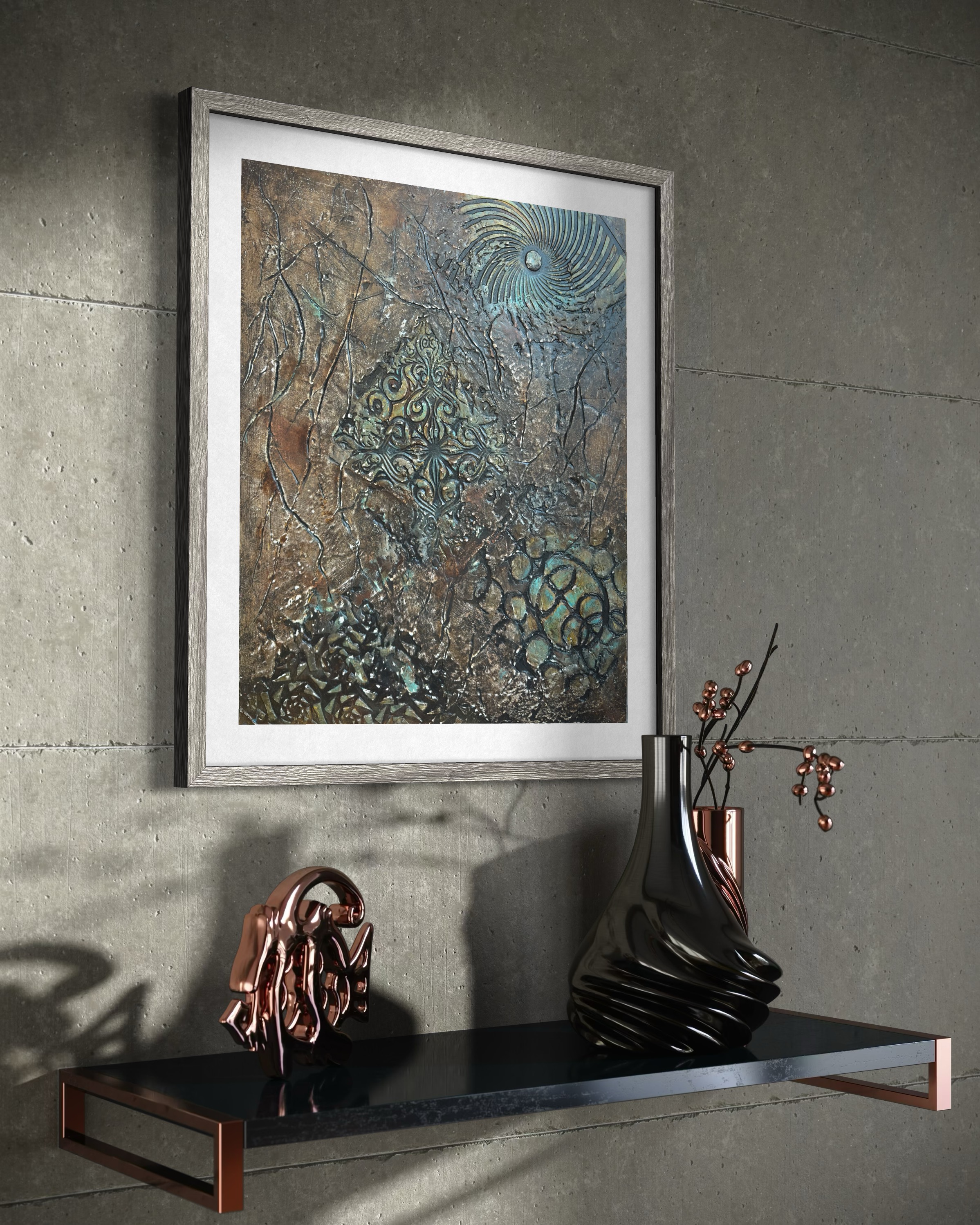
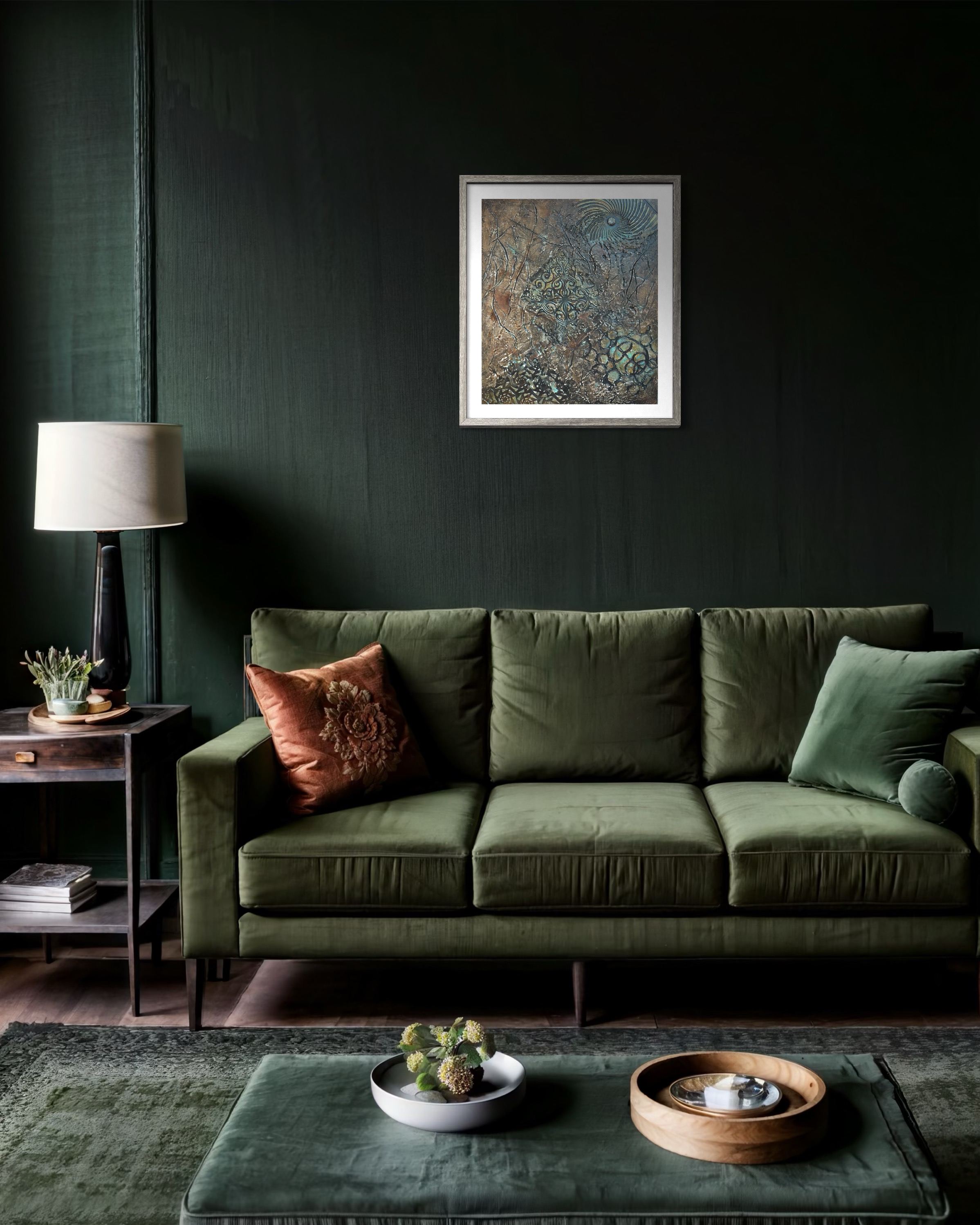
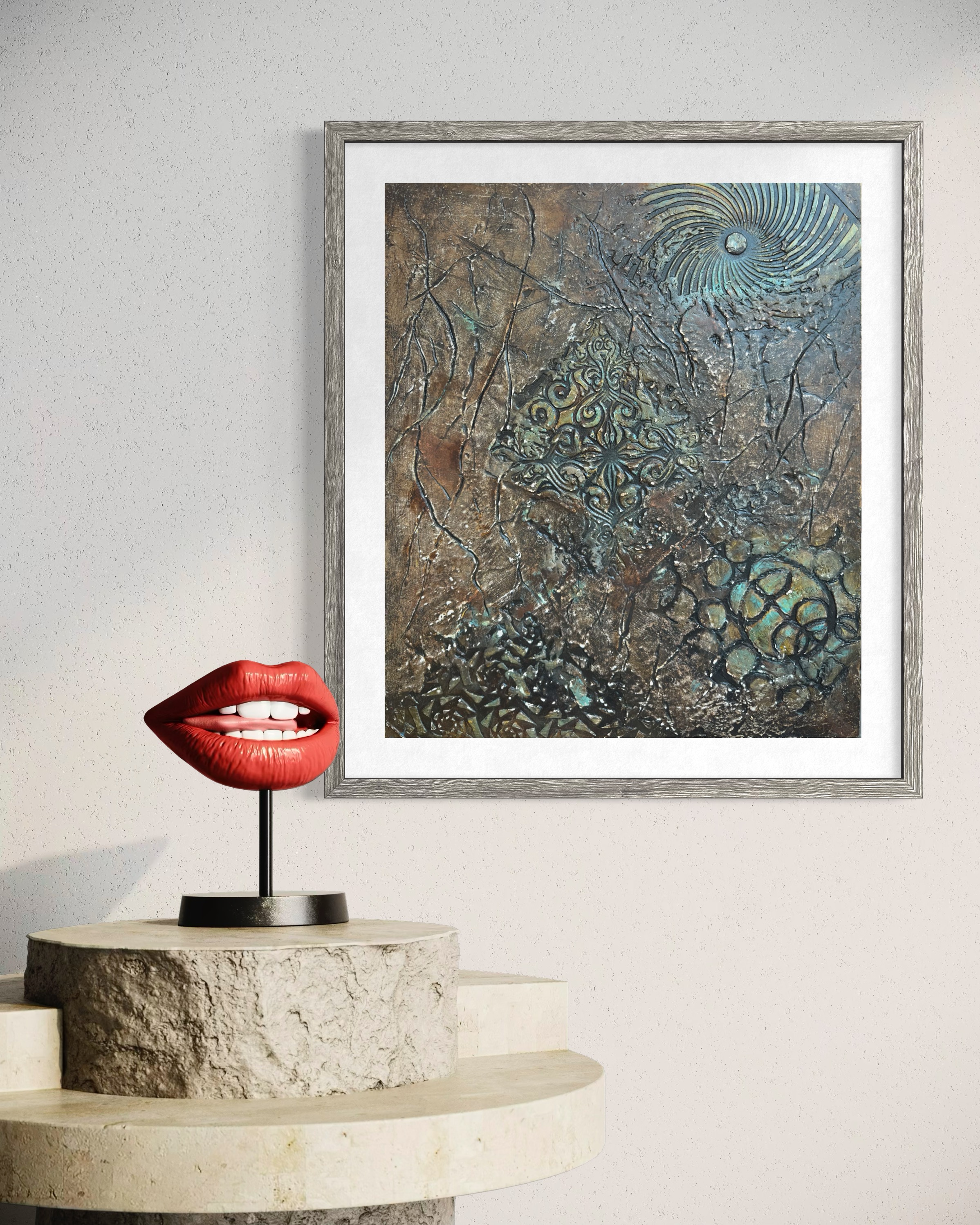
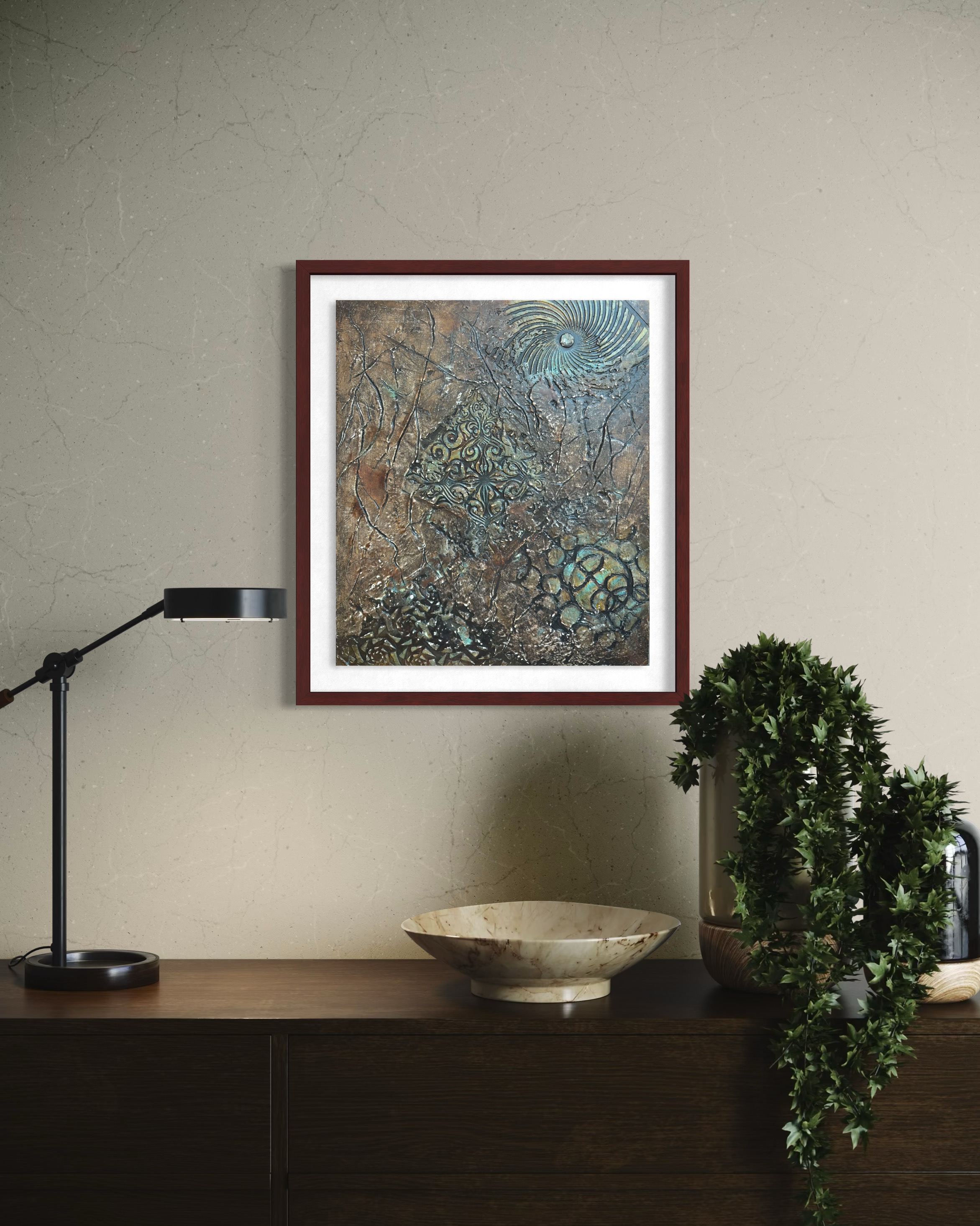
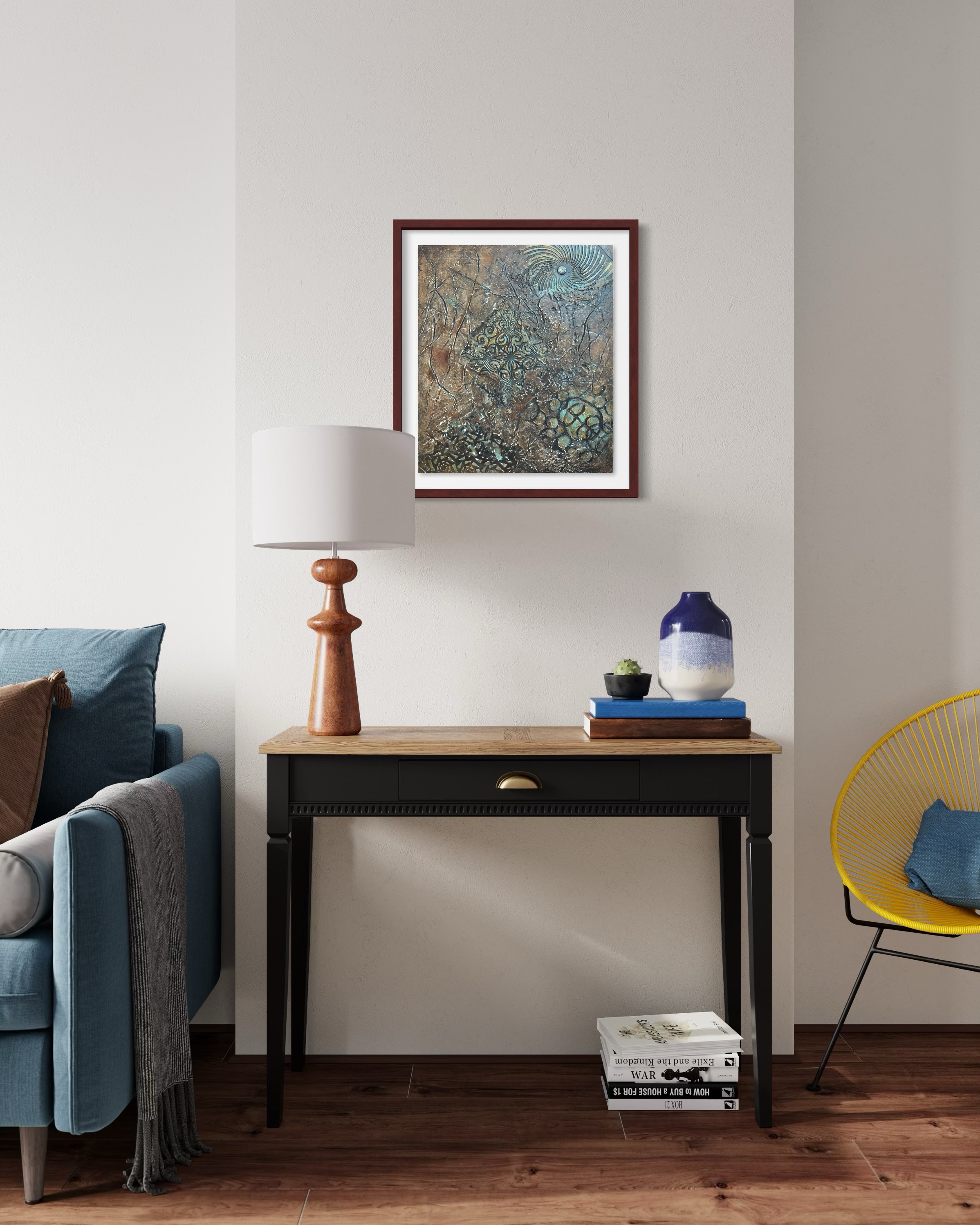
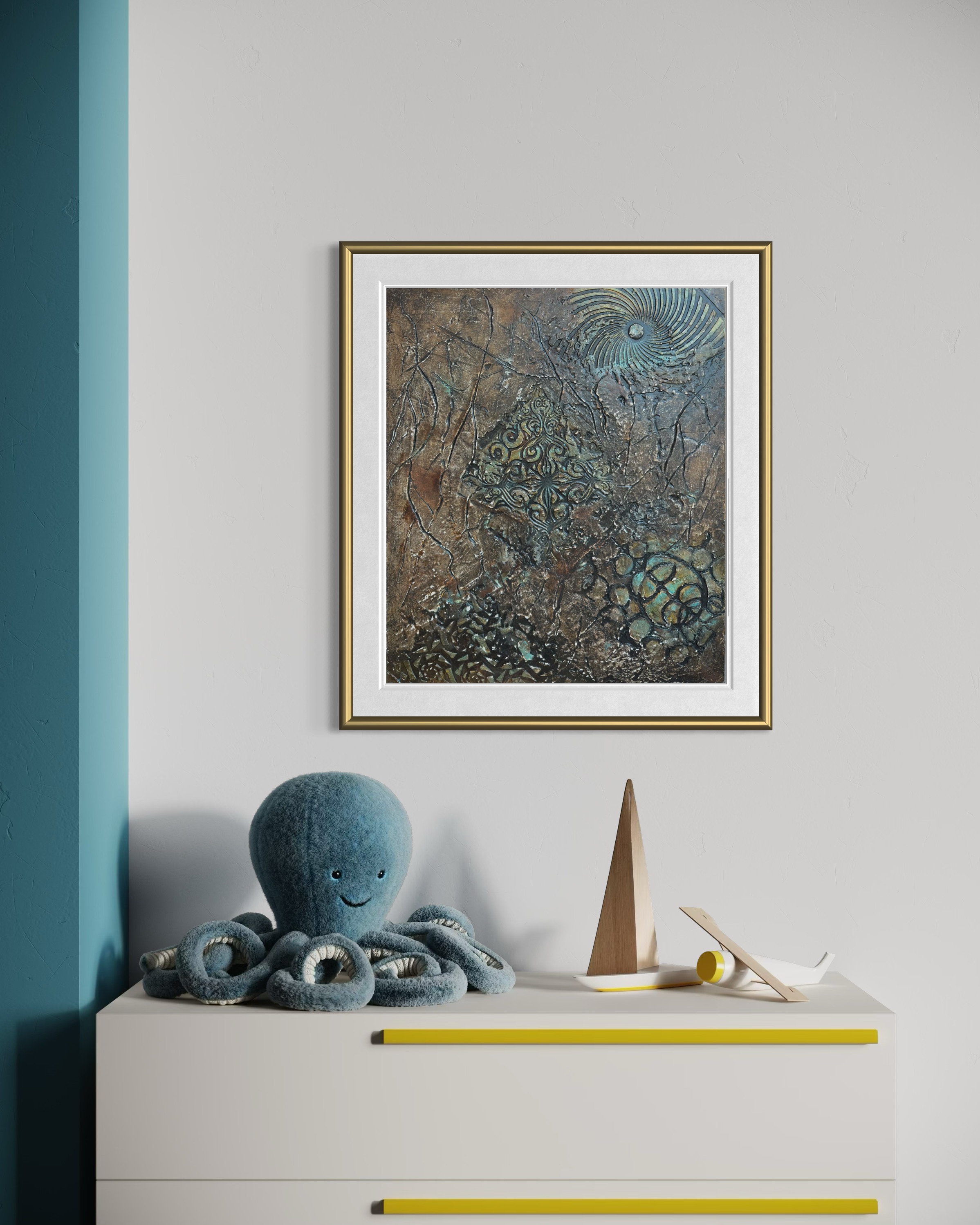
There is nothing new under the sun. While the world clamors for novelty, I returned to this canvas to excavate something firm that seems to be slipping away. I reworked it by rigorously sanding down layers laid years ago. The bronze tones and oxidizing patina suggest a landscape weathered by historical confusion, while the golden varnish on the central structure hints at an enduring value we have neglected. This work is a quiet resistance against a world losing its center. It is an attempt to polish the foundational agreements and democratic spirit, proving that the future is found not by invention, but by recovering the unbroken foundation we have allowed to decay.
"온고지신: 모두가 선을 알던 시절로. 선을 지키던 시절로."
해 아래 새것은 없다. 세상이 소란스럽게 새로움을 좇는 동안, 나는 오히려 희미해져 가는 단단한 무언가를 발굴하기 위해 이 캔버스로 돌아왔다. 나는 2년 전의 층위를 혹독하게 갈아냄으로써 작품을 재구성했다. 브론즈 톤과 산화된 파티나는 혼란에 풍화된 풍경을 암시하고, 중앙 구조물을 덮은 금빛 바니시는 우리가 방치했던 가치의 영속성을 은은하게 비춘다. 이 작업은 중심을 잃어가는 세상에 대한 조용한 저항이다. 그것은 민주주의의 기초와 합의 정신을 다시 닦아내려는 시도이며, 미래는 발명이 아니라 우리가 썩도록 방치했던 무너지지 않는 기초의 복원에서 발견됨을 역설한다.
"Ongojisin: Back to when everyone knew the line. Back to when everyone kept it."
This work was born from a sense of deep structural fracture. I witnessed the boundaries that sustain our shared reality—the lines of common sense and justice—blur into uncertainty, prompting a desperate return to the "old."
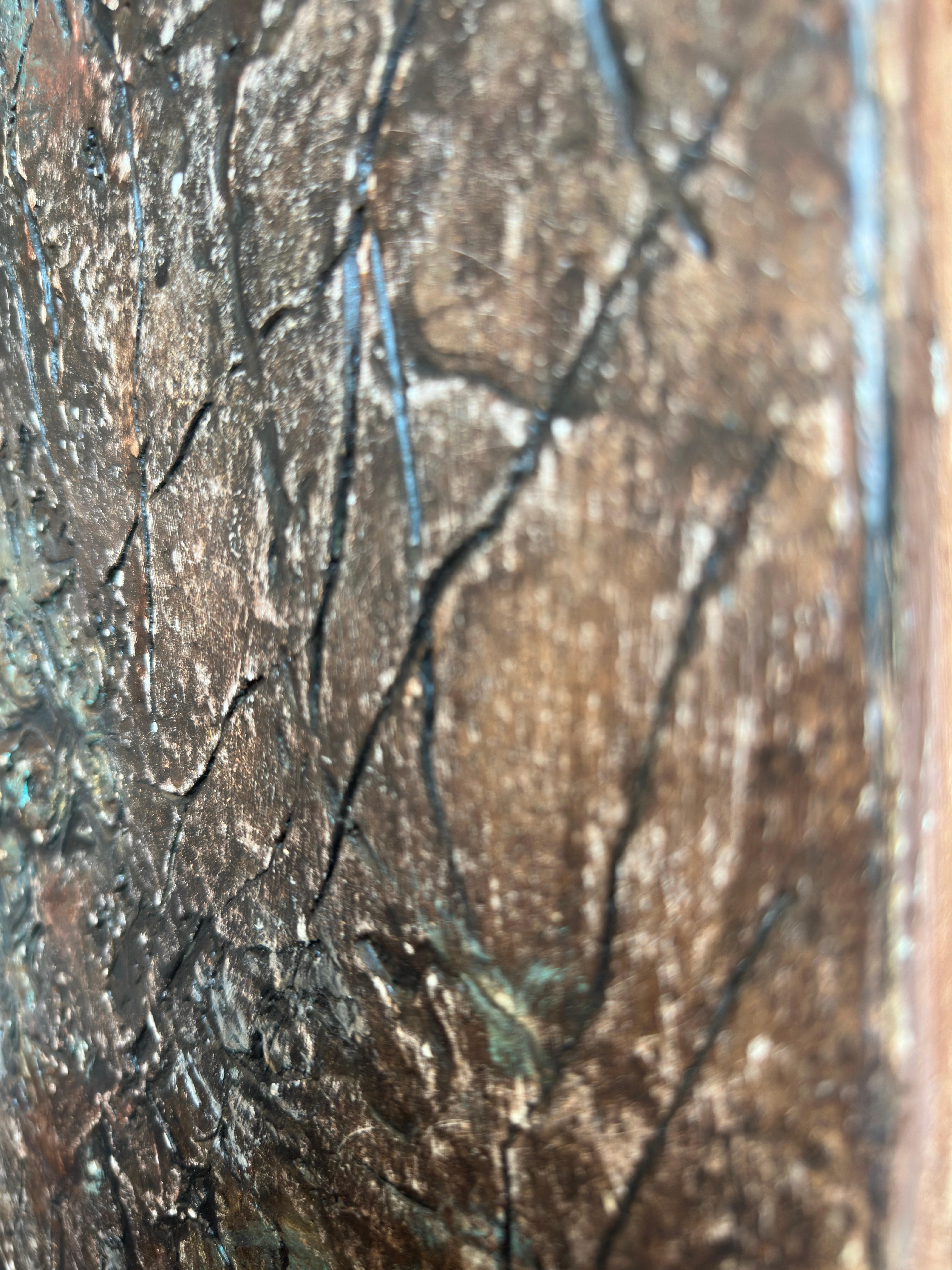
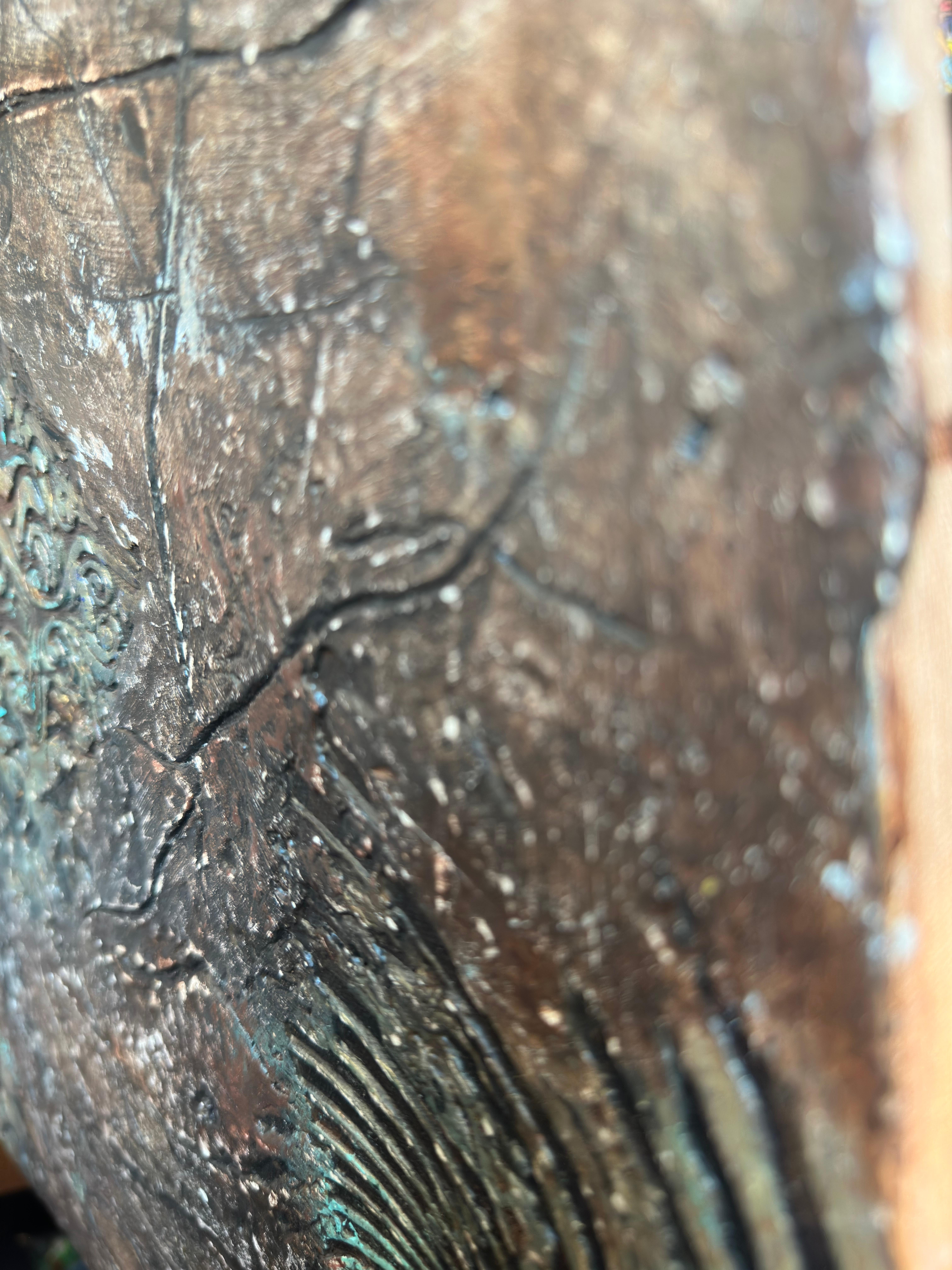
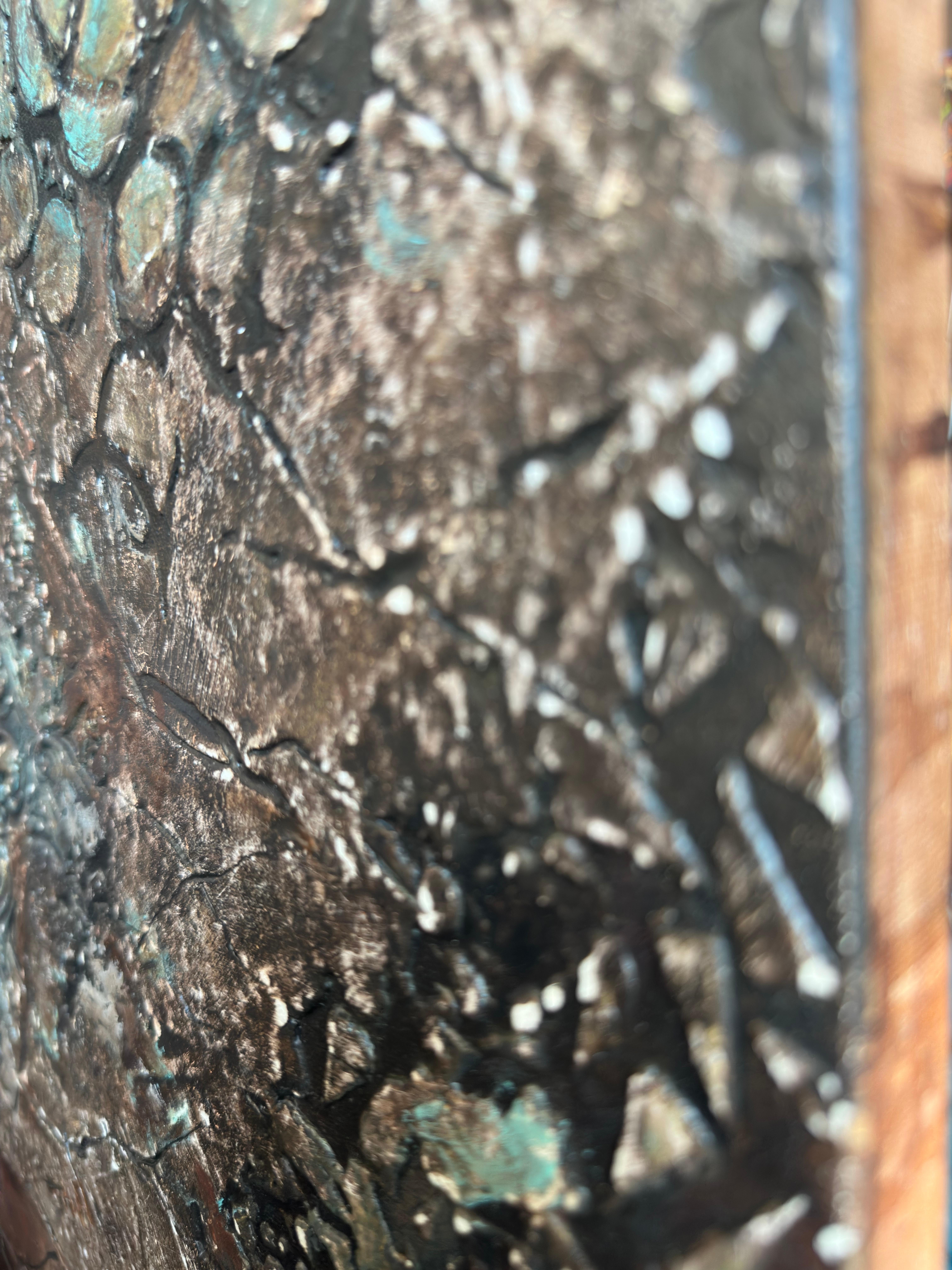
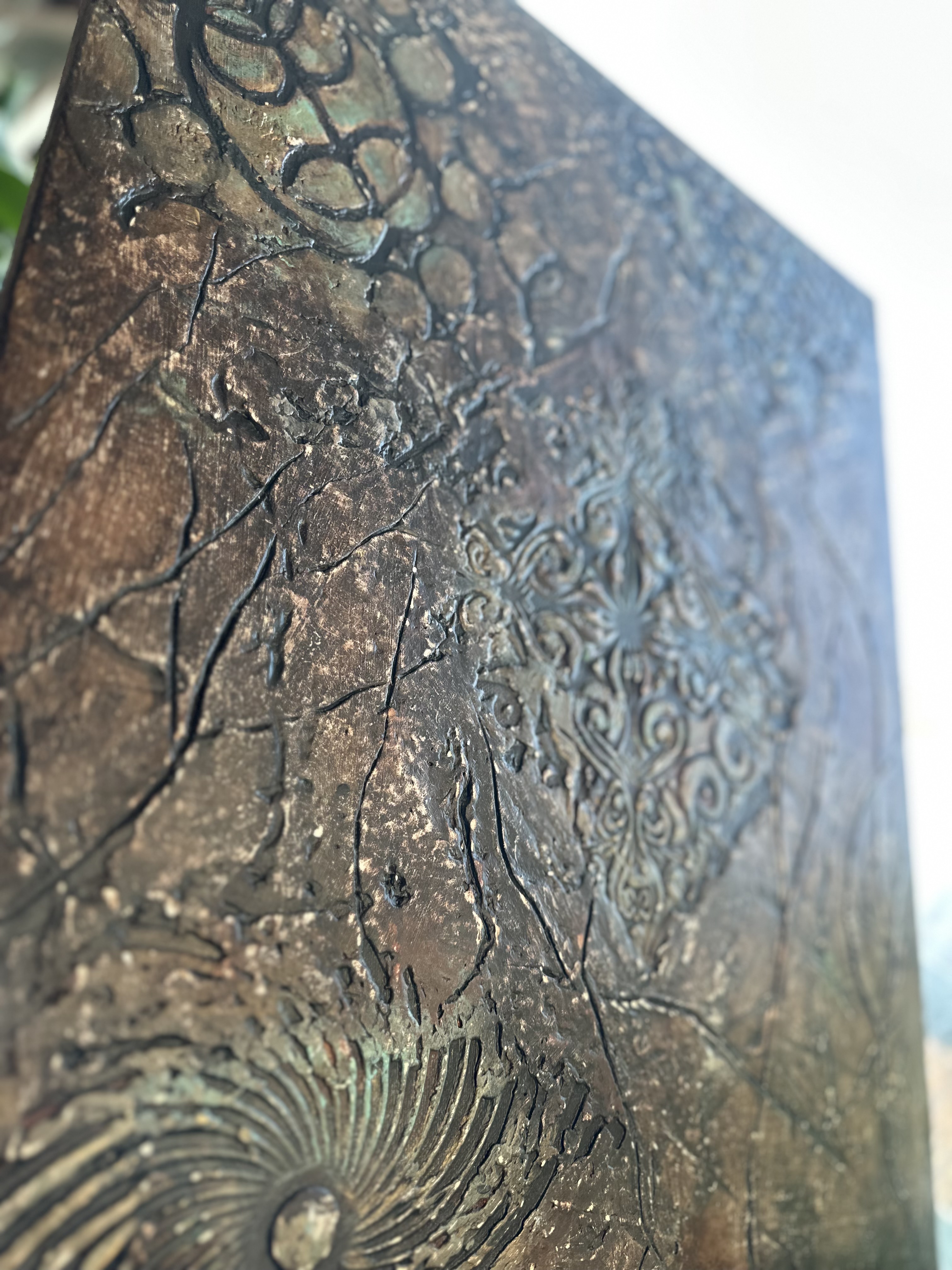
I revisited a canvas from 2023, treating the two-year gap not as abandonment, but as a period of necessary maturation. Approaching it with sandpaper, the process became abrasive and demanding. Grinding down the hardened modeling paste felt like an attempt to strip away the layers of hypocrisy and distortion that have encrusted our foundational principles. I sought to reach a surface that felt honest and raw.
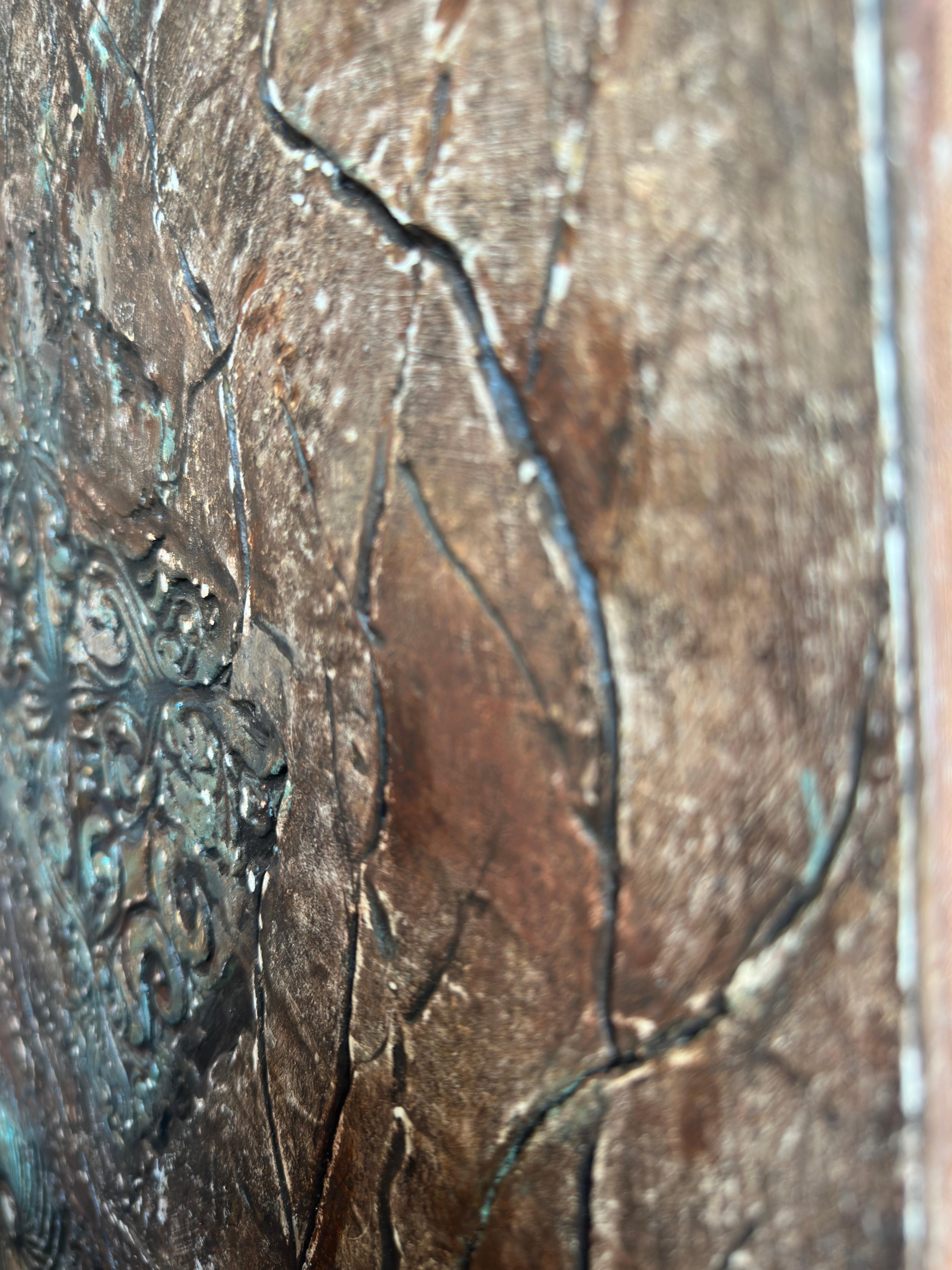
The oxidation and verdigris that seep into the cracks suggest a history marked by friction and decay. Yet, amidst this eroded terrain, the central geometric forms remain intact, now polished with gold. These forms are the "Geumdo"—the unwritten boundaries and political magnanimity that once acted as the moral keel of a society. By restoring their luster, I suggest that true renewal comes not from blind revolution, but from protecting these essential lines we are currently erasing. Ongojisin is a visual contemplation on whether we can polish the tarnished agreements of the past to illuminate a darkening present.
"온고지신: 모두가 선을 알던 시절로. 선을 지키던 시절로."
이 작품은 근본적인 구조의 파열(Fracture)에서 비롯되었다. 나는 우리의 공통된 현실을 지탱하던 공정과 상식의 선이 불확실성 속으로 희미하게 지워지는 것을 보며, '옛것'으로 돌아가야 할 절박함을 느꼈다.
2023년의 캔버스로 돌아와, 2년의 공백을 방치가 아닌 필수적인 숙성의 시간으로 간주했다. 사포로 마주한 작업 과정은 거칠고 고된 노동이었다. 굳어진 모델링 페이스트를 갈아내는 행위는 우리의 기초 원칙을 덮은 위선과 왜곡의 껍질을 벗겨내려는 시도처럼 느껴졌다. 나는 가장 정직하고 날 것의 표면에 닿고 싶었다.
균열 사이로 스며든 산화와 녹청은 마찰과 부식으로 점철된 시간을 암시한다. 그러나 이 침식된 지형 한가운데, 중앙의 기하학적 형상은 금빛으로 닦여진 채 온전히 남아 있다. 이 형상들은 어쩌면 '금도(襟度)'—사회의 도덕적 평형을 잡아주던, 넘지 말아야 할 선이자 정치적 아량—일지 모른다. 그 광채를 복원함으로써, 나는 묻고 싶었다. 진정한 갱신은 맹목적인 혁명이 아니라, 우리가 지워 가는 본질적인 선들을 다시 닦아내는 데서 시작되는 것이 아니겠느냐고.
"Ongojisin: Back to when everyone knew the line. Back to when everyone kept it."
Note: The following text adopts the format of a critical essay, analyzing the work through an objective lens while metaphorically alluding to the artist's underlying intent.
The Friction of Restoration: A Critique of Ongojisin
In Aging Series #8: Ongojisin, Junsung Kim moves beyond the abstract contemplation of time to engage in a physical struggle with the canvas. Initiated in 2023 and completed in 2025, the artwork bears the scars of its own making. The surface has been built up, abandoned, and then rigorously abraded, suggesting that for the artist, the act of painting has become inseparable from a desire to correct a profound structural distortion.
1. The Archeology of Texture
The artist treats the canvas like an excavation site. The bronze and umber tones dominate the background, feeling ancient and weathered. The blue-green verdigris blooming in the crevices suggests a long period of neglect—a visual metaphor for a state of affairs that has been allowed to corrode. The viewer gets the sense that the artist is digging through layers of sediment—rhetoric, distortion, and moral confusion—to find something solid underneath.
2. Sanding as a Metaphor for Heat
The defining process of this work is the act of sanding. It is not a gentle polishing but a harsh grinding. One can sense a simmering energy in these scratched surfaces—a friction generated by the artist's hand against the hardened past. This physical intensity hints at an underlying frustration, a reaction to a world where logic, consensus, and the basic rules of the game seem to have utterly warped.
3. The Restoration of the Line
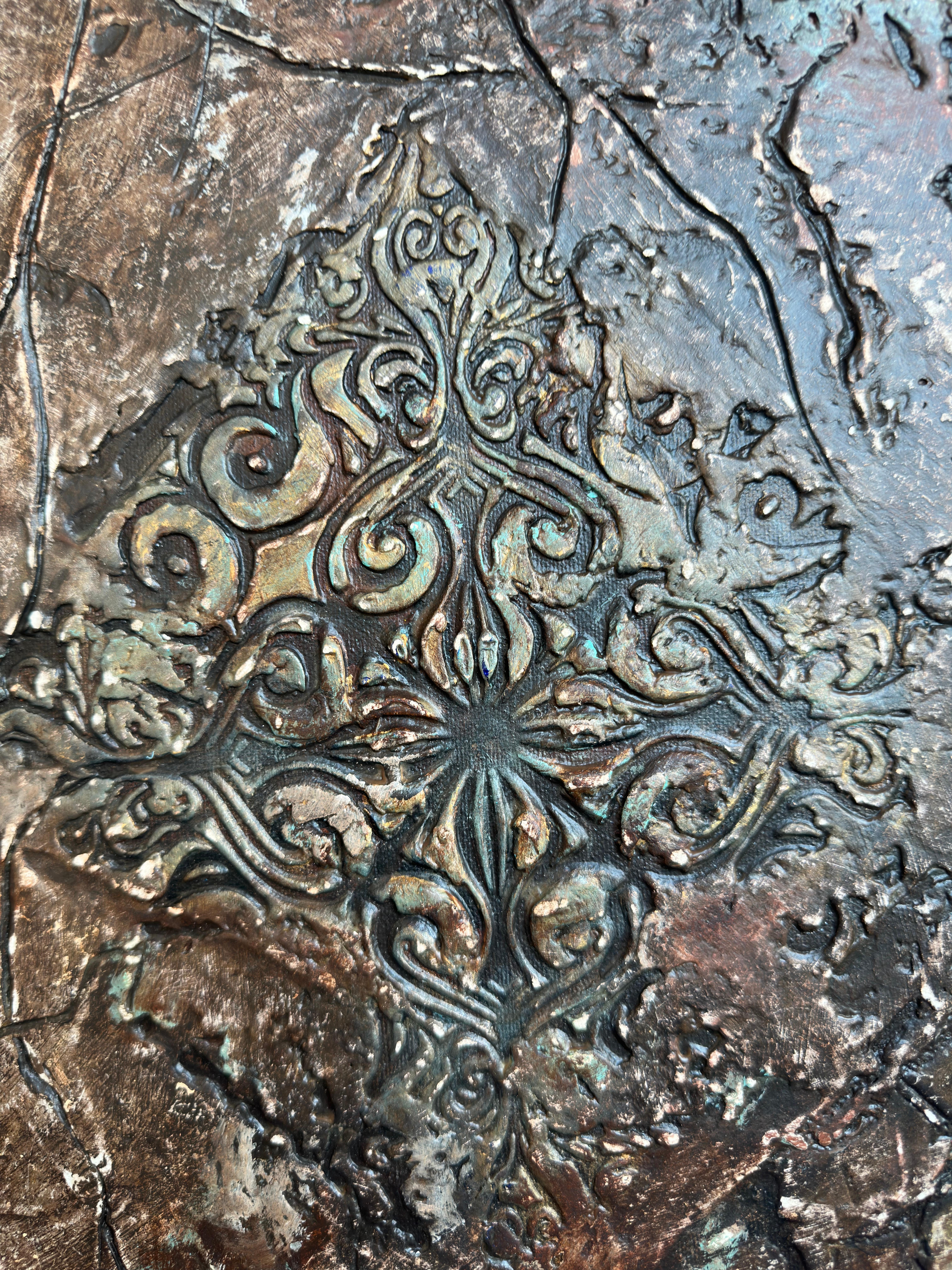
Amidst the chaotic textures, the central stencil forms stand out with startling clarity. Polished with gold and sealed with varnish, they possess a structural integrity that the surrounding areas lack. Here, the concept of Ongojisin takes on a specific gravity. The artist seems to be pointing to these forms as the "Geumdo" (襟度)—the invisible lines of decency, common sense, and public good. In a landscape where boundaries are routinely transgressed and the "common ground" has fractured, these golden geometric forms act as a visual anchor. They suggest that the "Old" we need to revisit is the fundamental agreement of justice and fairness that once allowed us to coexist.
4. Conclusion: A Fervent Prayer for Common Sense
Ongojisin avoids overt political slogans, yet it resonates with a profound civic anxiety. It speaks to the feeling of standing on a foundation that is cracking. By meticulously restoring the central structure amidst a field of oxidation, Junsung Kim offers a subtle but powerful proposition: that in a time of rampant distortion and polarization, the most radical artistic act is to insist on the restoration of the basic rules of the game. The work is a fervent prayer for the return of common sense, polished until it shines like gold in the twilight.
[cf. Background Note: The Artist's Direct Motivation]
The artist explicitly wishes to clarify that the intense, abrasive energy of this work is a direct, visceral response to the current erosion of constitutional democracy and common sense in South Korea.
The desire embedded in Ongojisin is a desperate yearning for a society where hate, discrimination, and political polarization do not dominate public discourse. The artwork's tension is fueled by the frustration over the state's failure to uphold the Constitutional Spirit and the fundamentals of democracy, primarily through:
1. The Collapse of Boundaries: Politics, Judiciary, and Religion
- The Threat to Separation of Church and State: The artist issues a strong condemnation of the breakdown of Jeonggyobunri (separation of church and state), citing the dangers posed by extreme Protestant and cult-like groups (e.g., Unification Church, Shincheonji, the Jeon Kwang-hoon faction). These groups have engaged in illegal and illicit political activities, including fraudulent party membership, improper election campaigning, and even acts of violence, such as the protest at the Seoul Western District Court. The artist points to the absence of clear condemnation from mainstream Christian leaders as a sign of profound societal failure.
- The Judicialization of Politics: There is a fundamental critique of the political sphere's failure to resolve its own issues, leading to the transfer of political conflicts to the courts. This has created a system where unelected judges intervene in the political realm based on subjective bias, destabilizing the nation and creating situations where judicial rulings appear detached from basic common sense and justice.
- Political Corruption and Malfeasance: The work reflects deep concern over high-level corruption, including bribery, illegal appointments/sales of public office (매관매직), and evidence of political pressure/lobbying (e.g., the Chae Sang-byeong case), which demonstrate a fundamental failure of public ethics.
2. The Loss of Consensus and Responsibility
- The Destruction of the Public Good: The artist laments the current climate where political competition is contaminated by lies and perjury, leading to the destruction of the public good and the common ground (consensus) required for civil debate.
- The Noble Tradition of Political Responsibility: The 'Old' (Go) that the artist seeks to restore is the noble tradition of political responsibility and dignity found in past eras. This includes the ethical standard of adhering to agreements and the grace to accept electoral defeat, resign, and retire with integrity, ensuring the smooth and responsible transfer of power.
The physical act of sanding and restoring the gold lines is the artist's intense, physical expression of the singular desire to recover these minimal standards of fairness, responsibility, and the strict separation of powers that define a civilized, democratic society.
"온고지신: 모두가 선을 알던 시절로. 선을 지키던 시절로."
주: 다음의 글은 비평 에세이의 형식을 차용하여, 작가의 의도를 직접적으로 드러내기보다 작품의 물성과 분위기를 통해 은유적으로 해석했다.
복원의 마찰열: <온고지신> 비평
김준성의 <온고지신>(에이징 시리즈 #8)에서 작가는 시간의 추상적 관조를 넘어 캔버스와의 물리적 투쟁을 벌인다. 2023년에 시작되어 2025년에 완성된 이 작품은 제작 과정의 상흔을 고스란히 담고 있다. 쌓아 올리고, 방치했다가, 다시 혹독하게 갈아낸 표면은, 작가에게 있어 그리는 행위가 무언가 뒤틀린 것을 바로잡으려는 갈망과 분리될 수 없음을 시사한다.
1. 텍스처의 고고학
작가는 캔버스를 발굴 현장처럼 다룬다. 브론즈와 암갈색이 지배하는 배경은 오래되고 풍화된 느낌을 준다. 틈새에서 피어오르는 청록색 녹(Verdigris)은 오랜 방치의 시간을 암시하며, 부식되도록 내버려 둔 어떤 상태에 대한 시각적 은유로 읽힌다. 관객은 작가가 혼란과 소음, 궤변의 퇴적층을 파헤쳐 그 아래 단단한 무언가를 찾으려 했다는 인상을 받게 될 것이다.
2. 마찰열로서의 샌딩(Sanding)
이 작품을 규정하는 핵심 공정은 '샌딩'이다. 그것은 부드러운 연마가 아니라 거친 갈아냄이다. 긁힌 표면에서는 작가의 손이 굳어진 과거와 부딪히며 발생시킨 마찰열, 즉 끓어오르는 에너지가 감지된다. 이 물리적 격렬함은 논리, 합의, 그리고 기본적인 게임의 규칙이 송두리째 뒤틀려버린 세상에 대한 작가의 내재된 답답함과 분노가 투영된 결과일 것이다.
3. 선(線)의 복원
혼란스러운 텍스처 속에서 중앙의 스탠실 형상들은 놀라울 만큼 명료하게 도드라진다. 금빛으로 닦이고 바니시로 봉인된 이 형상들은 주변 영역이 갖지 못한 구조적 무결성을 지니고 있다. 여기서 '온고지신'은 구체적인 무게를 얻는다. 작가는 이 형상들을 통해 '금도(襟度)'—문명사회를 지탱하던 보이지 않는 선과 상식—를 가리키고 있는 듯하다. 경계가 침범당하고 공감대가 깨진 풍경 속에서, 이 금빛 기하학적 형상들은 시각적 닻 역할을 한다.
4. 결론: 상식을 향한 간절한 기도
<온고지신>은 노골적인 구호를 배제하지만, 깊은 시민적 우려와 공명한다. 그것은 금이 가고 있는 기초 위에 서 있는 듯한 위태로움을 말한다. 산화된 들판 한가운데서 중앙의 구조를 세심하게 복원함으로써, 김준성은 은유적이지만 강력한 제안을 던진다. 왜곡과 극단이 난무하는 시대에, 가장 급진적인 예술적 행위는 게임의 기본 규칙을 복원하자고 고집하는 것일 수 있다. 이 작품은 황혼 속에서 금처럼 빛날 때까지 닦아낸, 상식의 귀환을 바라는 간절한 기도와도 같다.
[cf. 배경설명: 작가의 원생각]
작가는 이 작업의 거친 에너지가 한국 사회의 구체적 현실에 대한 직접적인 반응에서 비롯되었음을 밝히기를 원했으며, 이 글은 그 절규를 담고 있다.
<온고지신>은 혐오와 차별 없는 민주주의, 헌법 정신과 공정의 회복에 대한 절박한 염원을 담고 있다. 작가는 현실에서 벌어지는 공공선의 붕괴와 기초의 파괴에 대해 깊은 분노를 느낀다. 구체적으로는 다음과 같은 지점을 비판하고, 이에 저항한다.
1. 정치-사법-종교의 경계 붕괴
- 정교분리의 위협: 민주 사회의 척도인 정교분리 원칙이 무너지고, 극우 개신교 및 사이비 종교 세력(통일교, 신천지, 전광훈 세력 등)이 조직적으로 정치에 개입하는 현상에 대한 규탄이다. 이들은 위장 당원 가입, 불법 선거 운동 등을 통해 정치를 주관하려 했으며, 나아가 뇌물, 매관매직, 채상병 사건 연루 의혹과 같은 정치적 범죄와 연결되어 있다. 심지어 서부지법 난동과 같은 폭력 시위를 주도하기까지 했으며, 이에 대해 정작 교계 지도자들이 침묵하는 참담함이 작품의 배경에 깔려 있다.
- 사법 만능주의: 정치가 자신의 영역에서 책임을 지지 못하고 문제를 사법 영역으로 전이시켜, 선출되지 않은 판사들이 자기 주관에 따라 정치에 개입하고 판결을 치우치게 만드는 **'사법의 타락'**에 대한 강력한 비판이다. 이는 상식과 정의가 결여된 비정상적인 상황을 빈번하게 만들어 사회적 신뢰와 안정을 근본적으로 파괴하는 상황을 초래한다.
2. 책임 정치와 합의의 실종
- 공공선과 공감대의 파괴: 경쟁과 토론이 거짓말과 위증으로 얼룩져 공공선과 공감대가 무너지고, 밑도 끝도 없는 간극이 벌어진 상황에 대한 답답함이다.
- 정치적 책임의 고귀한 전통 상실: 작가는 복원해야 할 '옛것(故)'을 **'정치적 책임의 고귀한 전통'**에서 찾는다. 이는 민주화 시대에도 지켜졌던, 합의하면 지키고, 선거에서 지면 깨끗이 승복하며 물러날 줄 알았던 정치적 품격과 책임의 전통이다.
캔버스를 갈아엎고 금빛을 복원하는 행위는, 이 모든 혼란을 걷어내고 최소한의 상식과 공정, 그리고 정교분리와 책임이라는 '금도(襟度)'가 다시 지켜지기를 바라는 작가의 간절한 염원의 물리적 표현이다.






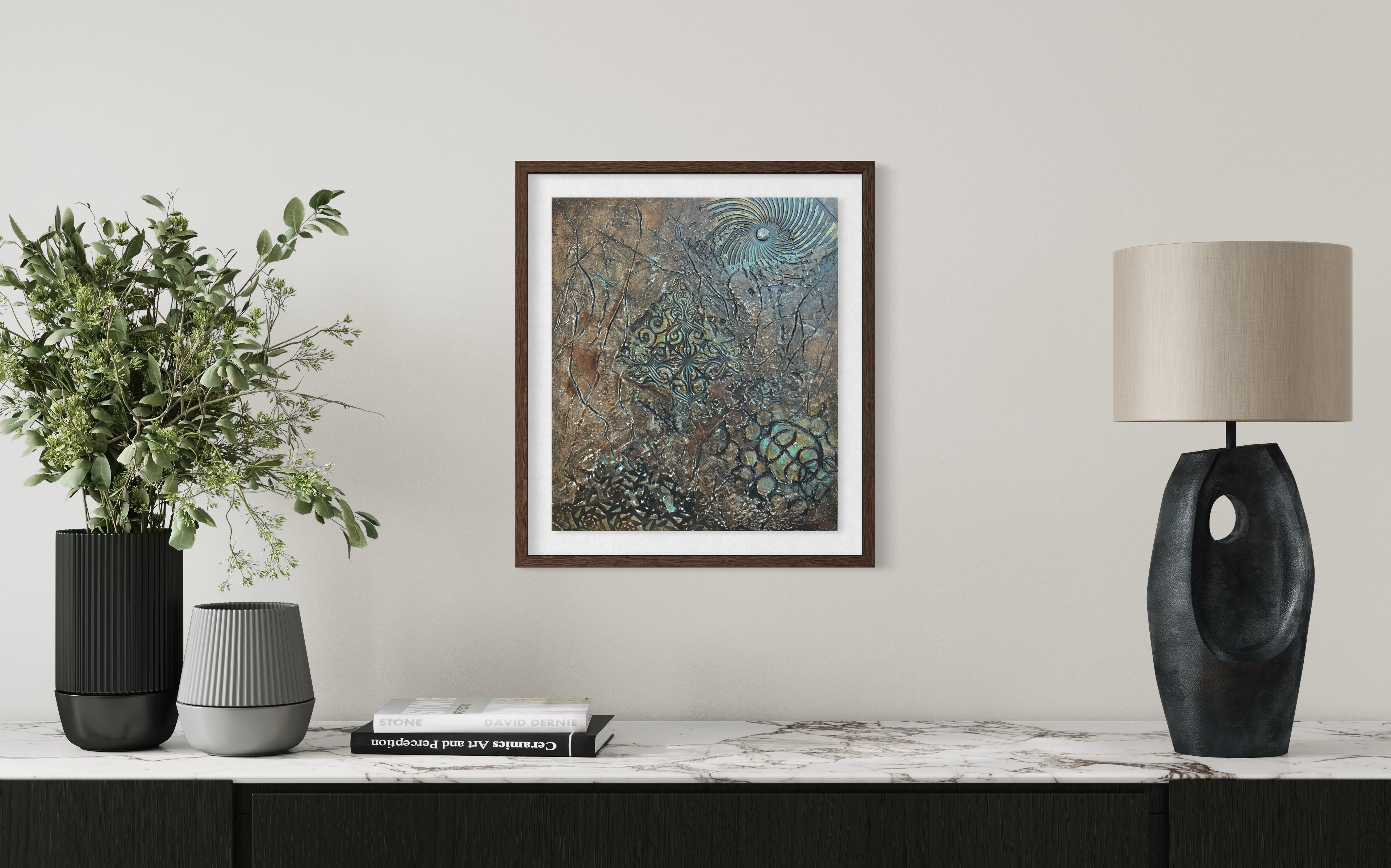
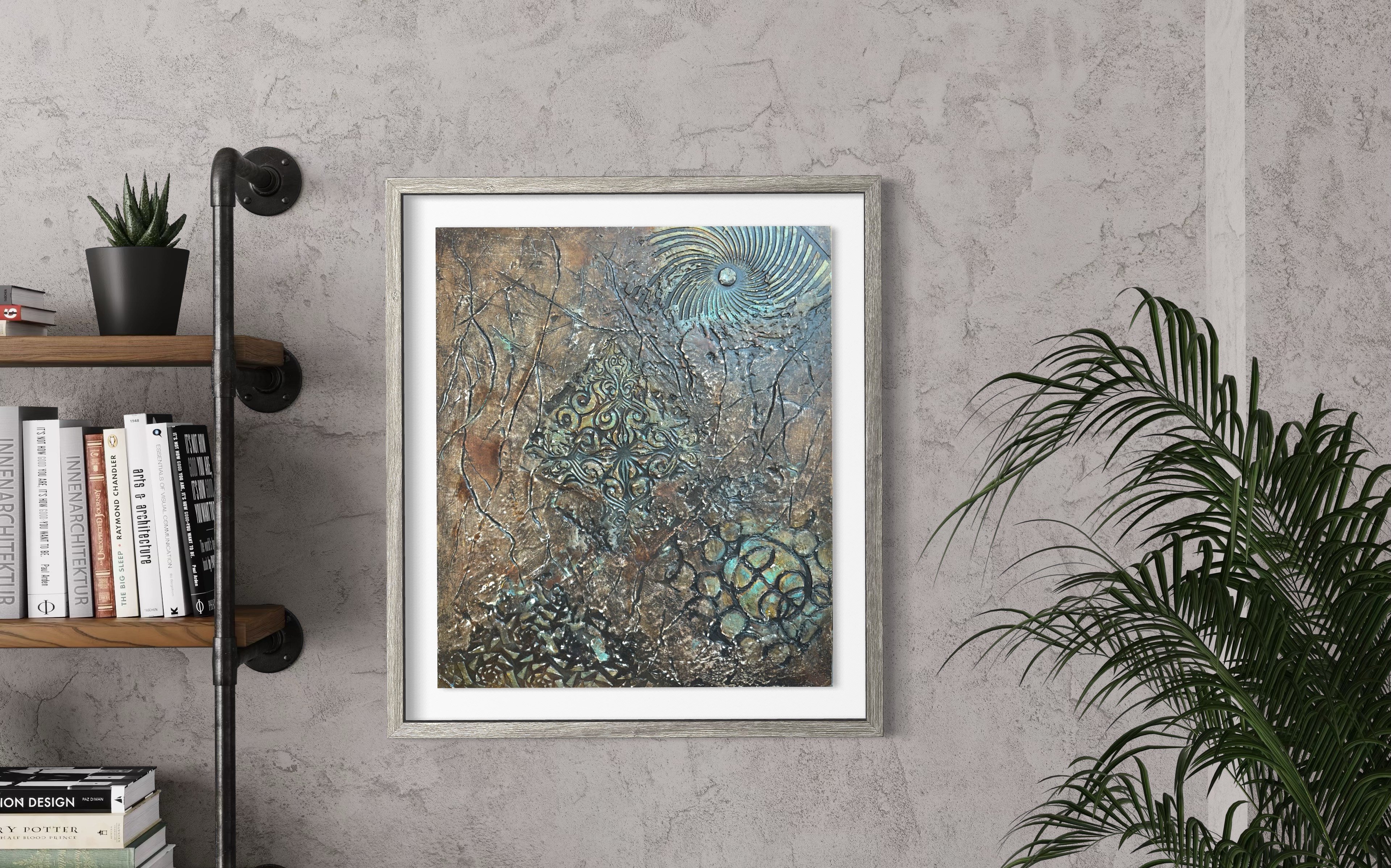
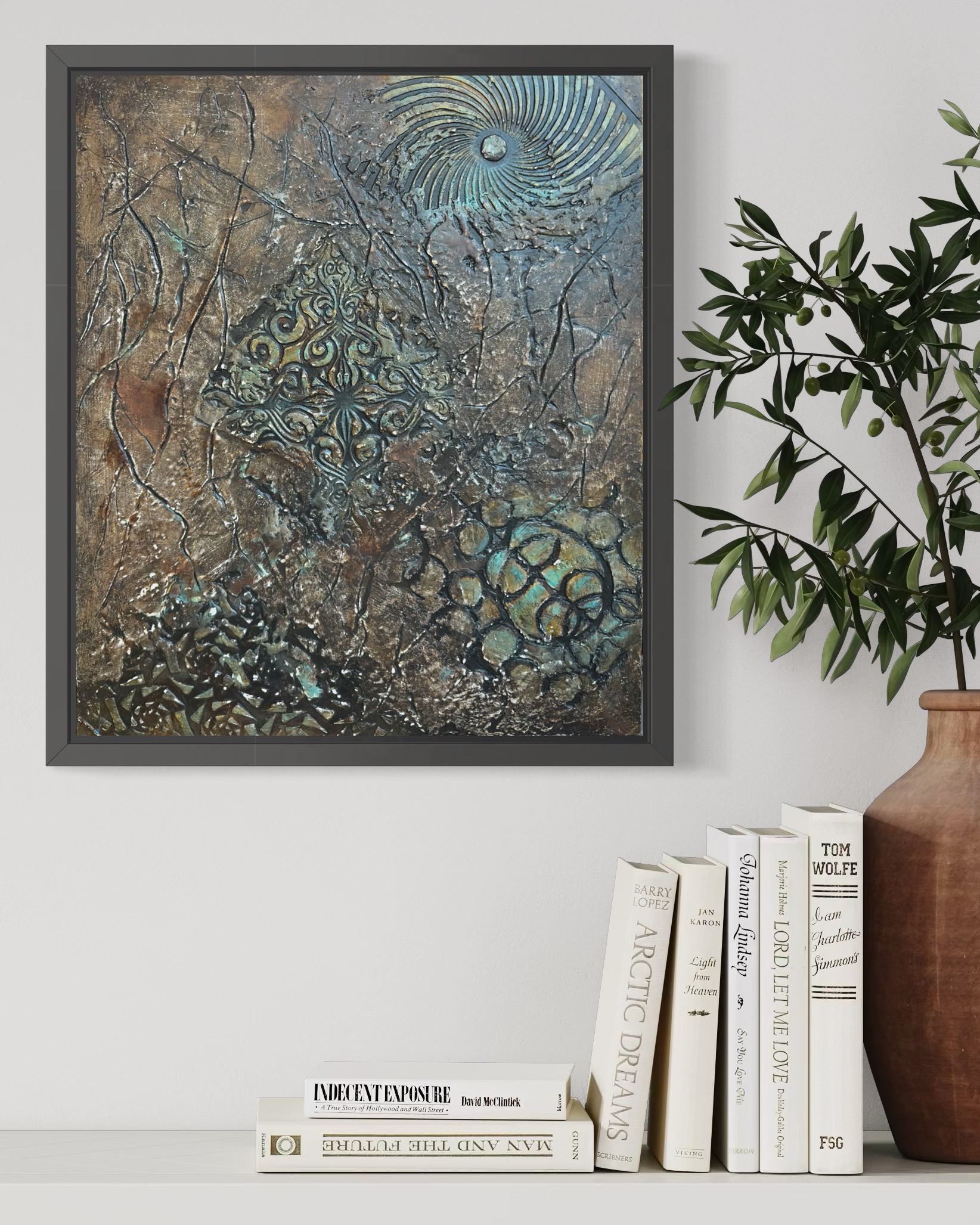
비평
"Everyone Knew the Line": Junsung Kim's Ongojisin
A Critical Assessment
The work announces itself before you see it: "Back to when everyone knew the line. Back to when everyone kept it." This tagline—part lament, part accusation—frames Junsung Kim's Ongojisin (2023–2025) not as neutral aesthetic object but as argument materialized in paint and paste.
Surface as Archive
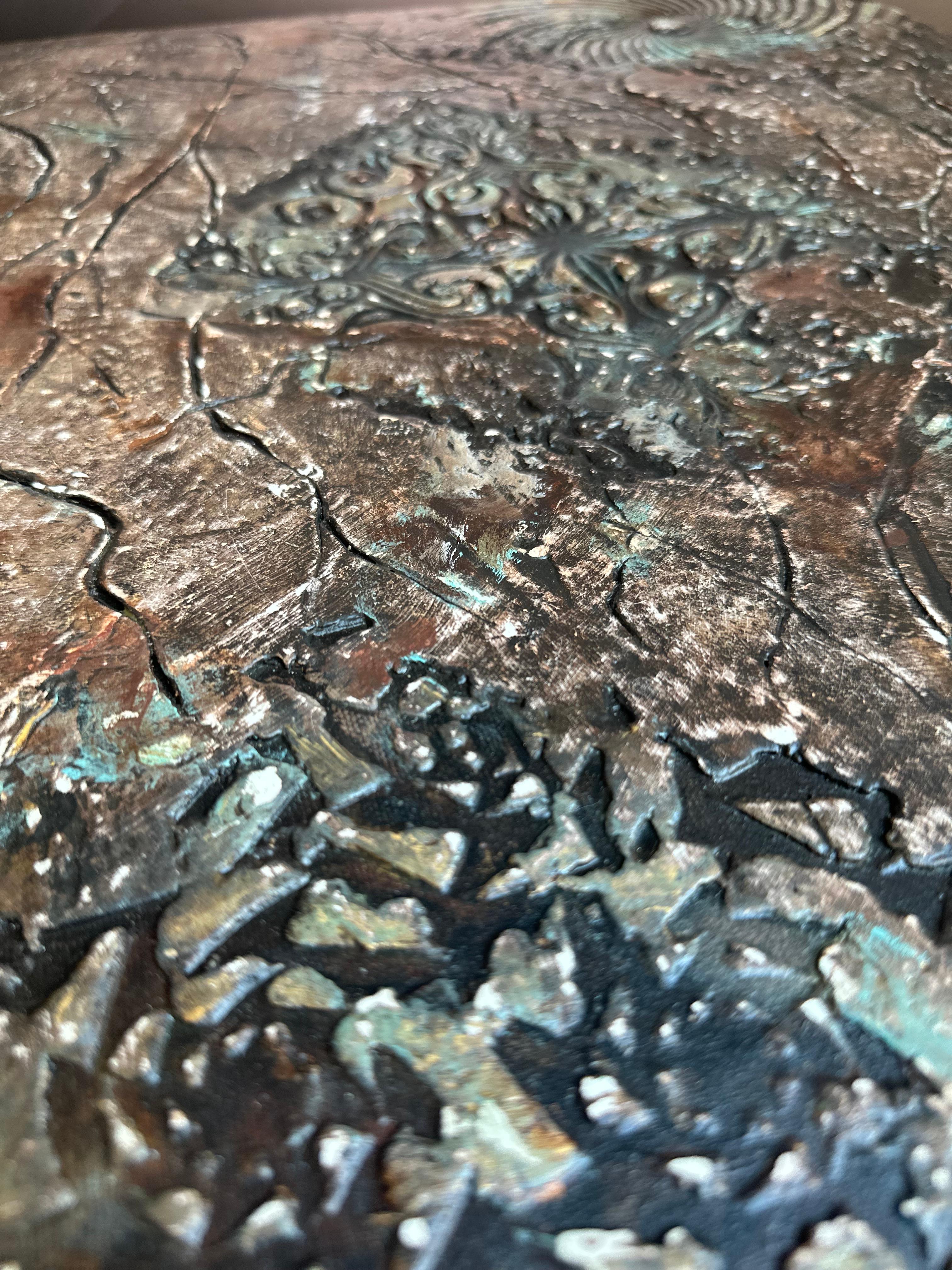
Stand before the canvas and what registers first is texture as violence. The bronze and umber field reads as terrain that has been worked, abandoned, then savagely reworked. Modeling paste built up in 2023 was ground down in 2025—not gently smoothed but abraded, leaving scratches that catch light like scars. This is not the dignified patina of age but evidence of the artist's hand returning, compulsively, to what remained unresolved.
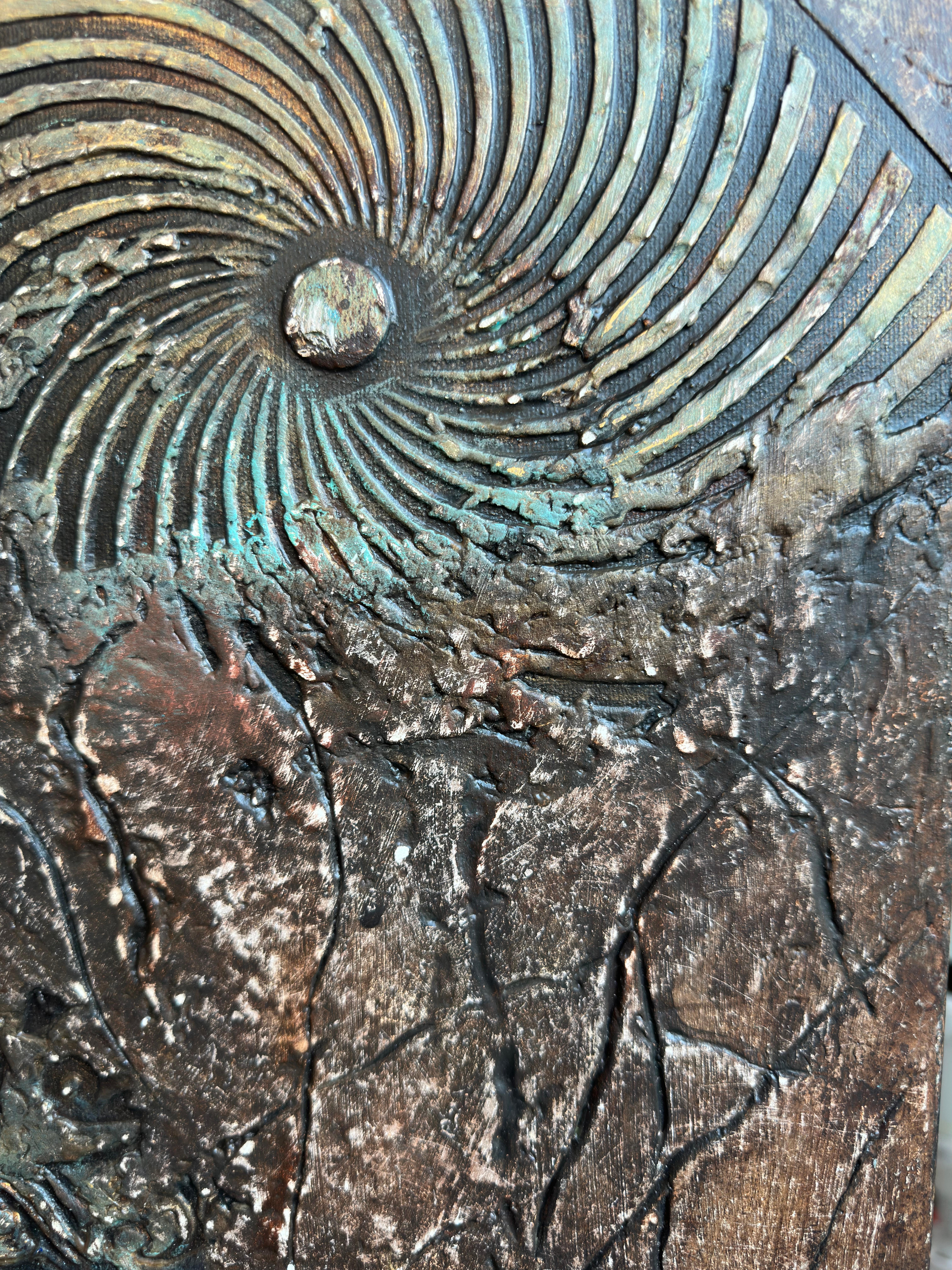
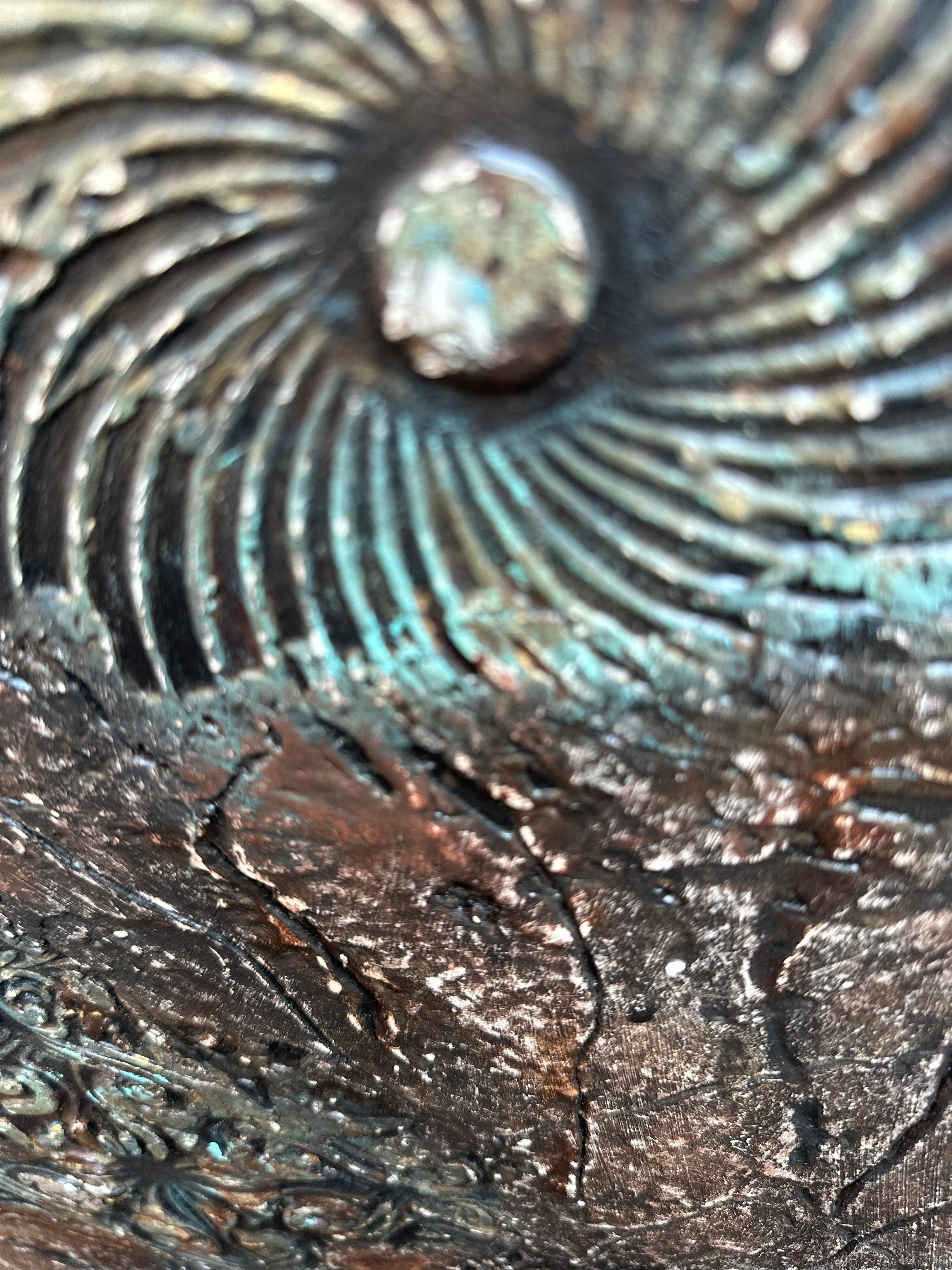
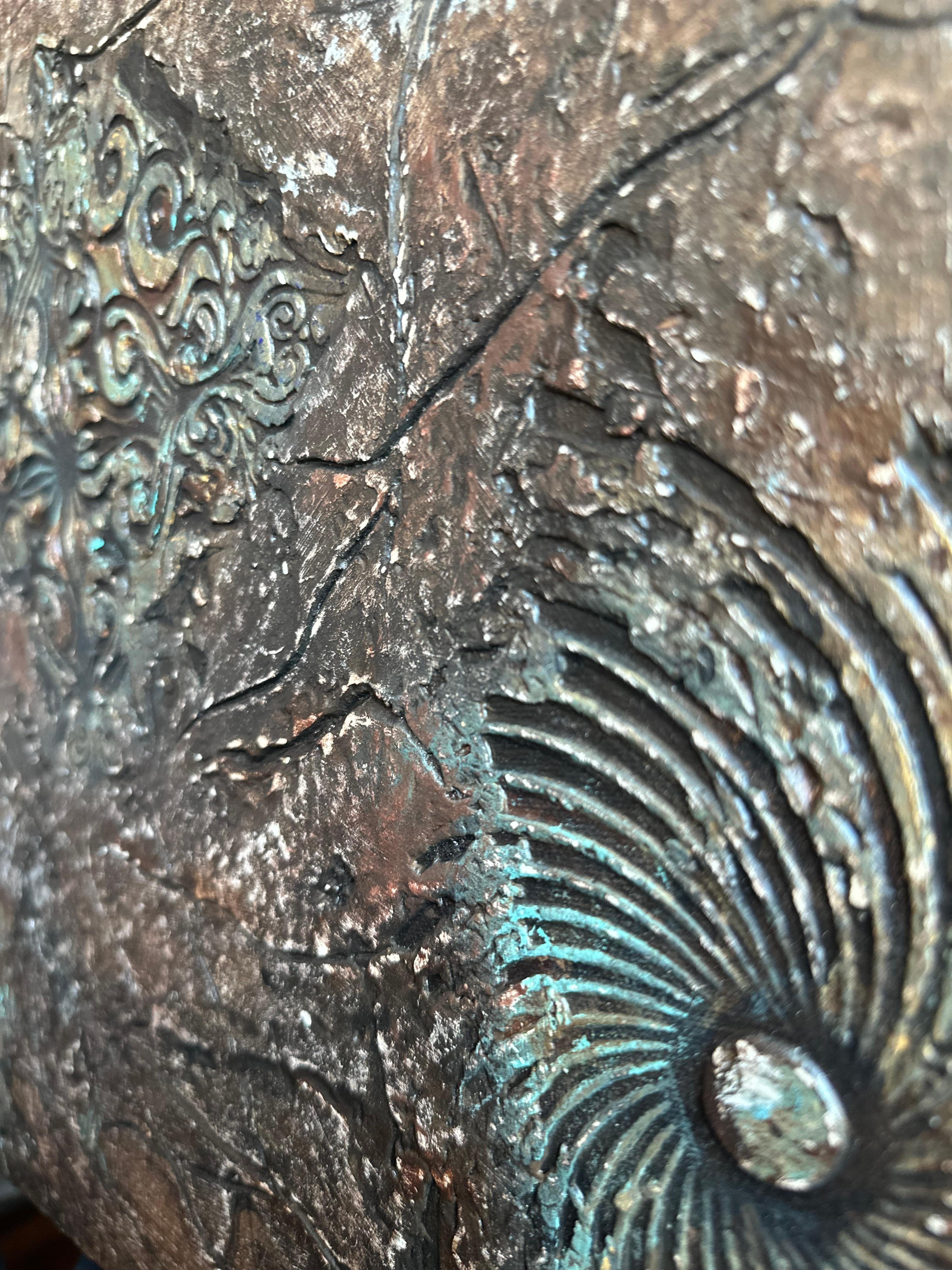
The surface divides into competing systems. Upper right: a spiral of concentric grooves pulling the eye into vortical recession. This formal device enacts the work's titular principle—ongojisin, warming the old to know the new—as spatial experience rather than abstract concept. We return to the same point but at different depths. Time becomes topology.
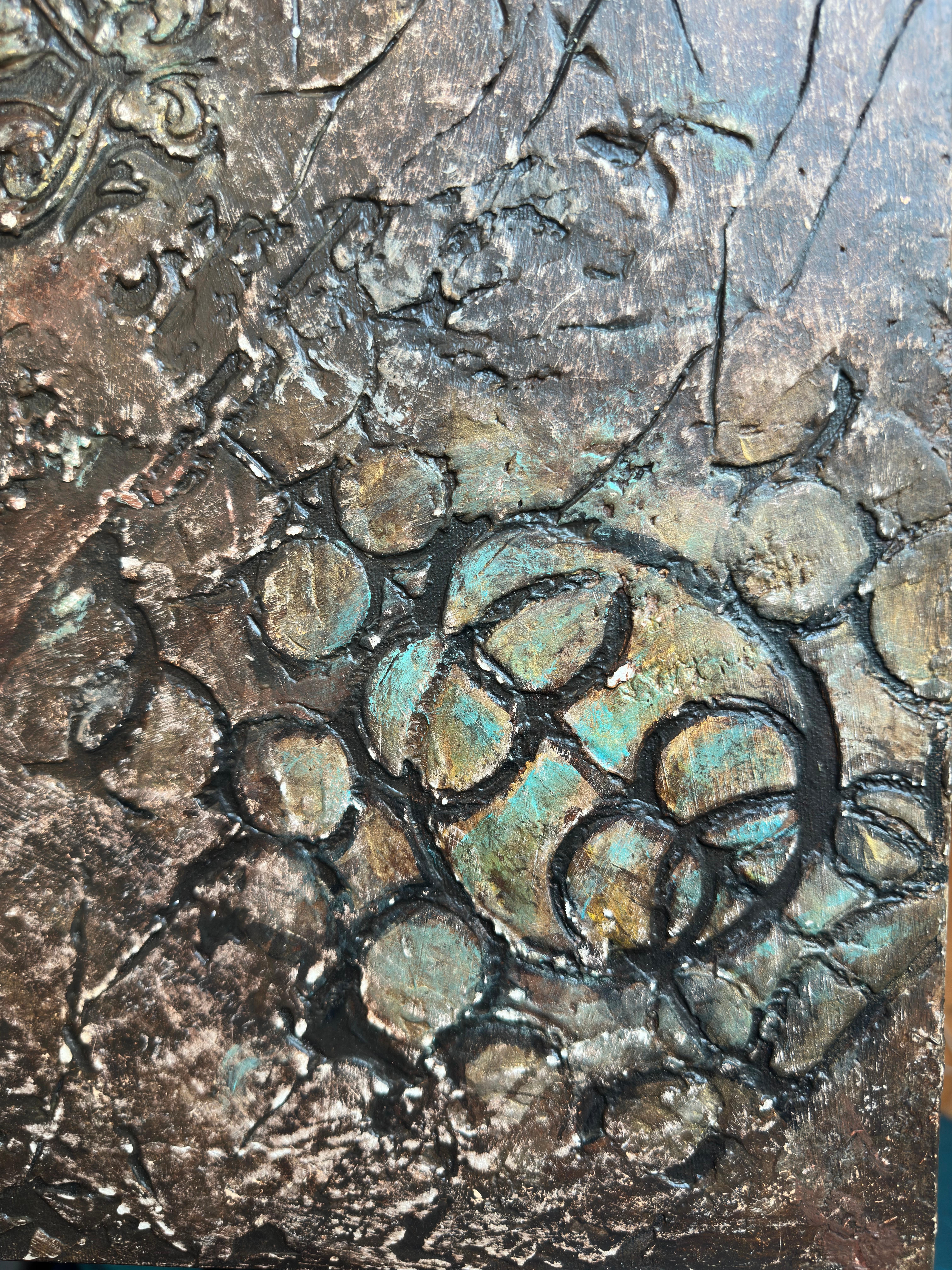
Lower right: cellular forms cluster like biological specimens under magnification or settlements viewed from altitude. The scalar ambiguity matters. These bubble-like spheres, outlined in black with turquoise and gold interiors, refuse stable reading. Are they microscopic or macroscopic? Growing or decaying? The work insists we cannot stabilize the image, cannot settle into comfortable distance.
And center: the medallion. Ornate stencil forms—baroque scrollwork, symmetrical arabesques—polished to golden luminosity and sealed beneath varnish. Against the surrounding field of oxidation and fracture, this central structure possesses geometric integrity that feels archaeological. Not decoration but excavation's prize: the form that endures when everything built upon it collapses.
The Collision of Registers
The work's power derives from registral dissonance. The eroded field speaks the language of abstract expressionism—gestural, atmospheric, concerned with surface as event. The medallion speaks neoclassical clarity—symmetry, order, decorative tradition. These languages should not coexist; their collision generates the work's friction.
Traditional criticism might read this as compositional failure, as the artist unable to commit to a coherent visual vocabulary. But the dissonance is the point. Kim stages collision between erosion and structure, chaos and order, forgetting and recovery. The work does not resolve this tension because the tension is the content.
Consider how the verdigris operates. This blue-green oxidation blooming in cracks could signify natural aging, the romance of ruins, picturesque decay. But positioned against the aggressively sanded surface—those visible abrasions testifying to recent, violent intervention—the oxidation reads differently. Not nature taking its course but neglect with consequences. The work distinguishes between time's inevitable passage and deliberate abandonment.
Archaeology vs. Aestheticization
Here the work encounters its central risk. By making erosion beautiful—and it is beautiful, those bronze tones glowing beneath turquoise accents—does Kim aestheticize what should remain uncomfortable? Does the polished medallion function as formal resolution, allowing the viewer to exit satisfied that order has been restored?
The work resists this reading through material honesty. The sanding marks remain visible. The cracks propagate unpredictably. The oxidation refuses containment. Even the golden medallion, for all its clarity, sits within rather than above the eroded field. It has been excavated, not imported. The work insists: restoration is not return to pristine origins but recovery of structures that bear marks of burial.
This matters because it refuses the conservative fantasy that we can simply reverse time, that going "back to when everyone knew the line" means erasing everything that happened since. The work admits: time has passed, damage has occurred, corrosion has spread. Restoration will not erase these facts but must work through them.
The Line Itself
What is the line? Kim's background note provides specific content—separation of powers, electoral integrity, boundaries between religious and state authority. But the work itself operates through strategic vagueness. The medallion's geometric forms could represent anything: legal principles, social contracts, architectural foundations, musical notation.
This vagueness is not evasion but method. By refusing to illustrate specific principles, the work becomes structurally rather than topically political. It does not argue for particular policies but insists that some foundational agreements must exist for any collective life to function. The work's claim is formal: that societies require structure, that not all boundaries are oppressive, that some lines deserve defense.
Critics from the left might read this as conservative—valorizing order over justice, structure over liberation. The work has no rebuttal to this critique except its own material evidence: the eroded field testifying that when all structure dissolves, what emerges is not freedom but proliferating violences masquerading as chaos.
Process as Argument
The work's temporal structure—2023 inception, abandonment, 2025 return—enacts its philosophy. Kim does not start fresh but returns to what was left incomplete. The act of sanding becomes diagnostic archaeology: removing accumulated layers to reveal what lies beneath. This process-based argument proposes that genuine renewal requires not innovation but excavation, not imagination but recovery of what has been obscured.
Yet this raises questions the work cannot answer. What if nothing valuable lies beneath? What if the "golden lines" were always exclusionary, their clarity purchased through violence against those outside the frame? The work does not address who counts as "everyone" in the phrase "everyone knew the line." This absence might be strategic ambiguity or unexamined privilege.
Scale and Ambition
At 53 × 45.5 cm, Ongojisin is intimate rather than monumental. This scale matters. The work does not demand cathedral reverence but close inspection—the viewer must approach to see the sanding marks, the oxidation's subtle gradations, the medallion's intricate detail. Intimacy becomes method: the work argues that recovery of foundational principles requires patient, close attention rather than grand gestures.
This modesty distinguishes Kim's approach from bombastic political art that announces its urgency through scale and spectacle. Ongojisin whispers where others shout. Whether this restraint constitutes sophistication or evasion depends on whether you believe the work's formal qualities justify its political claims.
Assessment
Ongojisin succeeds as material argument about restoration's possibility and necessity. The work demonstrates rather than illustrates its claims, performing archaeological recovery through literal surface excavation. The collision of eroded field and polished center creates productive tension that refuses easy resolution.
The work's limitations stem from what it cannot specify. The medallion glows golden, but what principles does it represent? The tagline invokes a time when "everyone knew the line," but who was excluded from that consensus? These absences might be strategic—allowing the work to transcend specific context—or symptomatic of perspectives the artist has not interrogated.
Ultimately, the work bets that in moments when all structure seems corrupt, insisting that some structures deserve preservation constitutes a radical gesture. Whether this constitutes conservatism or necessary pragmatism depends on judgments the work invites but cannot settle. What remains is the image: cracked field, golden center, and the question of whether foundations truly persist beneath accumulated debris—or whether we simply need to believe they do.
"모두가 선을 알았다": 김준성의 온고지신
비평적 평가
작품은 당신이 보기 전에 스스로를 알린다. "모두가 선을 알던 시절로. 선을 지키던 시절로." 이 문구—반은 탄식, 반은 고발—는 김준성의 온고지신(2023–2025)을 중립적 미학 대상이 아니라 페인트와 페이스트로 물질화된 논증으로 프레이밍한다.
아카이브로서의 표면
캔버스 앞에 서면 가장 먼저 등록되는 것은 폭력으로서의 질감이다. 청동과 황갈색 들판은 작업되고, 버려지고, 그 다음 야만적으로 재작업된 지형으로 읽힌다. 2023년에 쌓아 올린 모델링 페이스트가 2025년에 갈려 내려갔다—부드럽게 매끄럽게 된 것이 아니라 마모되어, 흉터처럼 빛을 붙잡는 긁힌 자국들을 남겼다. 이것은 품위 있는 세월의 파티나가 아니라 미해결 상태로 남은 것으로 강박적으로 돌아간 작가의 손의 증거다.
표면은 경쟁하는 체계들로 나뉜다. 우측 상단: 시선을 소용돌이치는 후퇴 속으로 끌어당기는 동심원 홈들의 나선. 이 형식적 장치는 작품의 제목 원리—온고지신, 옛것을 데워 새것을 안다—를 추상 개념이 아니라 공간적 경험으로 실행한다. 우리는 같은 지점으로 돌아가지만 다른 깊이에서. 시간은 위상학이 된다.
우측 하단: 현미경 아래 생물학적 표본처럼 또는 고도에서 본 정착지처럼 군집을 이루는 세포 형태들. 척도의 모호성이 중요하다. 검은색으로 윤곽이 그려지고 청록색과 금빛 내부를 가진 이 기포 같은 구체들은 안정적 읽기를 거부한다. 이것들은 미시적인가 거시적인가? 성장하는가 부패하는가? 작품은 우리가 이미지를 안정화할 수 없고, 편안한 거리에 정착할 수 없다고 주장한다.
그리고 중앙: 메달리온. 화려한 스텐실 형태들—바로크 스크롤워크, 대칭적 아라베스크—금빛 광채로 닦이고 바니시 아래 봉인되어. 산화와 균열의 주변 들판에 대비하여, 이 중앙 구조는 고고학적으로 느껴지는 기하학적 무결성을 소유한다. 장식이 아니라 발굴의 전리품: 그 위에 세워진 모든 것이 무너질 때 견뎌내는 형태.
레지스터의 충돌
작품의 힘은 레지스터 불협화음에서 나온다. 침식된 들판은 추상표현주의의 언어를 말한다—제스처적, 분위기적, 사건으로서의 표면에 관심. 메달리온은 신고전주의적 명료함을 말한다—대칭, 질서, 장식 전통. 이 언어들은 공존해서는 안 된다. 그들의 충돌이 작품의 마찰을 생성한다.
전통적 비평은 이것을 구성적 실패로, 일관된 시각 어휘에 헌신하지 못한 작가로 읽을 수 있다. 그러나 불협화음이 요점이다. 김준성은 침식과 구조, 혼돈과 질서, 망각과 회복 사이의 충돌을 무대화한다. 작품은 이 긴장을 해소하지 않는다. 왜냐하면 긴장이 내용이기 때문이다.
청록색 녹이 어떻게 작동하는지 고려해보라. 균열 속에서 번지는 이 청록색 산화는 자연적 노화, 폐허의 낭만, 그림 같은 부식을 의미할 수 있다. 그러나 공격적으로 샌딩된 표면—최근의, 폭력적 개입을 증언하는 가시적 마모—에 대비하여 위치할 때, 산화는 다르게 읽힌다. 자연이 그 과정을 밟는 것이 아니라 결과를 동반한 방치. 작품은 시간의 불가피한 경과와 의도적 유기를 구별한다.
고고학 대 심미화
여기서 작품은 중심적 위험과 만난다. 침식을 아름답게 만듦으로써—그리고 그것은 아름답다, 청록 악센트 아래 빛나는 청동 톤들—김준성은 불편하게 남아야 할 것을 심미화하는가? 닦인 메달리온은 형식적 해결로 기능하여, 관객이 질서가 복원되었다고 만족하며 나갈 수 있게 하는가?
작품은 물질적 정직함을 통해 이 읽기를 저항한다. 샌딩 자국들은 가시적으로 남는다. 균열들은 예측 불가능하게 증식한다. 산화는 봉쇄를 거부한다. 심지어 금빛 메달리온조차, 그 모든 명료함에도, 침식된 들판 위가 아니라 안에 앉아 있다. 그것은 수입된 것이 아니라 발굴되었다. 작품은 주장한다: 복원은 깨끗한 기원으로의 귀환이 아니라 매장의 흔적을 담은 구조의 회복이다.
이것이 중요한 이유는 우리가 단순히 시간을 역전시킬 수 있다는, "모두가 선을 알던 시절로" 돌아간다는 것이 그 이후 일어난 모든 것을 지운다는 보수적 환상을 거부하기 때문이다. 작품은 인정한다: 시간은 지나갔고, 손상이 발생했으며, 부식이 퍼졌다. 복원은 이 사실들을 지우지 않고 그것들을 통해 작업해야 한다.
선 그 자체
선이란 무엇인가? 김준성의 배경 노트는 구체적 내용을 제공한다—권력분립, 선거 무결성, 종교적 권위와 국가 기구 사이의 경계. 그러나 작품 자체는 전략적 모호함을 통해 작동한다. 메달리온의 기하학적 형태들은 무엇이든 나타낼 수 있다: 법적 원칙, 사회 계약, 건축 기초, 음악 표기.
이 모호함은 회피가 아니라 방법이다. 특정 원칙을 예시하기를 거부함으로써, 작품은 주제적으로가 아니라 구조적으로 정치적이 된다. 특정 정책을 주장하지 않고 어떤 기초적 합의가 어떤 집단적 삶이 기능하기 위해 존재해야 한다고 주장한다. 작품의 주장은 형식적이다: 사회가 구조를 요구하며, 모든 경계가 억압적인 것은 아니고, 어떤 선들은 방어될 가치가 있다는 것.
좌파 비평가들은 이것을 보수적으로—정의보다 질서를, 해방보다 구조를 가치 있게 여기는—읽을 수 있다. 작품은 자신의 물질적 증거 외에 이 비판에 대한 반박이 없다: 모든 구조가 용해될 때, 나타나는 것은 자유가 아니라 혼돈으로 가장하는 증식하는 폭력들이라고 증언하는 침식된 들판.
과정으로서의 논증
작품의 시간적 구조—2023년 시작, 유기, 2025년 귀환—는 그 철학을 실행한다. 김준성은 처음부터 시작하지 않고 불완전하게 남겨진 것으로 돌아간다. 샌딩 행위는 진단적 고고학이 된다: 아래 놓인 것을 드러내기 위해 축적된 층들을 제거하는 것. 이 과정 기반 논증은 진정한 갱신이 혁신이 아니라 발굴을, 상상이 아니라 가려진 것의 회복을 요구한다고 제안한다.
그러나 이것은 작품이 답할 수 없는 질문들을 제기한다. 아래에 가치 있는 것이 아무것도 놓여 있지 않다면? "금빛 선들"이 항상 배제적이었고, 그들의 명료함이 프레임 밖의 사람들에 대한 폭력을 통해 구매되었다면? 작품은 "모두가 선을 알았다"는 구절에서 누가 "모두"로 계산되는지 다루지 않는다. 이 부재는 전략적 모호함일 수도, 검토되지 않은 특권일 수도 있다.
규모와 야심
53 × 45.5 cm로, 온고지신은 기념비적이기보다 친밀하다. 이 규모가 중요하다. 작품은 성당 같은 경외를 요구하지 않고 면밀한 조사를—관객은 샌딩 자국들, 산화의 미묘한 그라데이션, 메달리온의 복잡한 디테일을 보기 위해 접근해야 한다. 친밀함이 방법이 된다: 작품은 기초 원칙의 회복이 거대한 몸짓이 아니라 인내심 있고 가까운 주의를 요구한다고 주장한다.
이 겸손함은 규모와 스펙터클을 통해 긴급성을 알리는 허세 부리는 정치 예술과 김준성의 접근을 구별한다. 온고지신은 다른 이들이 외치는 곳에서 속삭인다. 이 자제가 정교함을 구성하는지 회피를 구성하는지는 당신이 작품의 형식적 특질들이 그 정치적 주장들을 정당화한다고 믿는지에 달려 있다.
평가
온고지신은 복원의 가능성과 필연성에 관한 물질적 논증으로 성공한다. 작품은 그 주장들을 예시하기보다 입증하며, 문자 그대로의 표면 발굴을 통해 고고학적 회복을 수행한다. 침식된 들판과 닦인 중심의 충돌은 쉬운 해결을 거부하는 생산적 긴장을 만든다.
작품의 한계는 그것이 명시할 수 없는 것에서 나온다. 메달리온은 금빛으로 빛나지만, 그것은 어떤 원칙들을 나타내는가? 문구는 "모두가 선을 알았던" 시기를 호명하지만, 누가 그 합의에서 배제되었는가? 이 부재들은 전략적일 수 있다—작품이 특정 맥락을 초월하도록 허용하는—또는 작가가 검토하지 않은 관점들의 증상일 수 있다.
궁극적으로, 작품은 모든 구조가 부패해 보이는 순간에, 어떤 구조가 보존될 가치가 있다고 주장하는 것이 급진적 몸짓을 구성한다고 내기한다. 이것이 보수주의를 구성하는지 필수적 실용주의를 구성하는지는 작품이 초대하지만 결정할 수 없는 판단들에 달려 있다. 남는 것은 이미지다: 균열진 들판, 금빛 중심, 그리고 기초가 진정으로 축적된 잔해 아래 지속되는지—아니면 우리가 단순히 그렇게 믿을 필요가 있는지의 질문.
'Art > Ag(e)ing Series' 카테고리의 다른 글
| GROOVE AND RIDGE (0) | 2025.12.09 |
|---|---|
| Patterns Begging to Be Buried (0) | 2025.12.03 |
| Spectrum of Gray (0) | 2025.11.20 |
| Life Has No Rehearsal, Only the Live Performance ! (0) | 2025.11.14 |
| DEULCHUM (LIFTING THE VEILS) (1) | 2025.11.11 |