2026. 1. 3. 19:05ㆍArt/Ag(e)ing Series
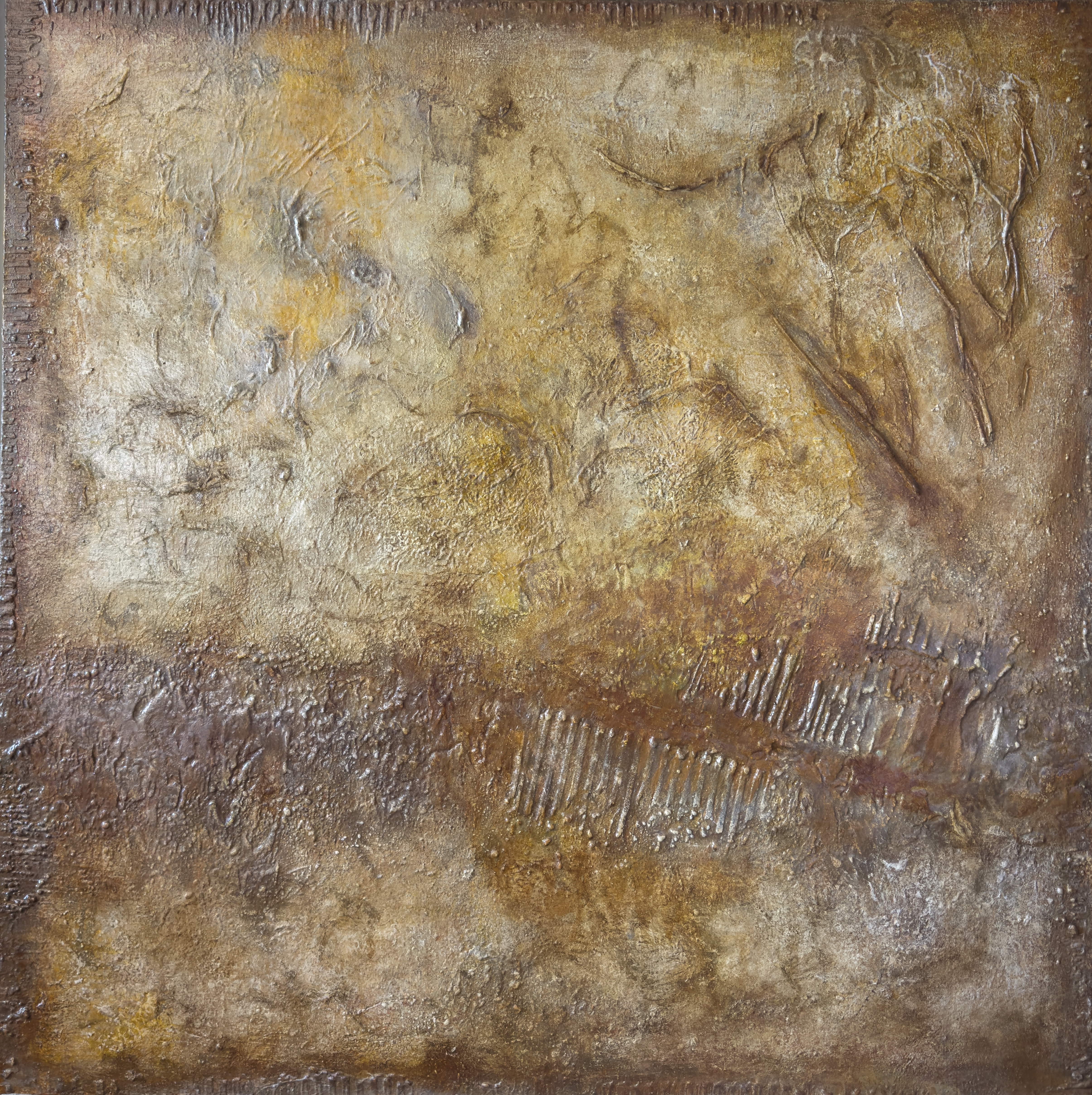
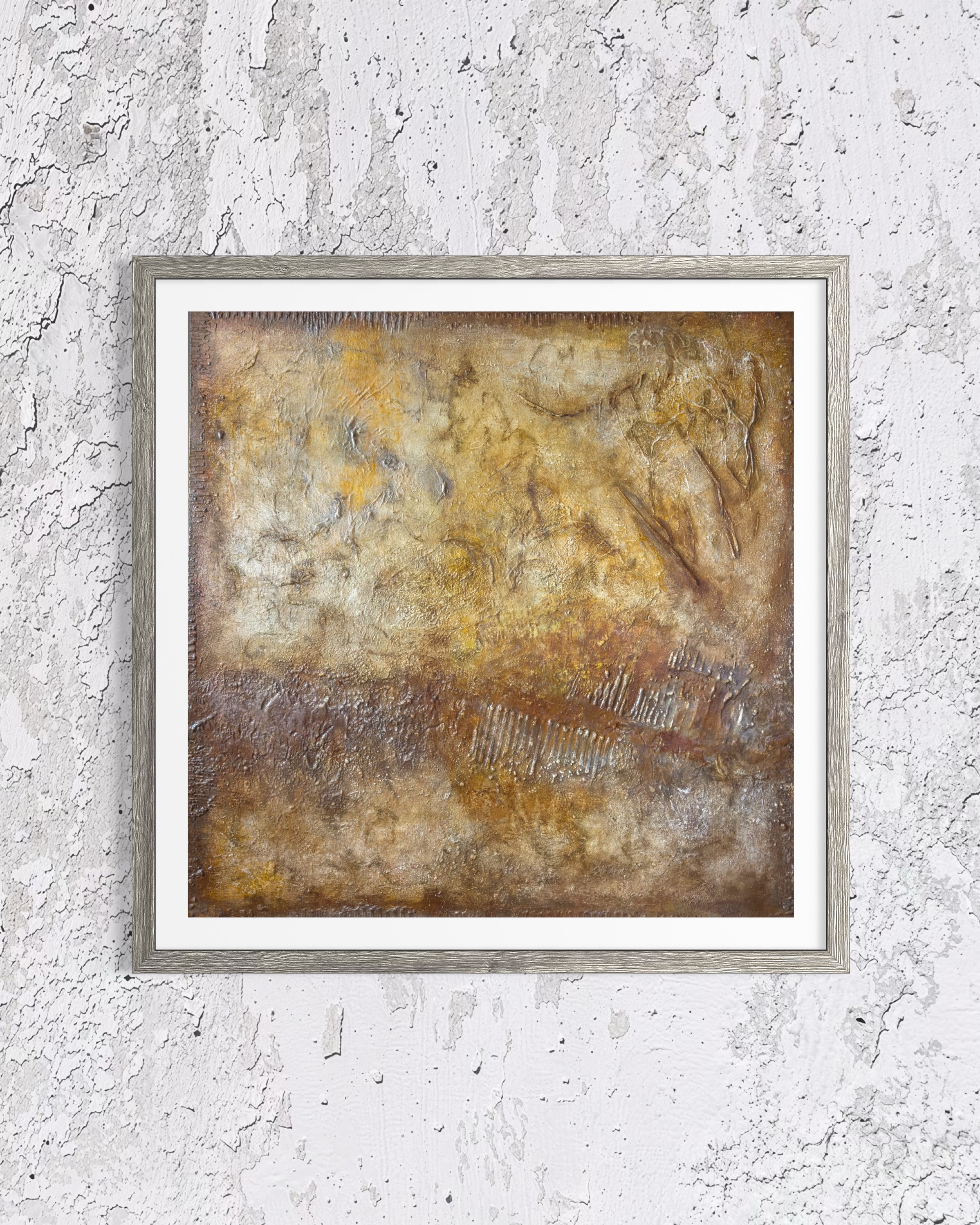
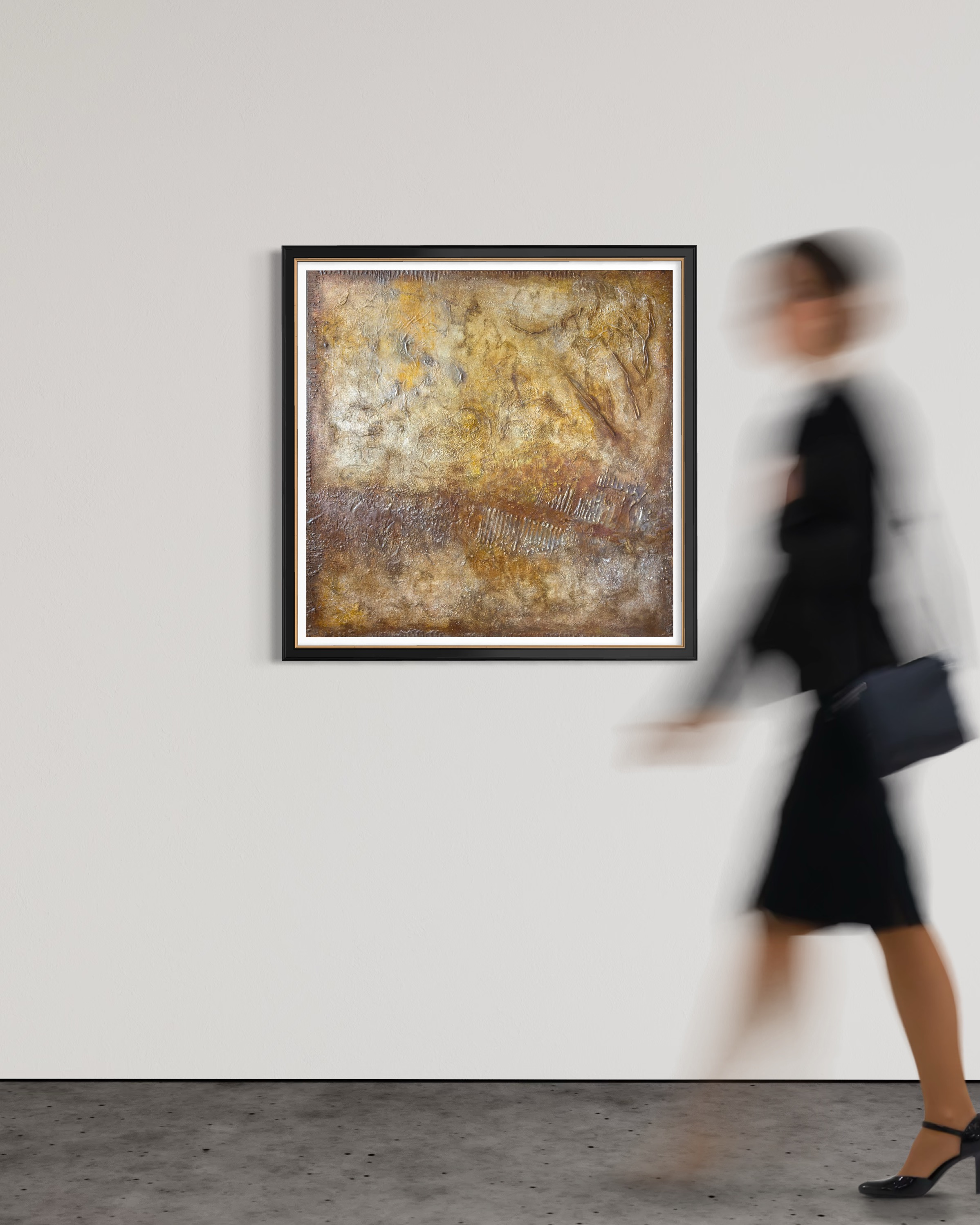
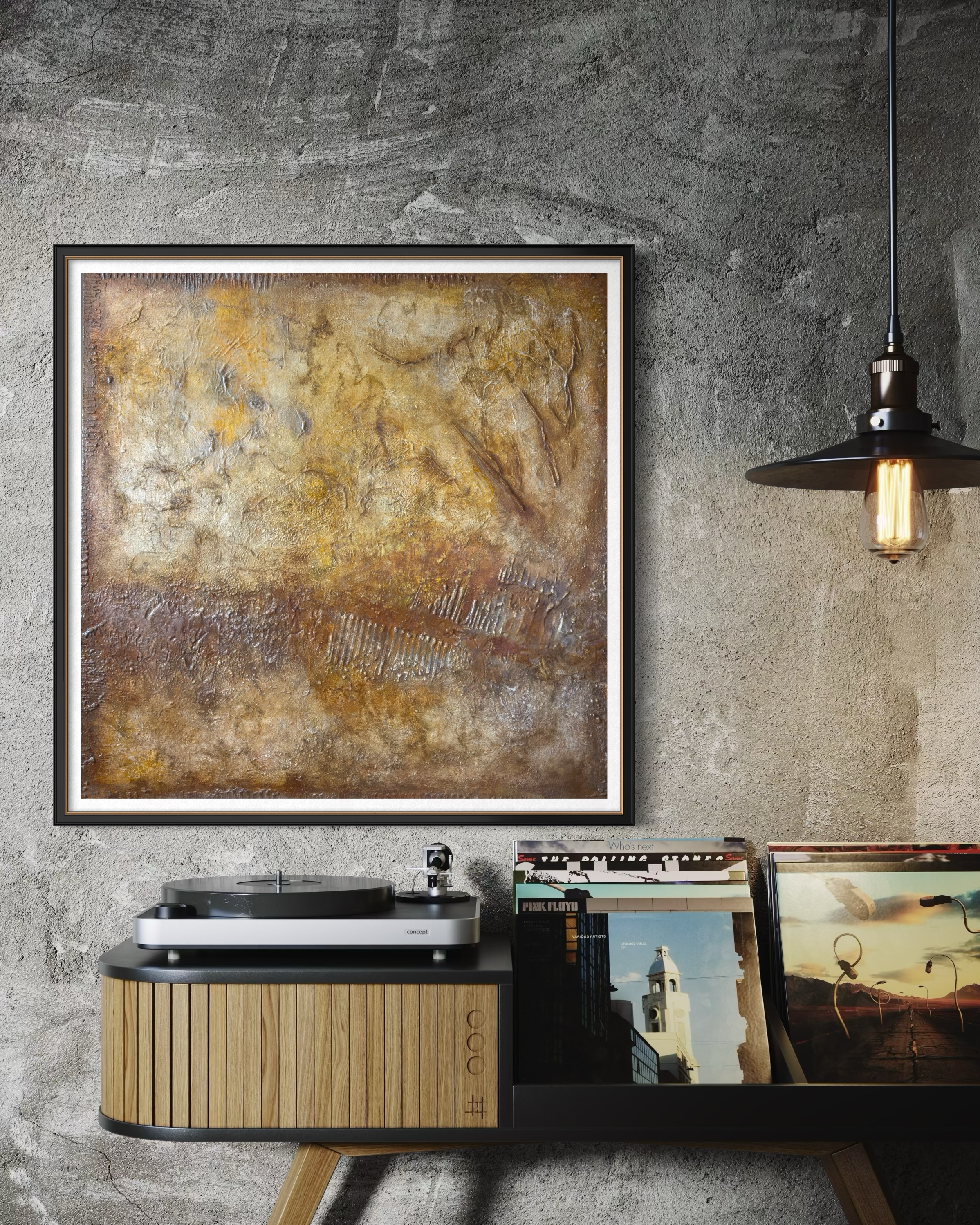
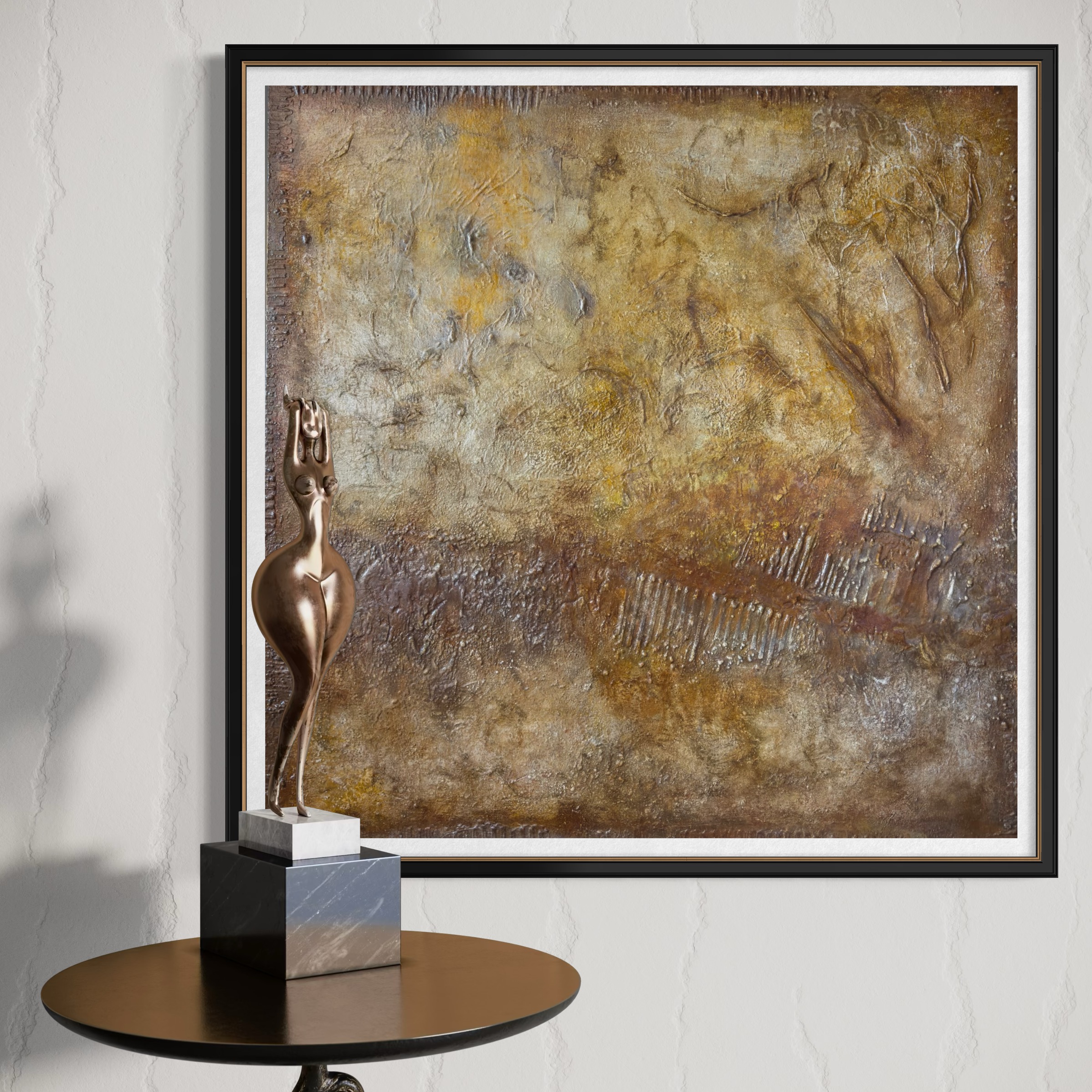
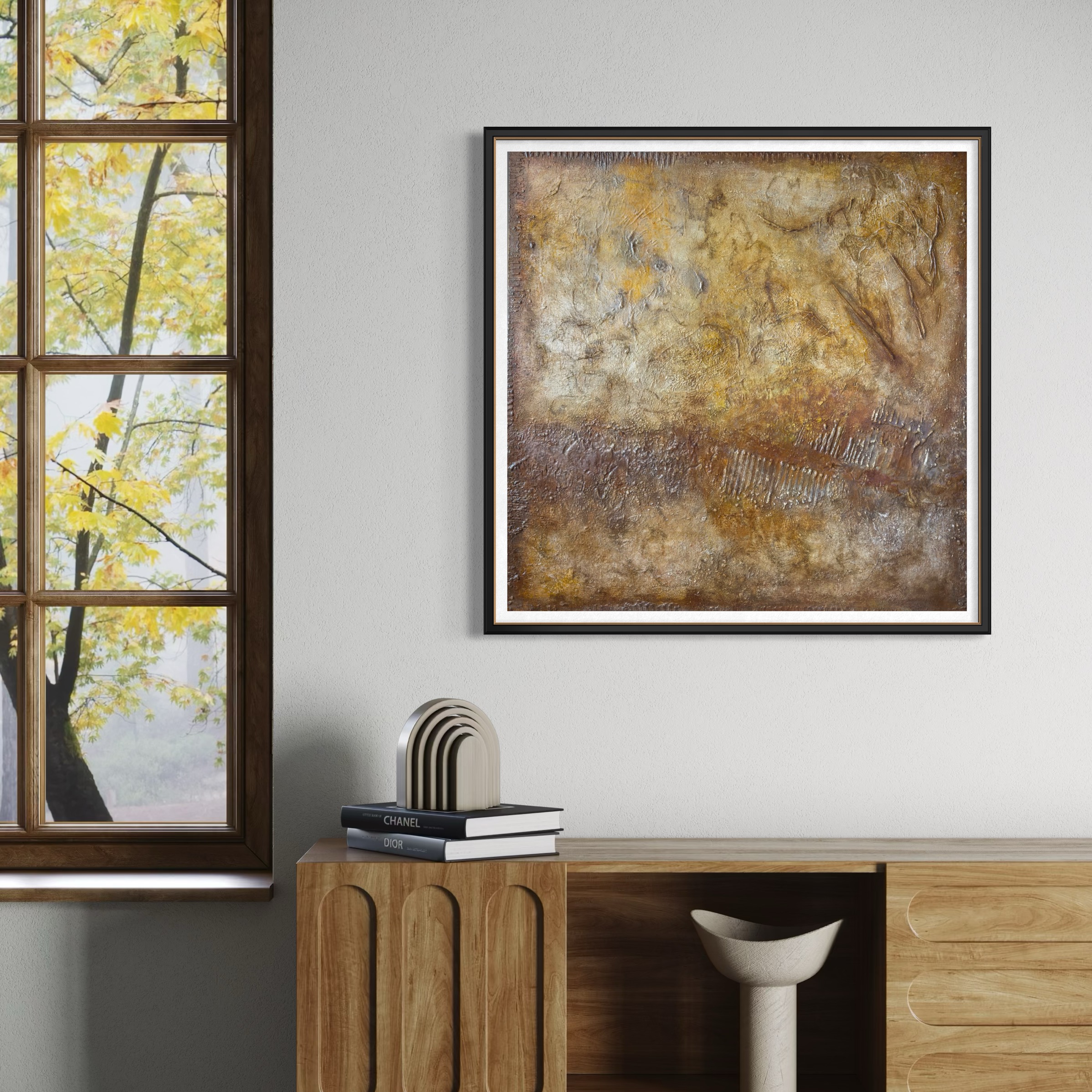
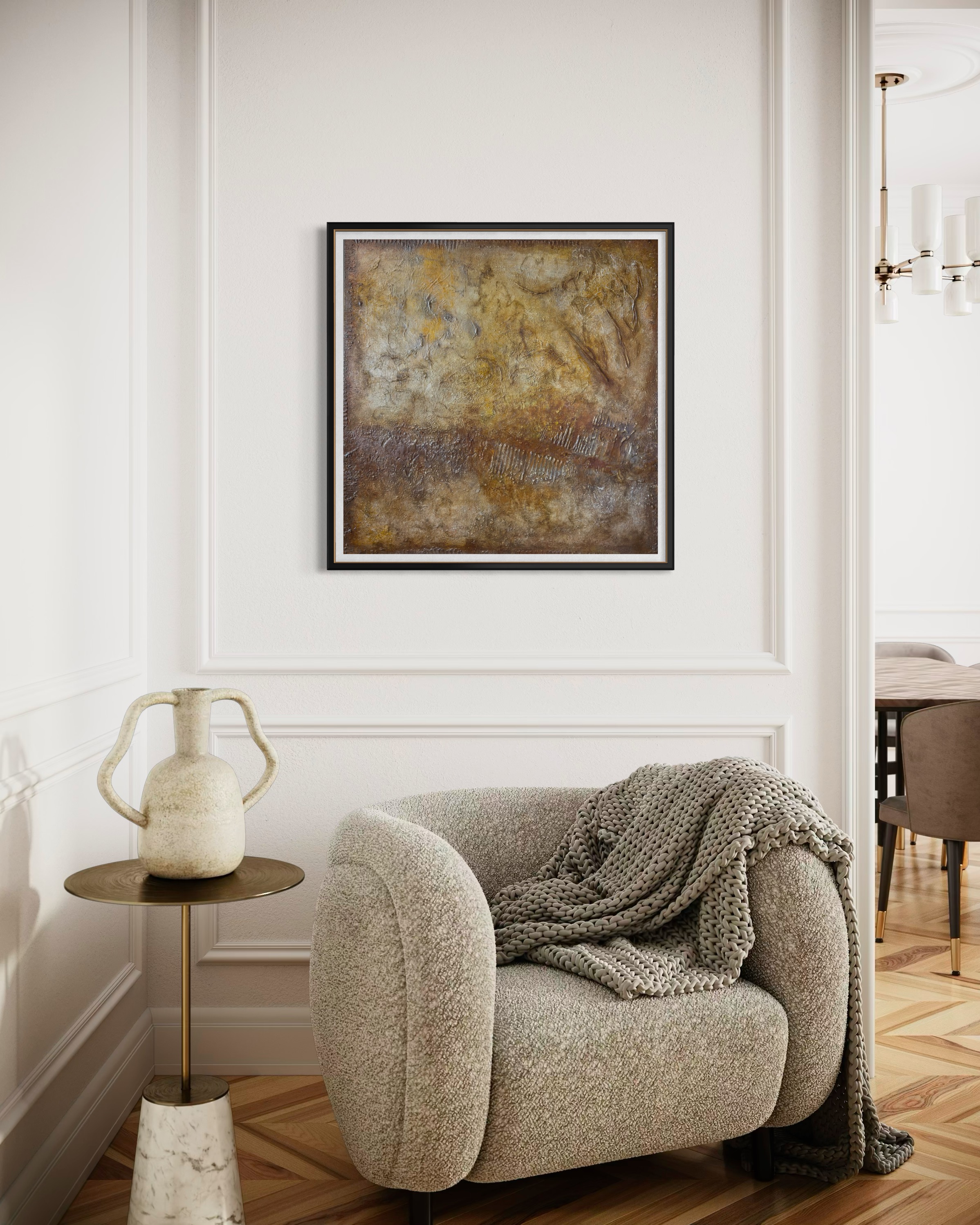
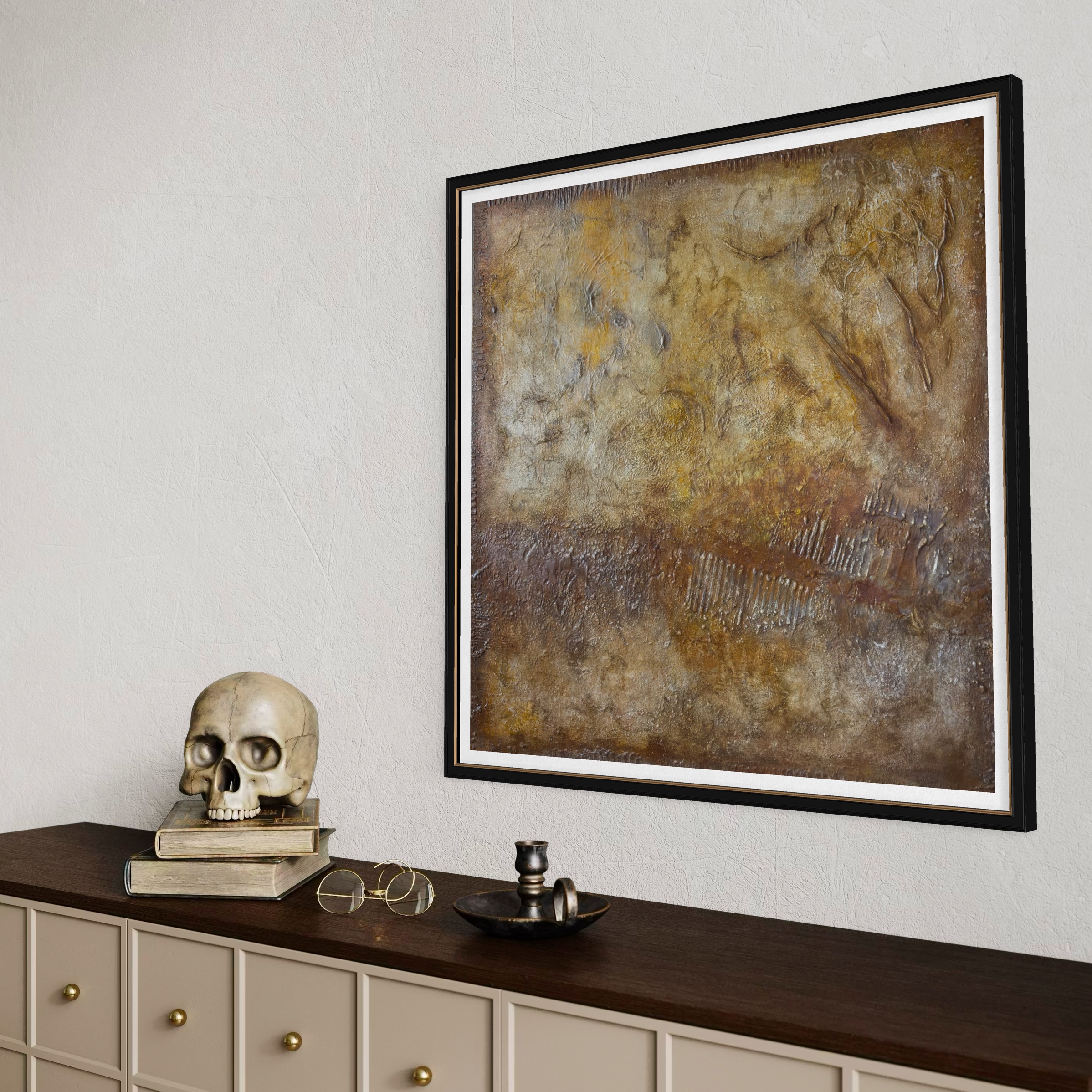
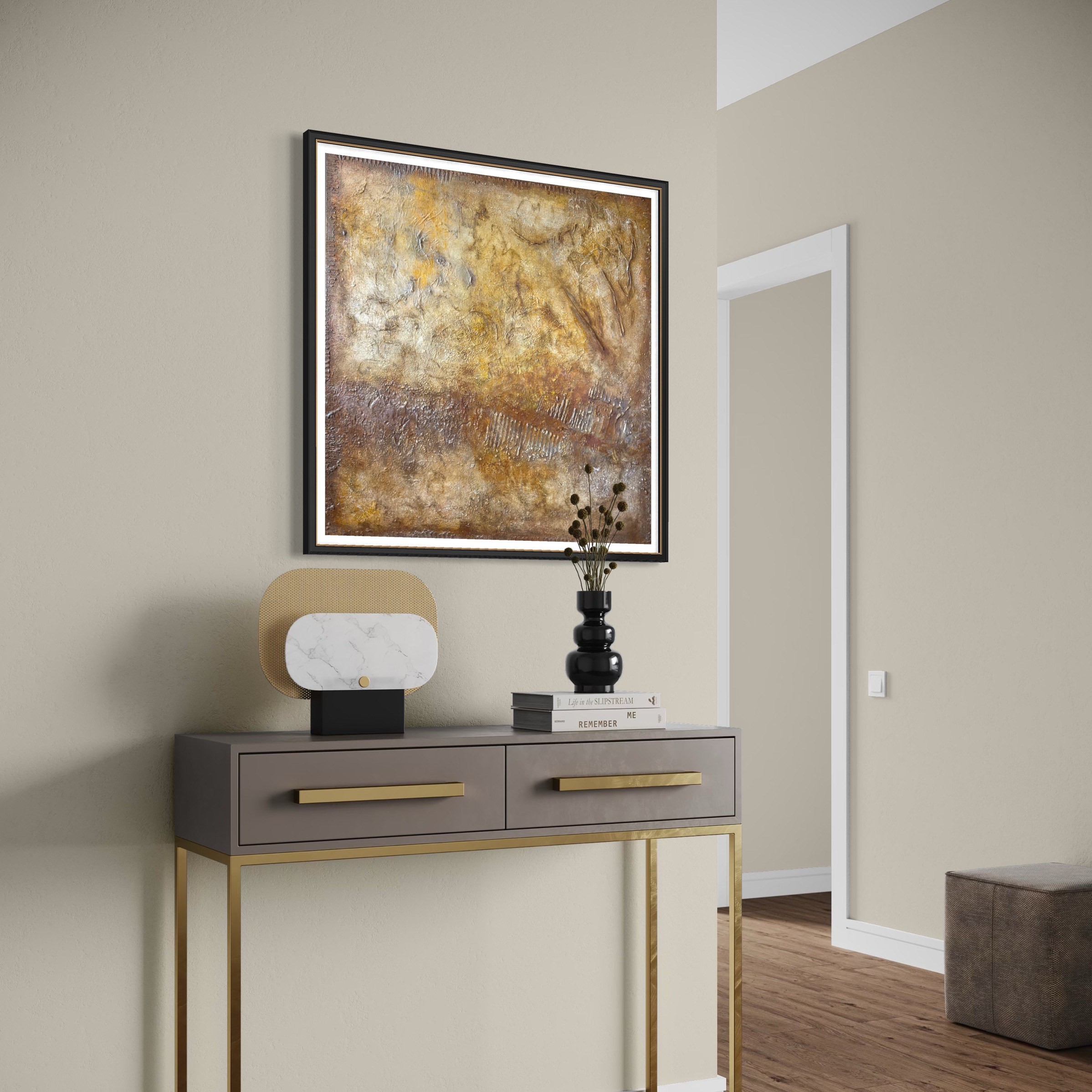
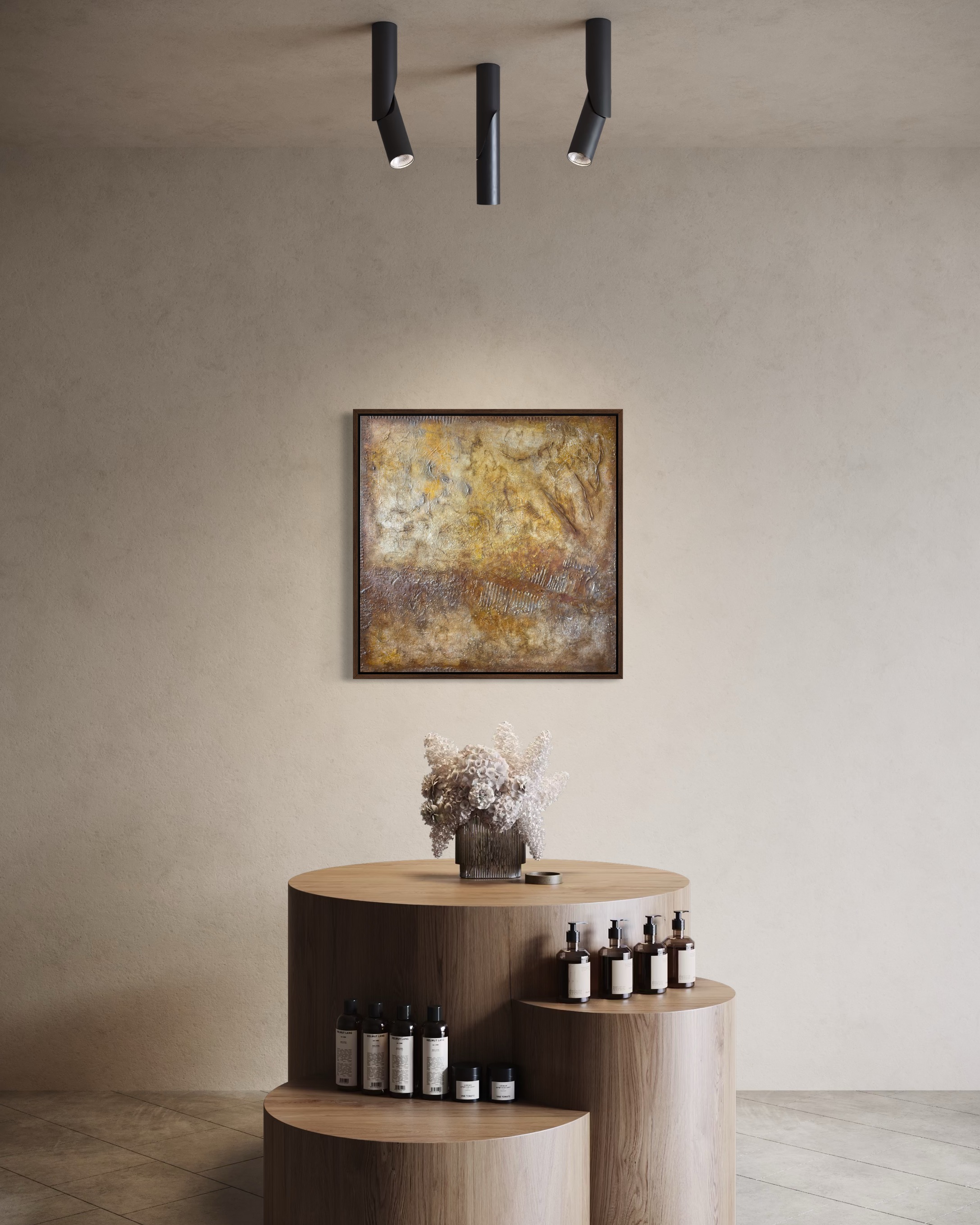
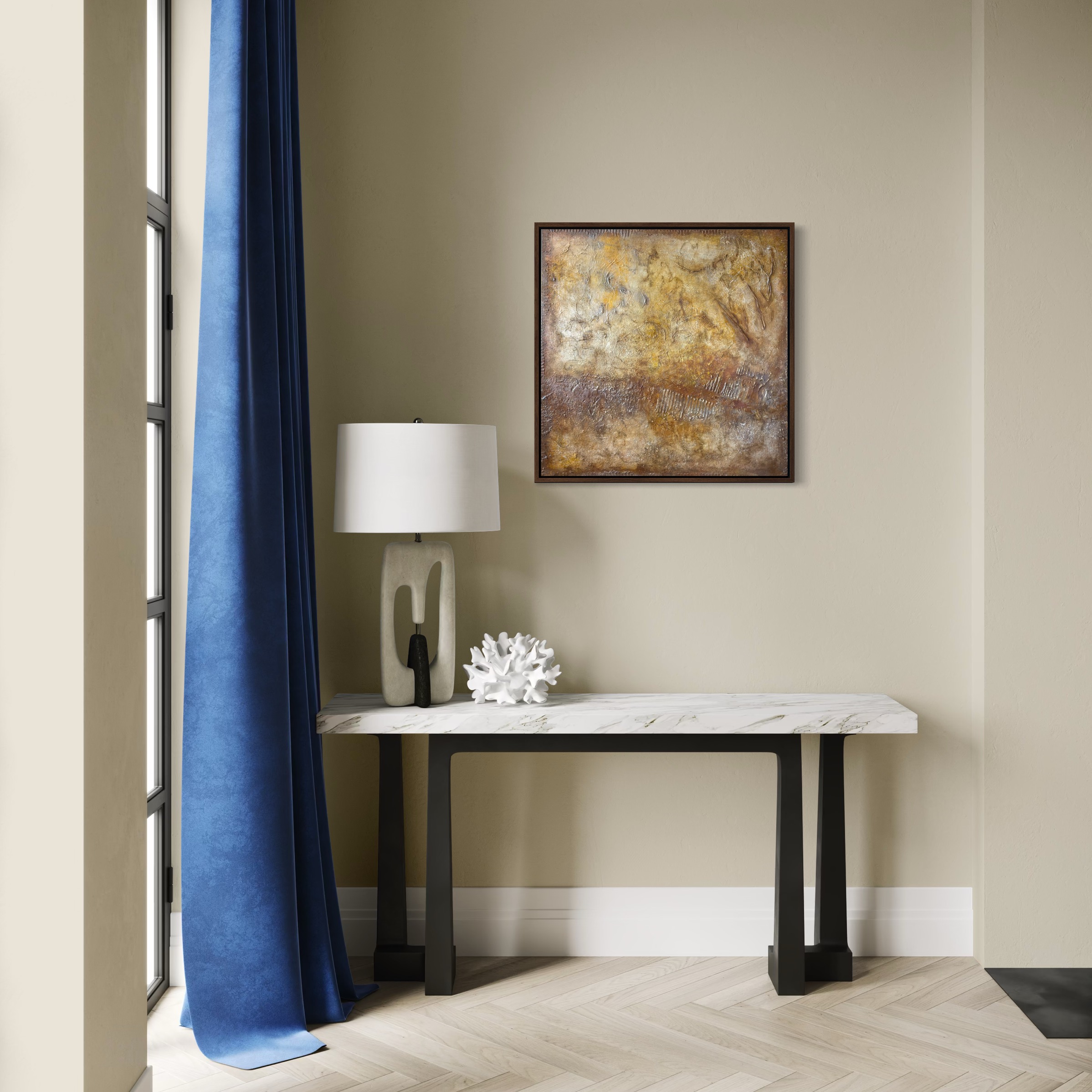
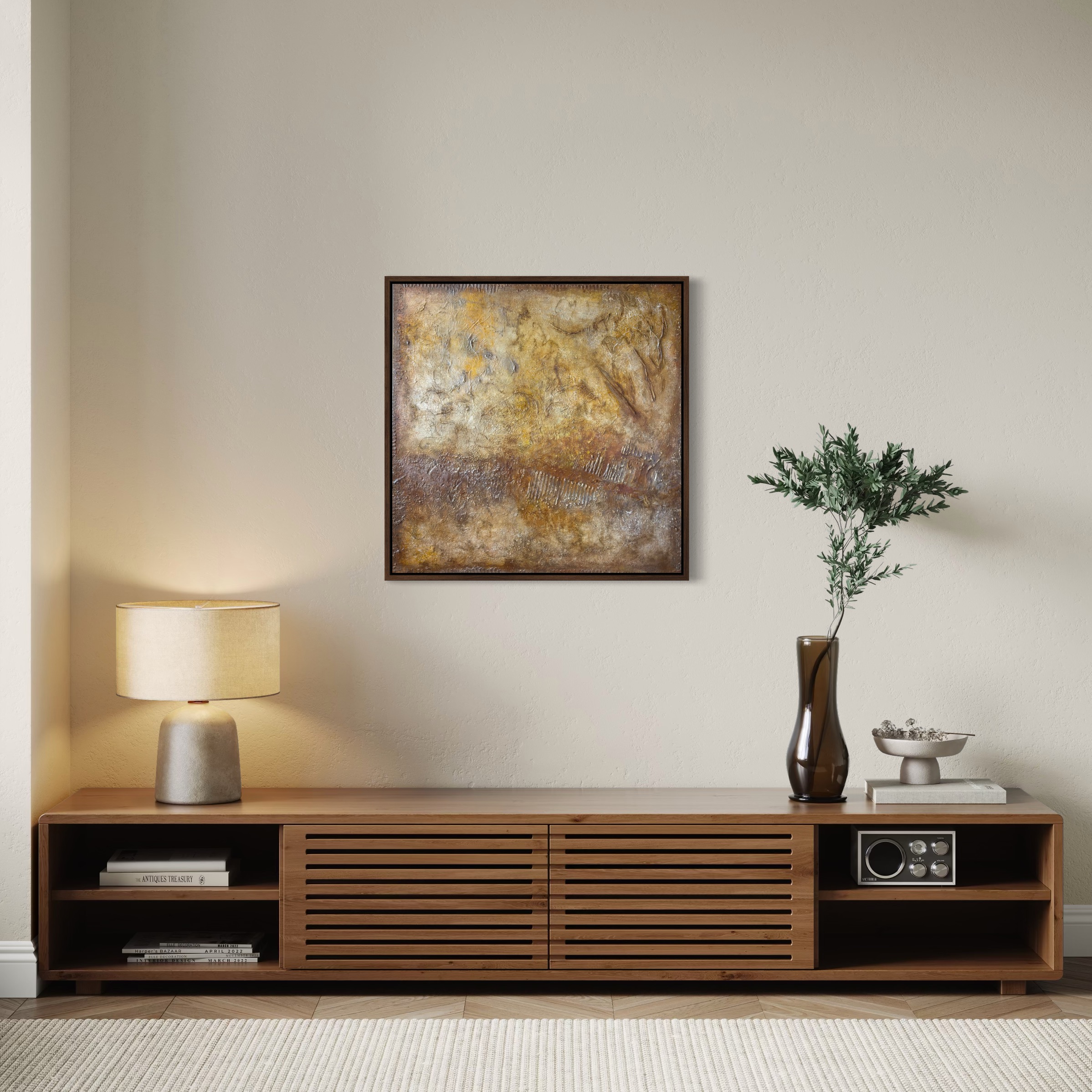
Result of Follow-up (답습의 결과)
Aging Series (2023-2025 version)
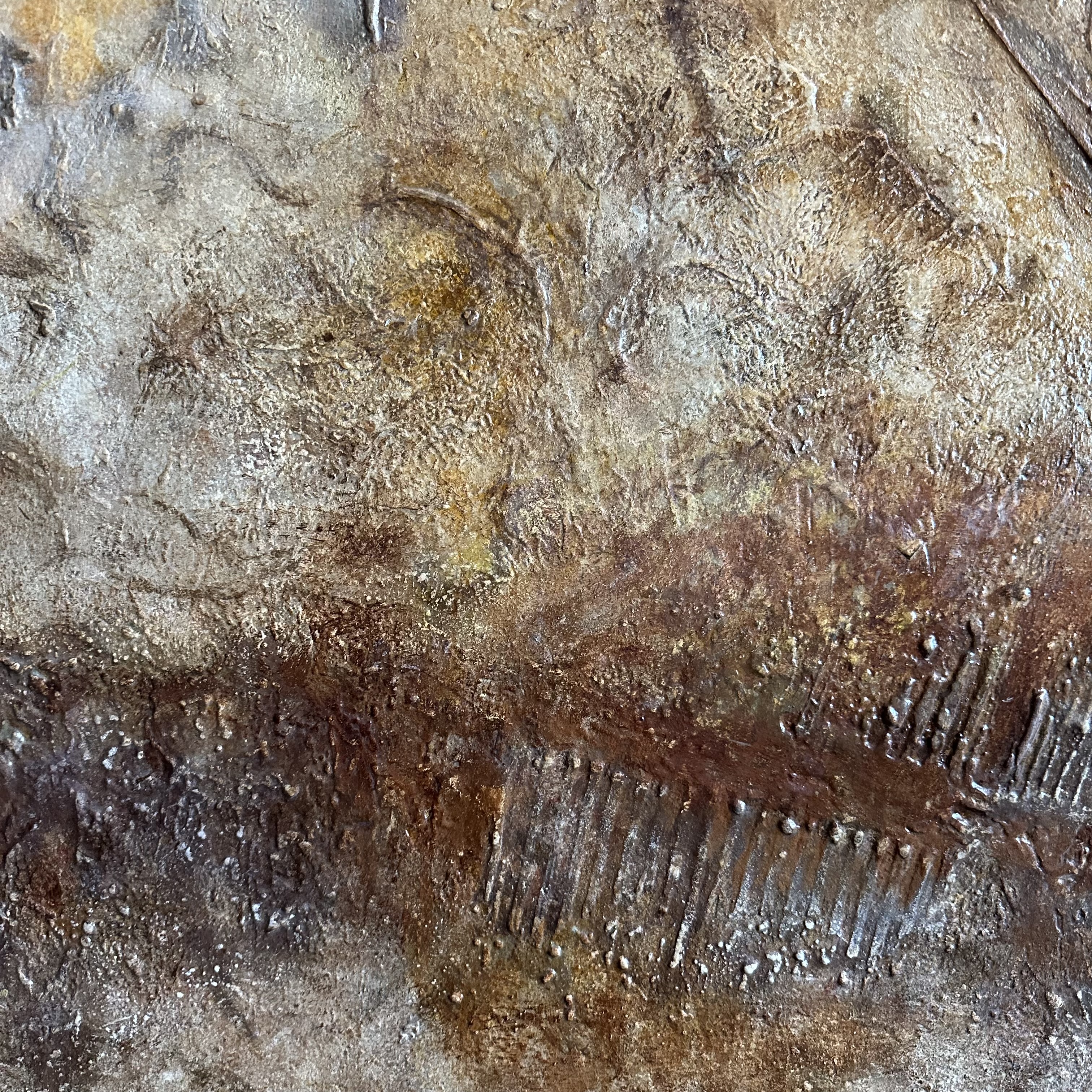
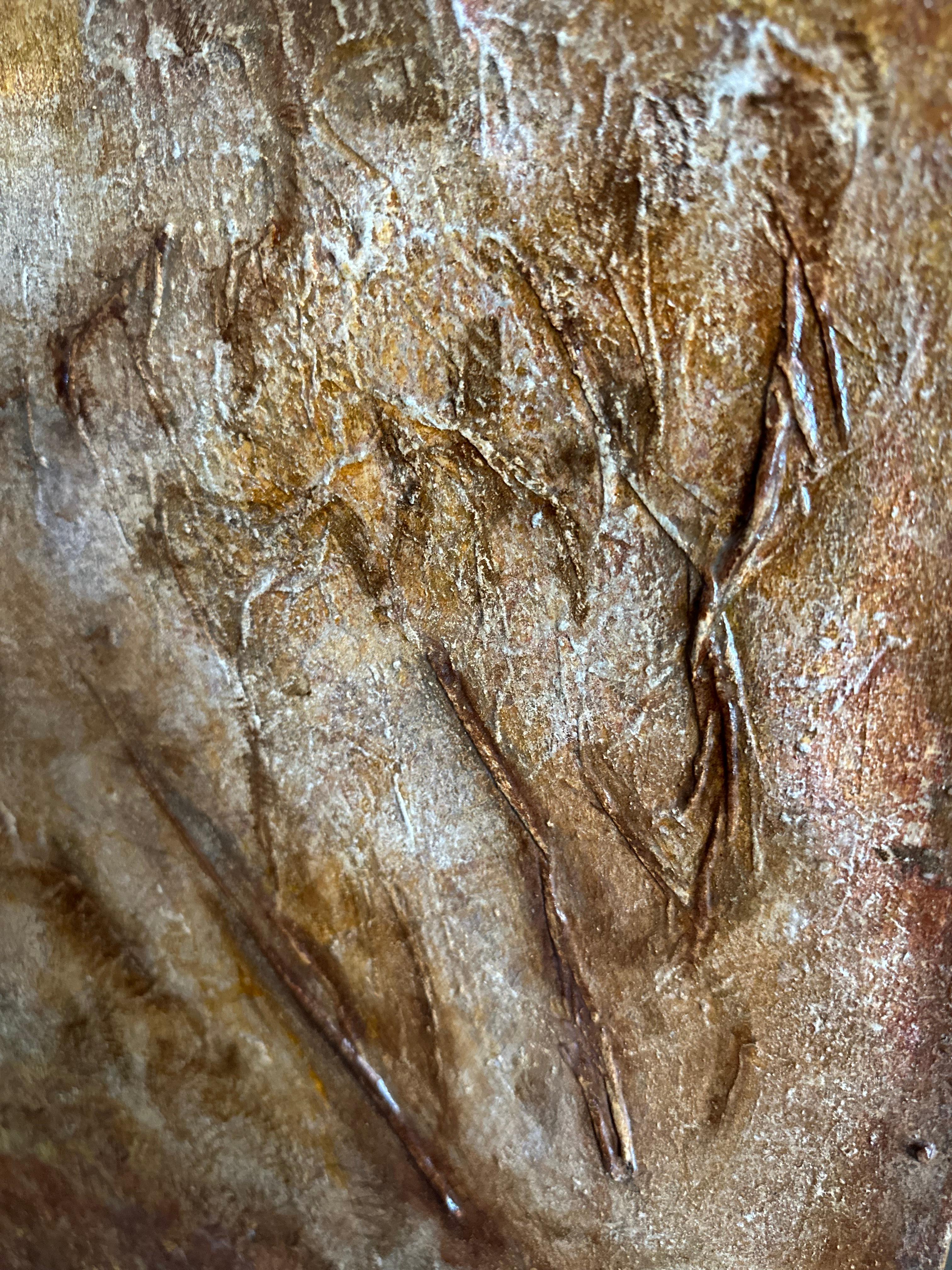
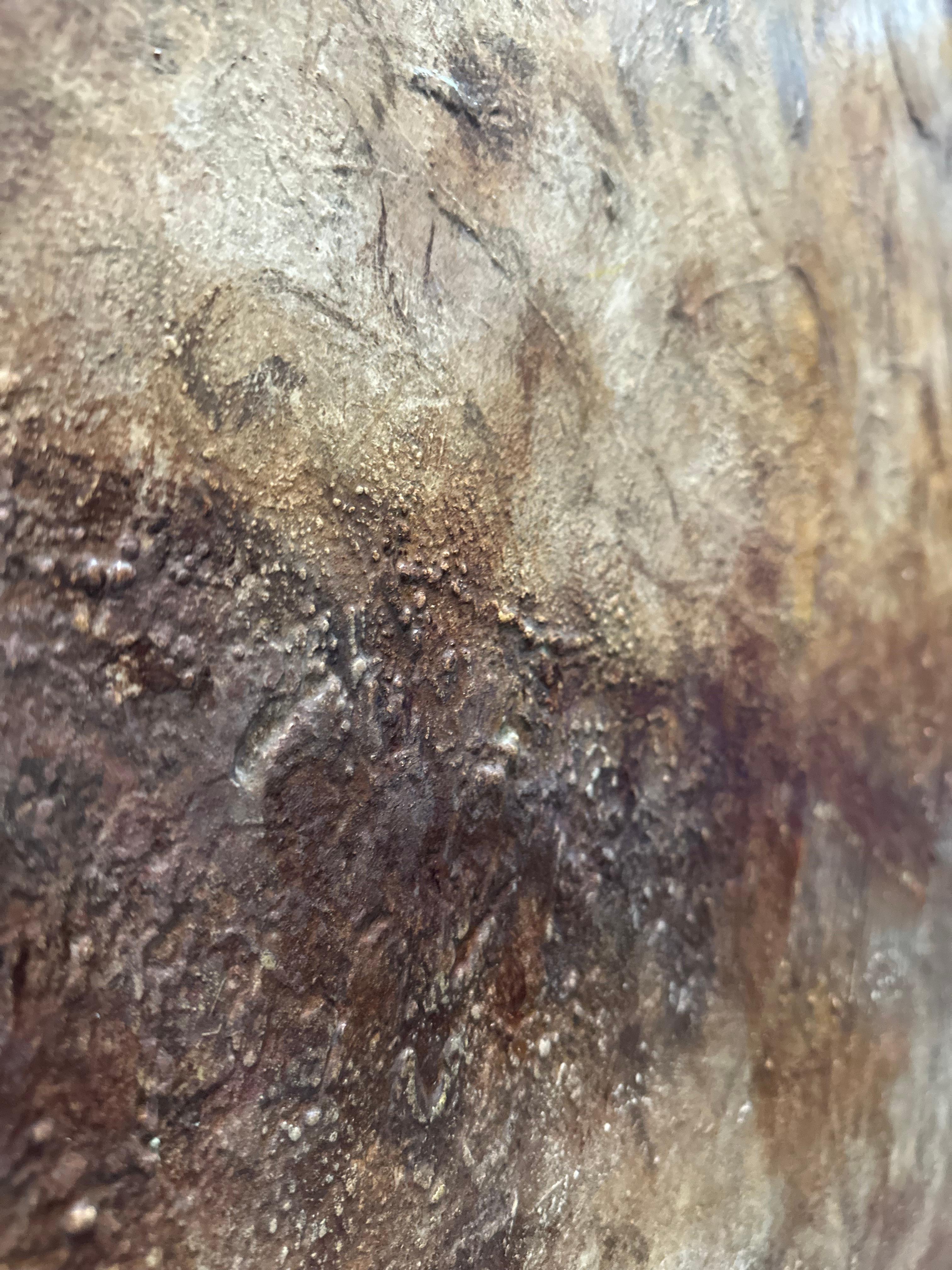
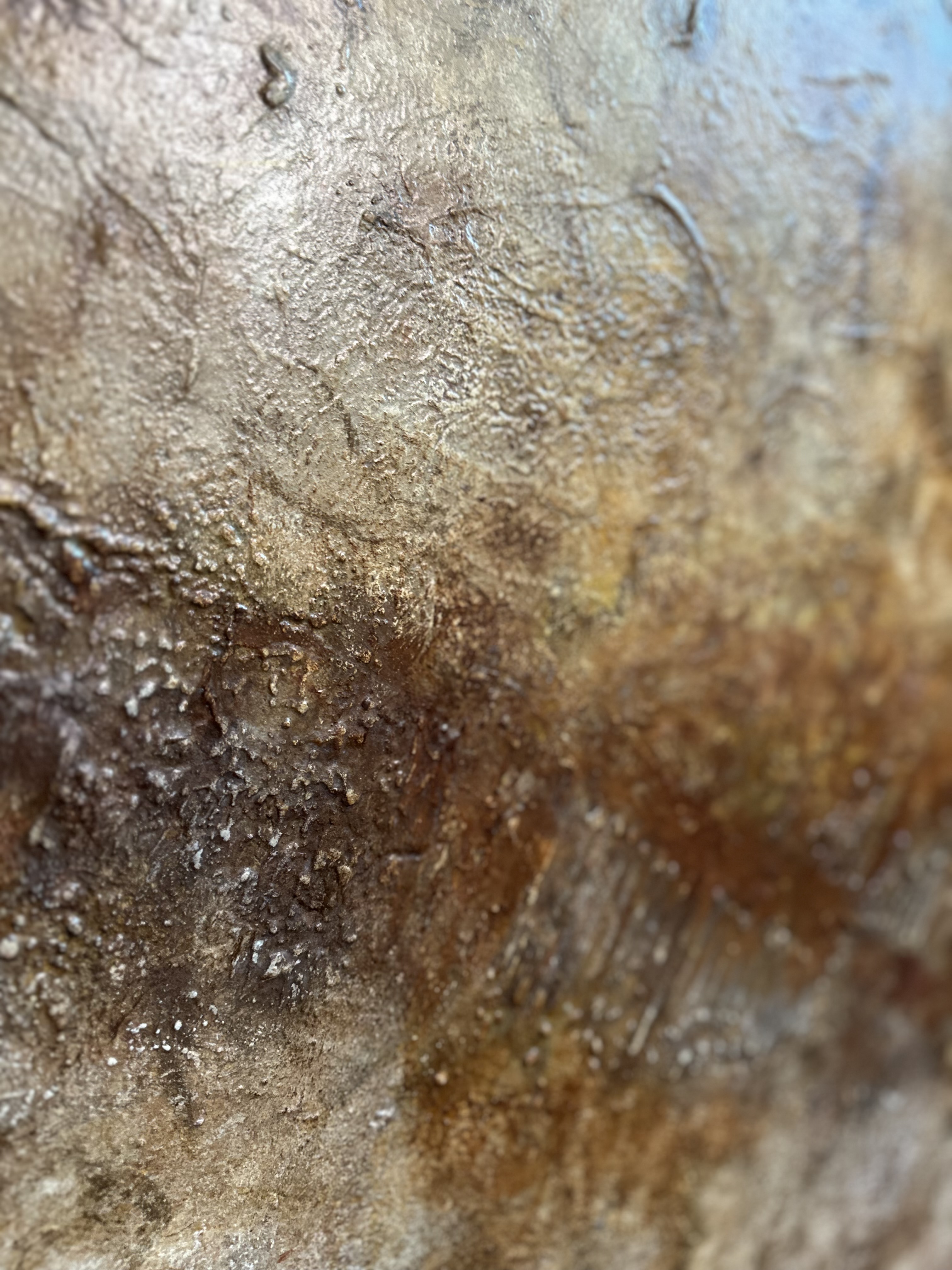
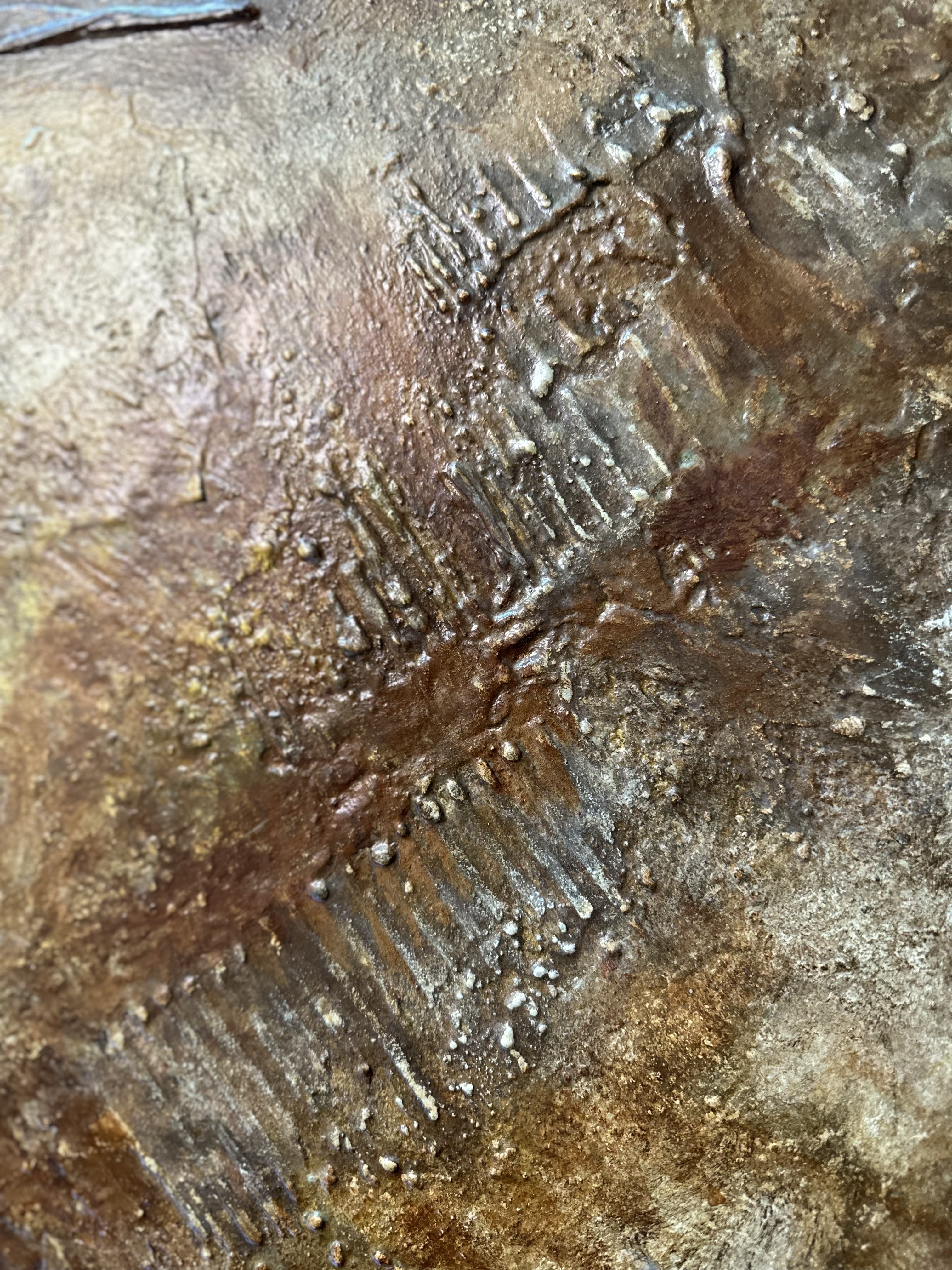
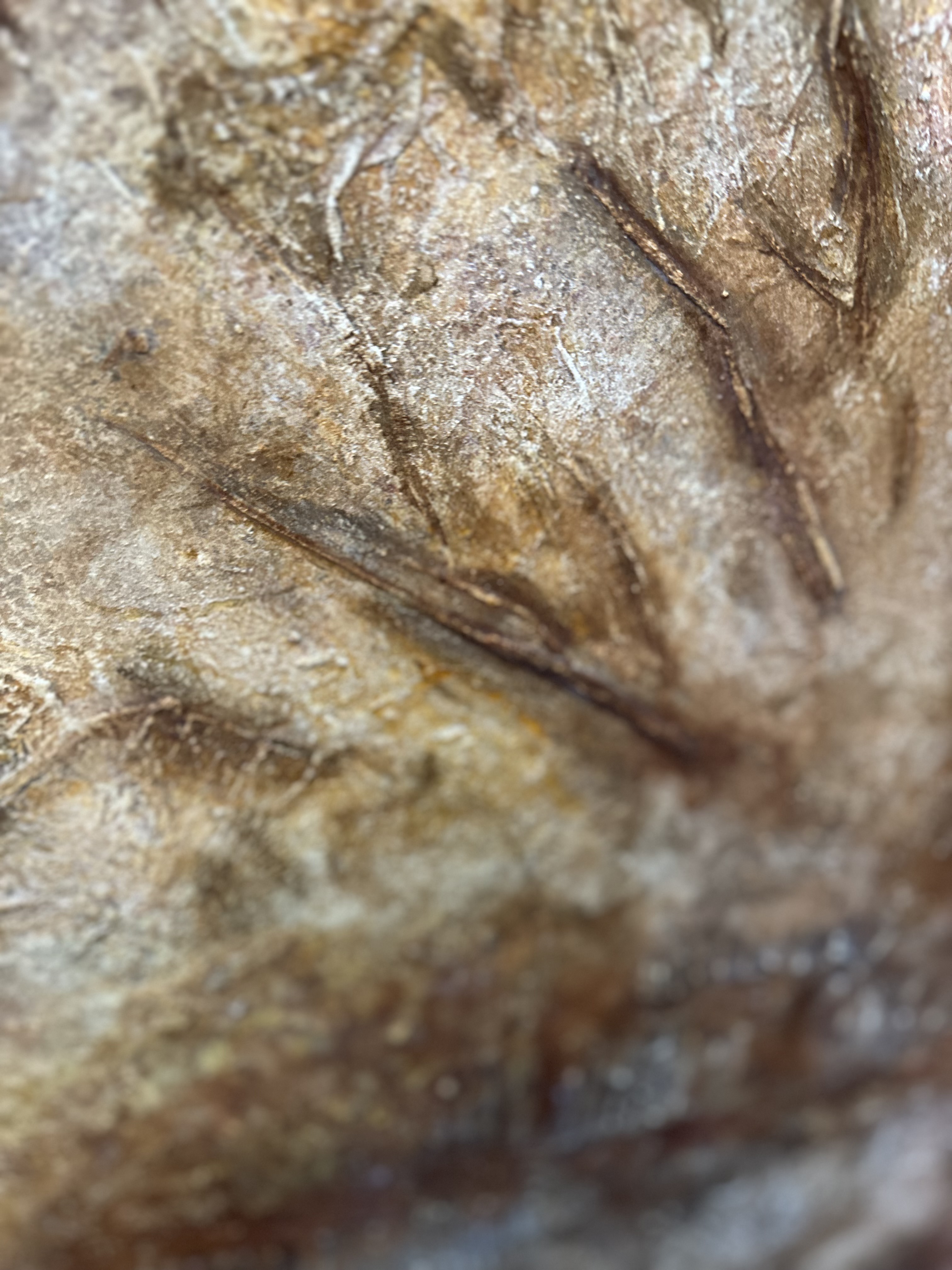
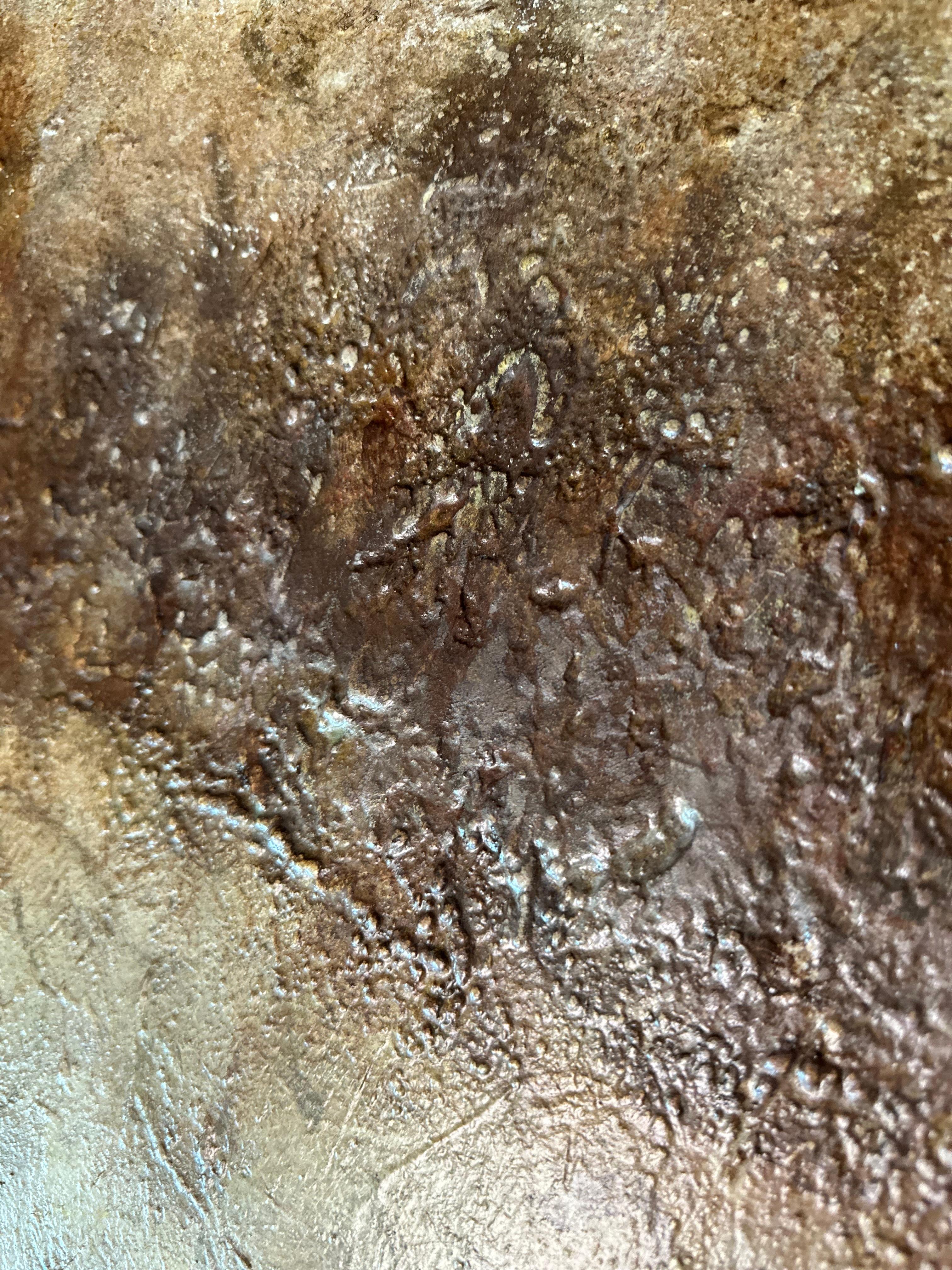
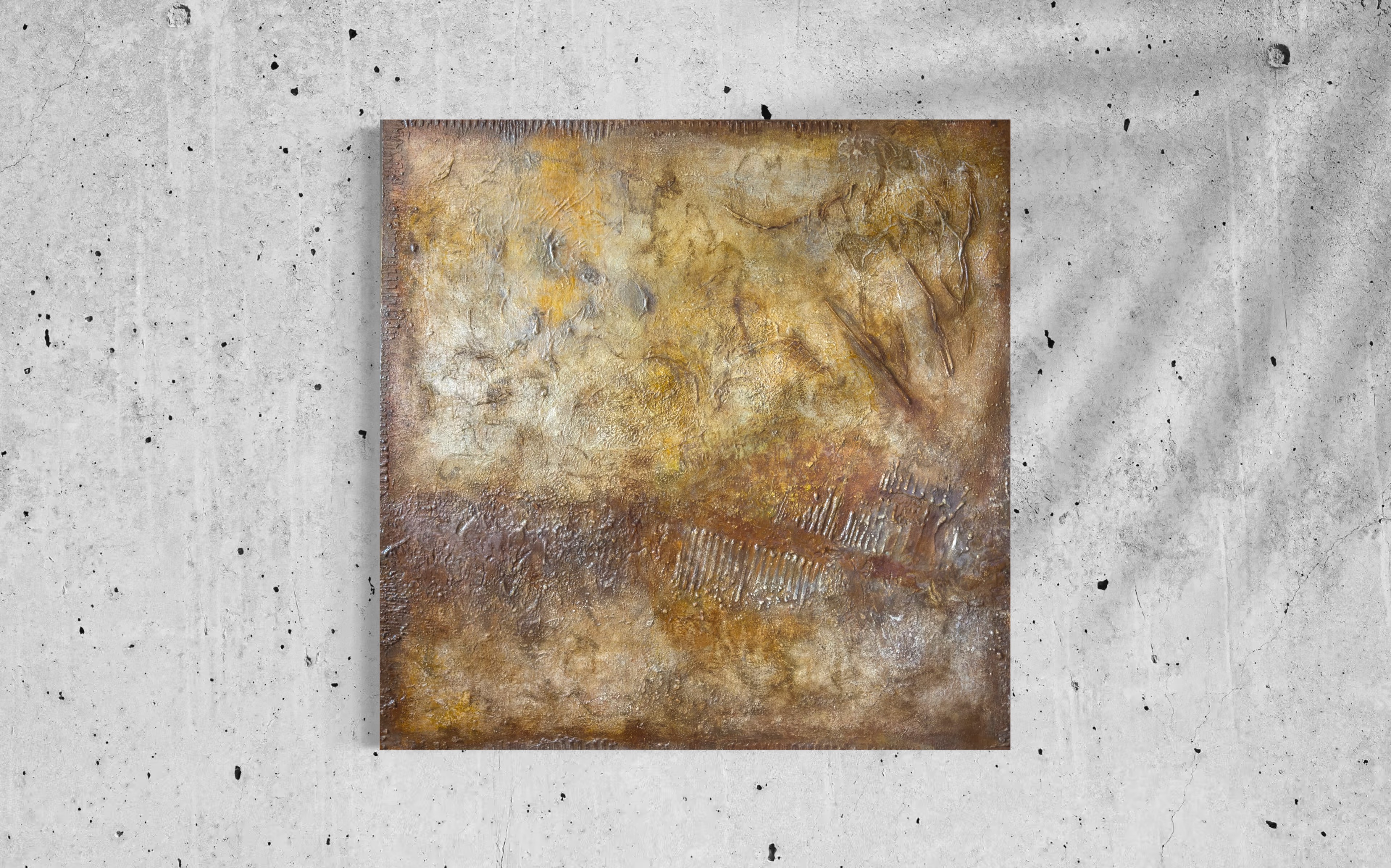
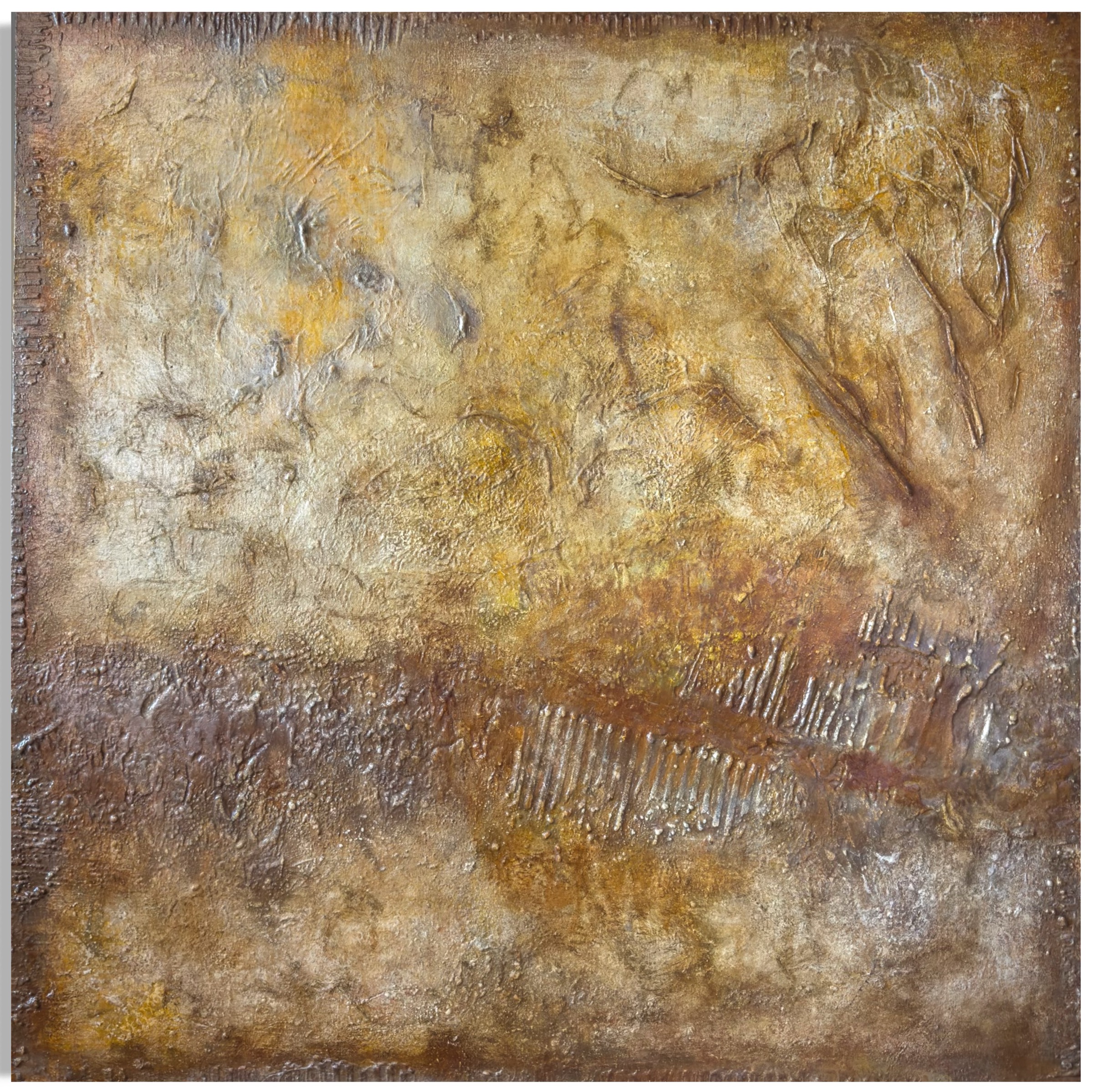
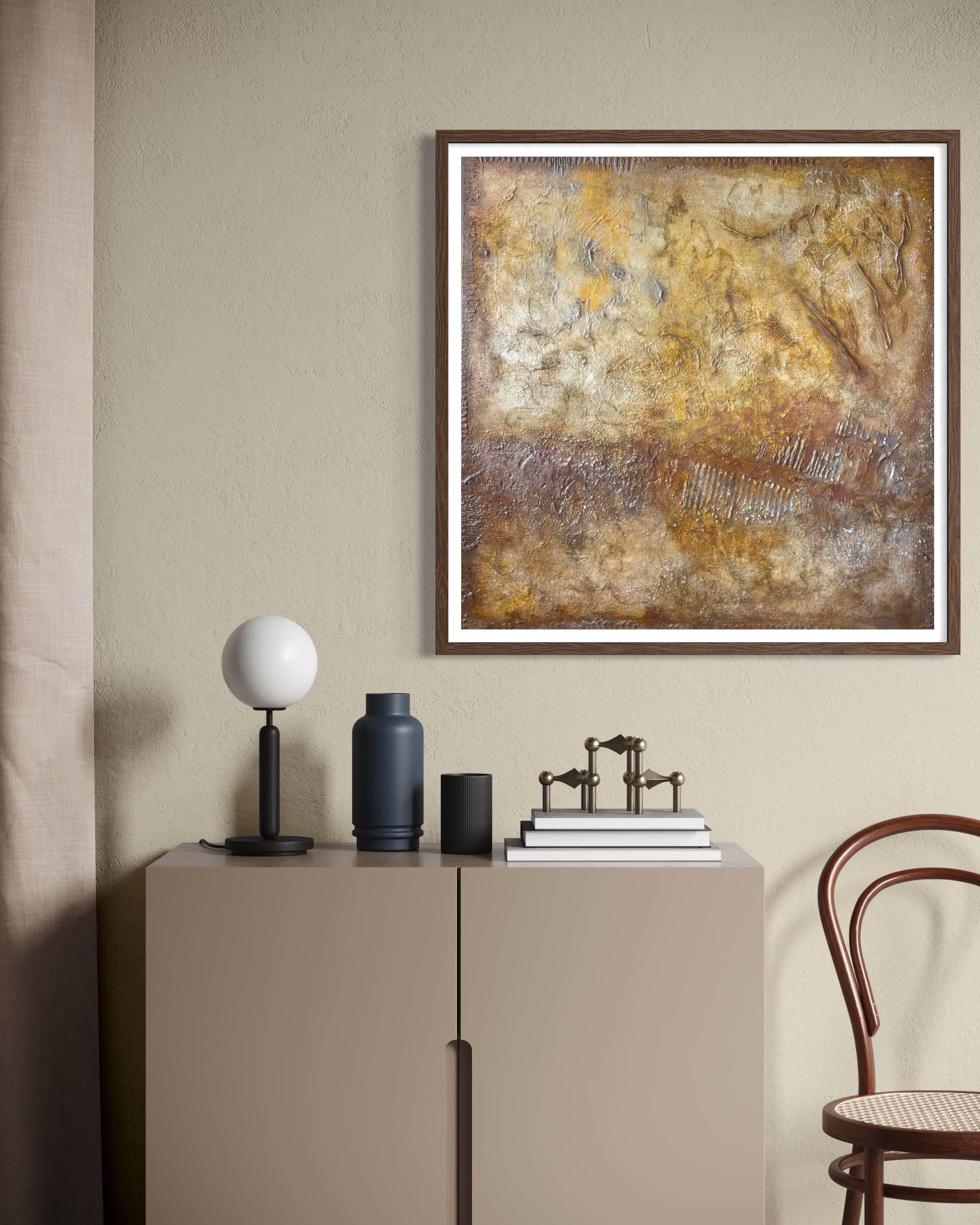
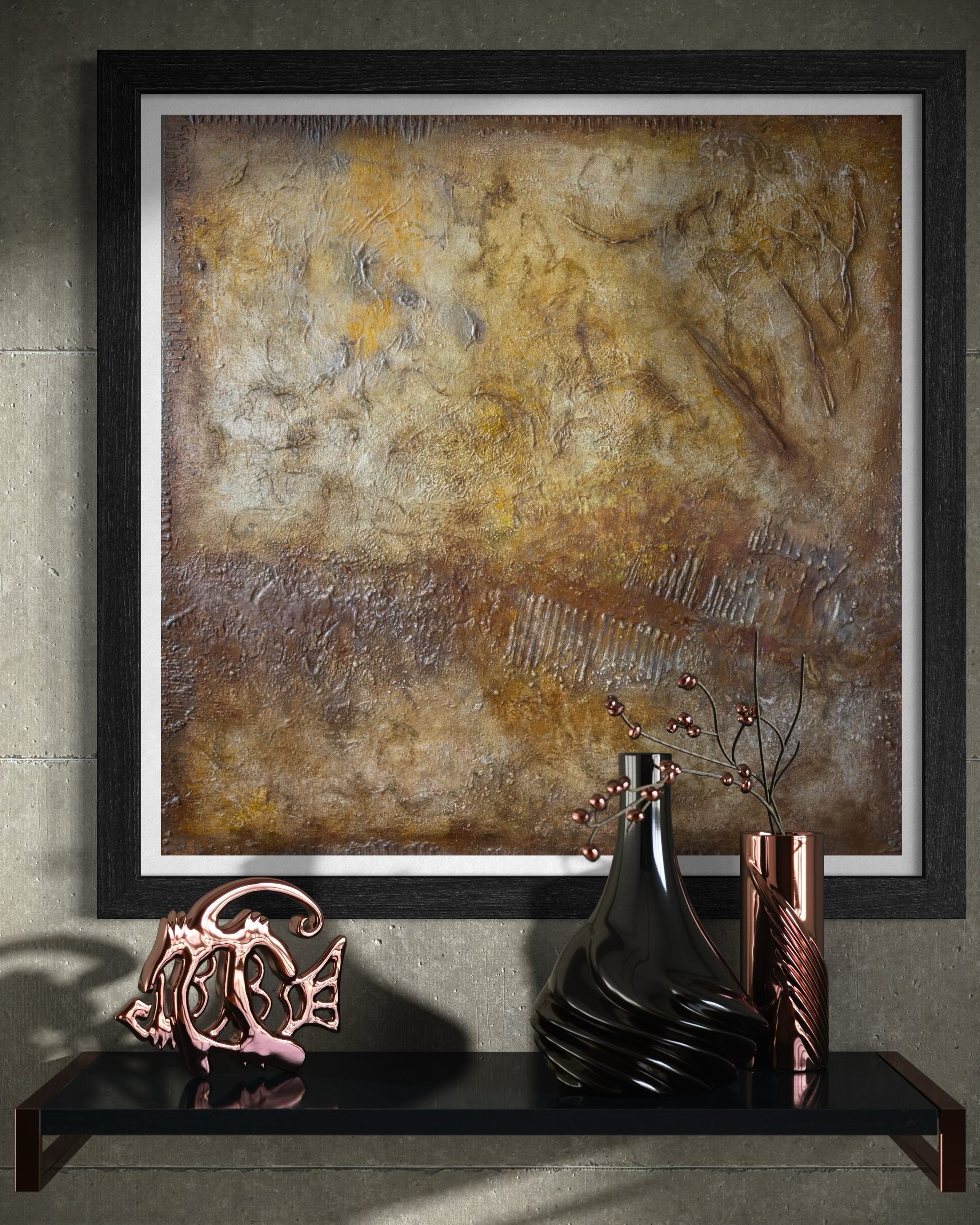
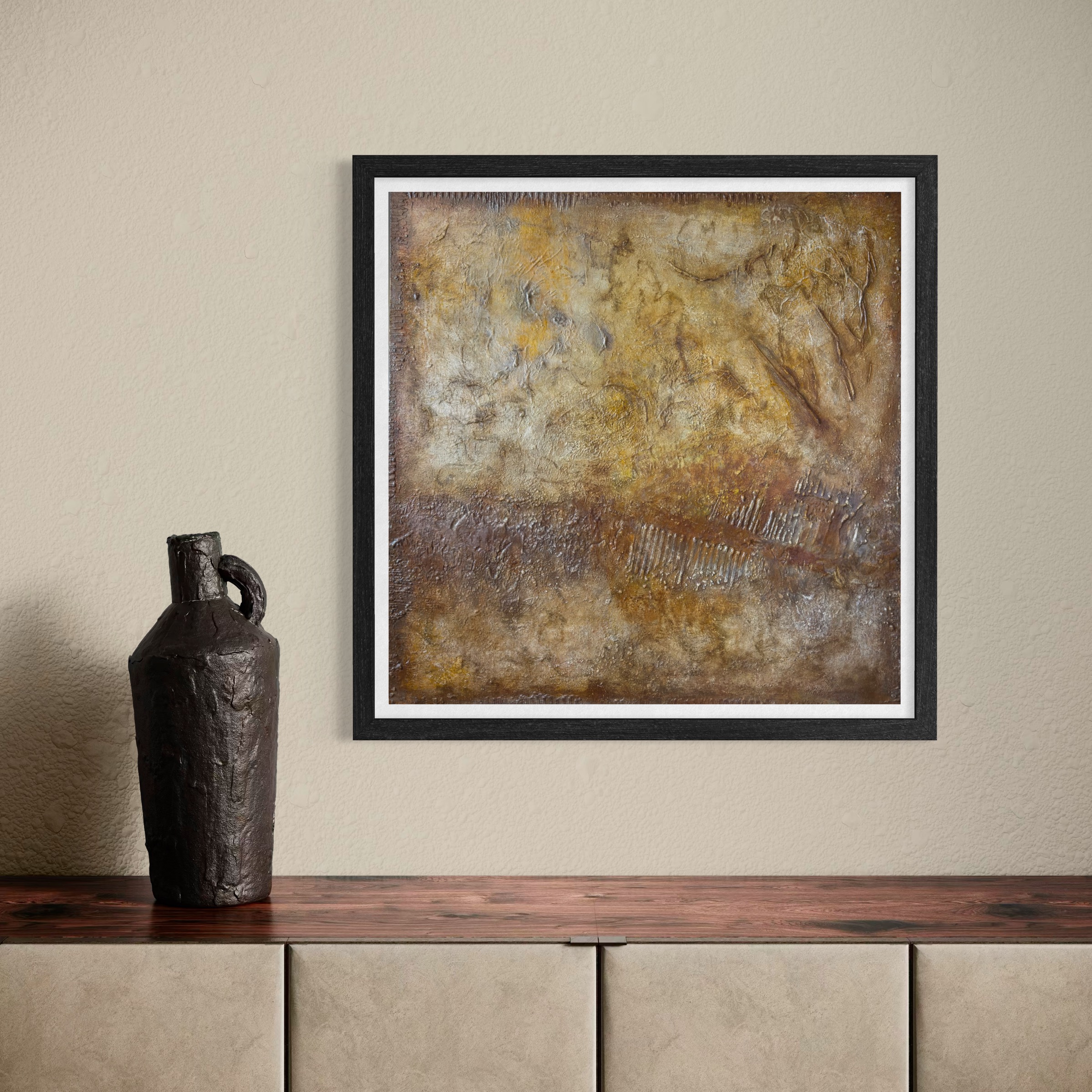
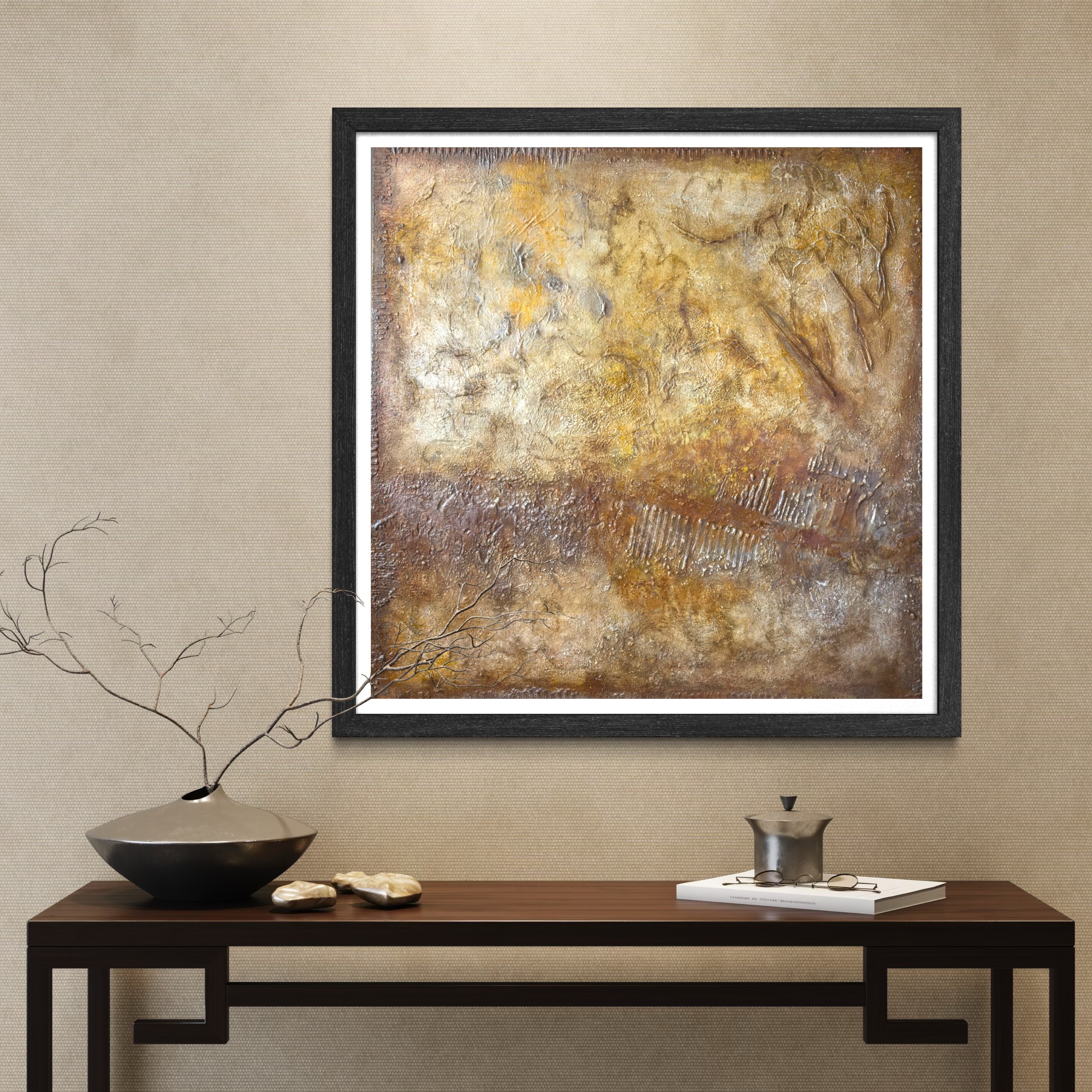
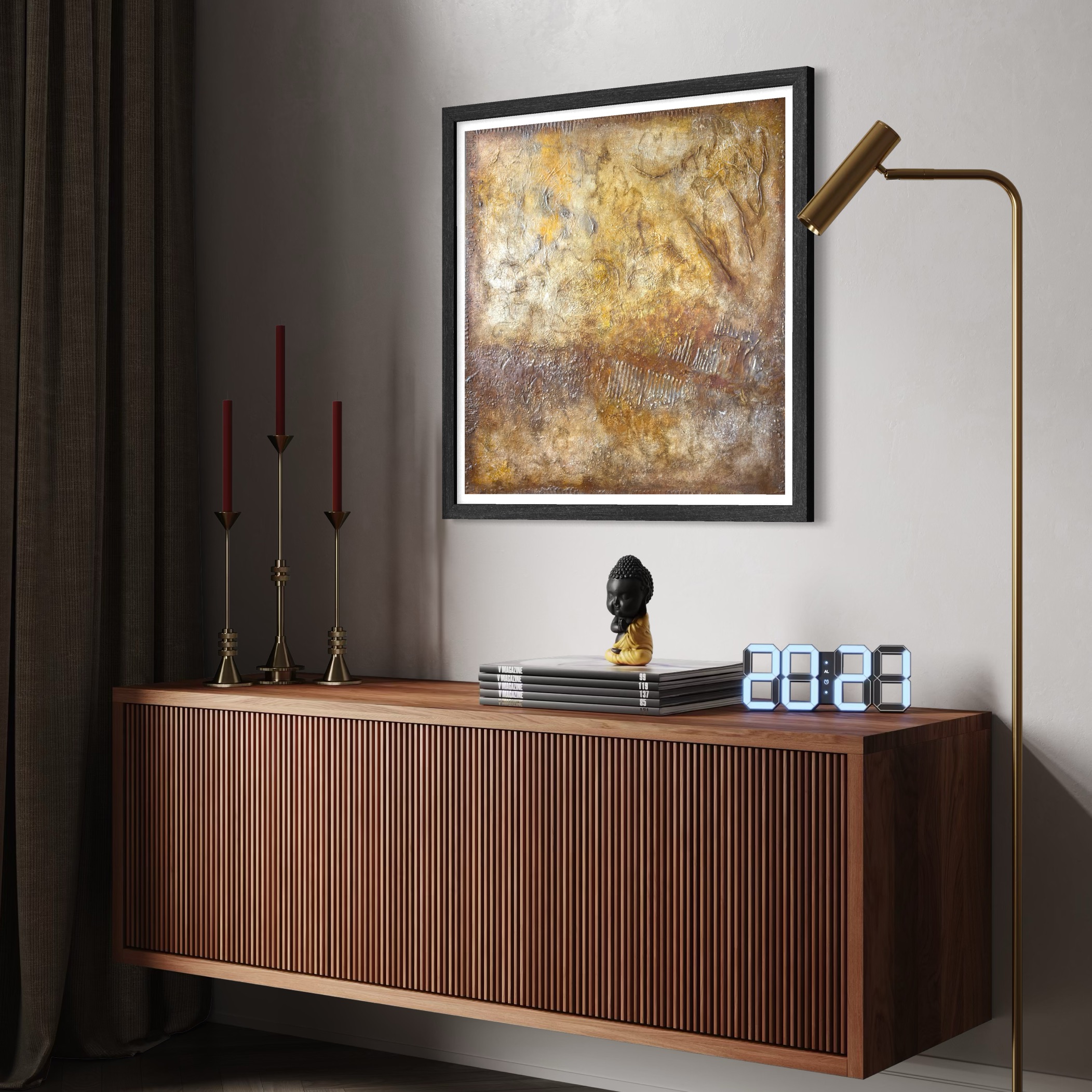
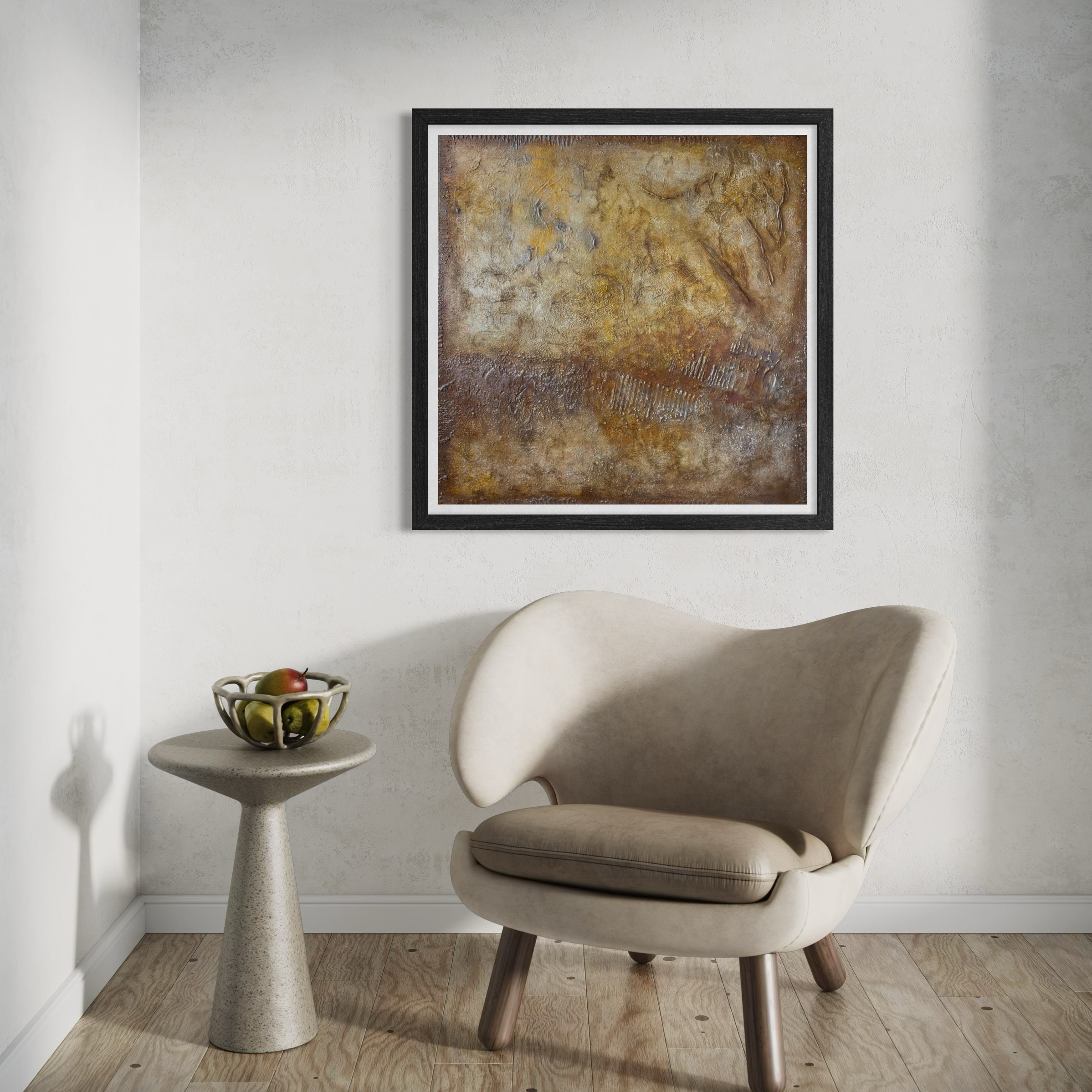
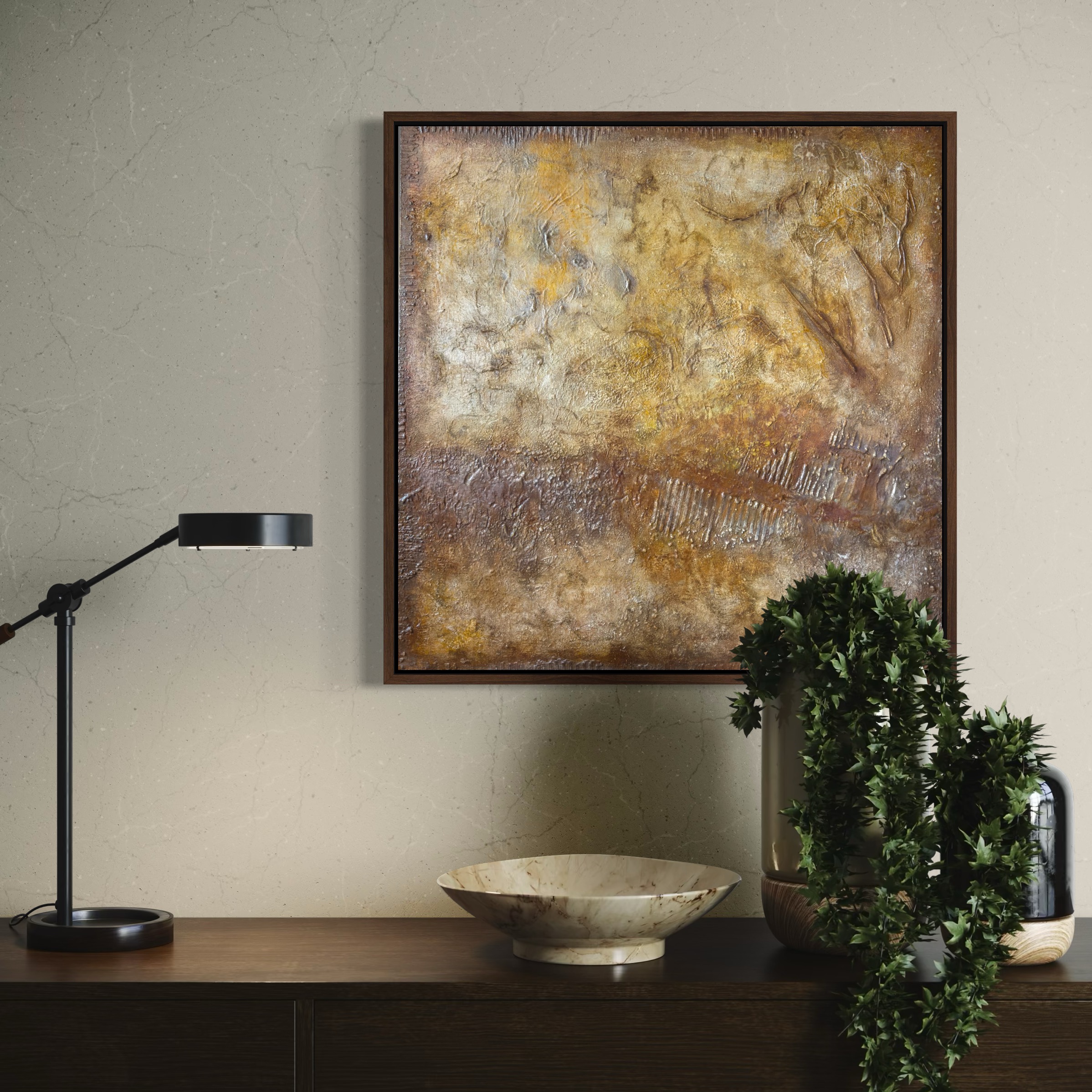
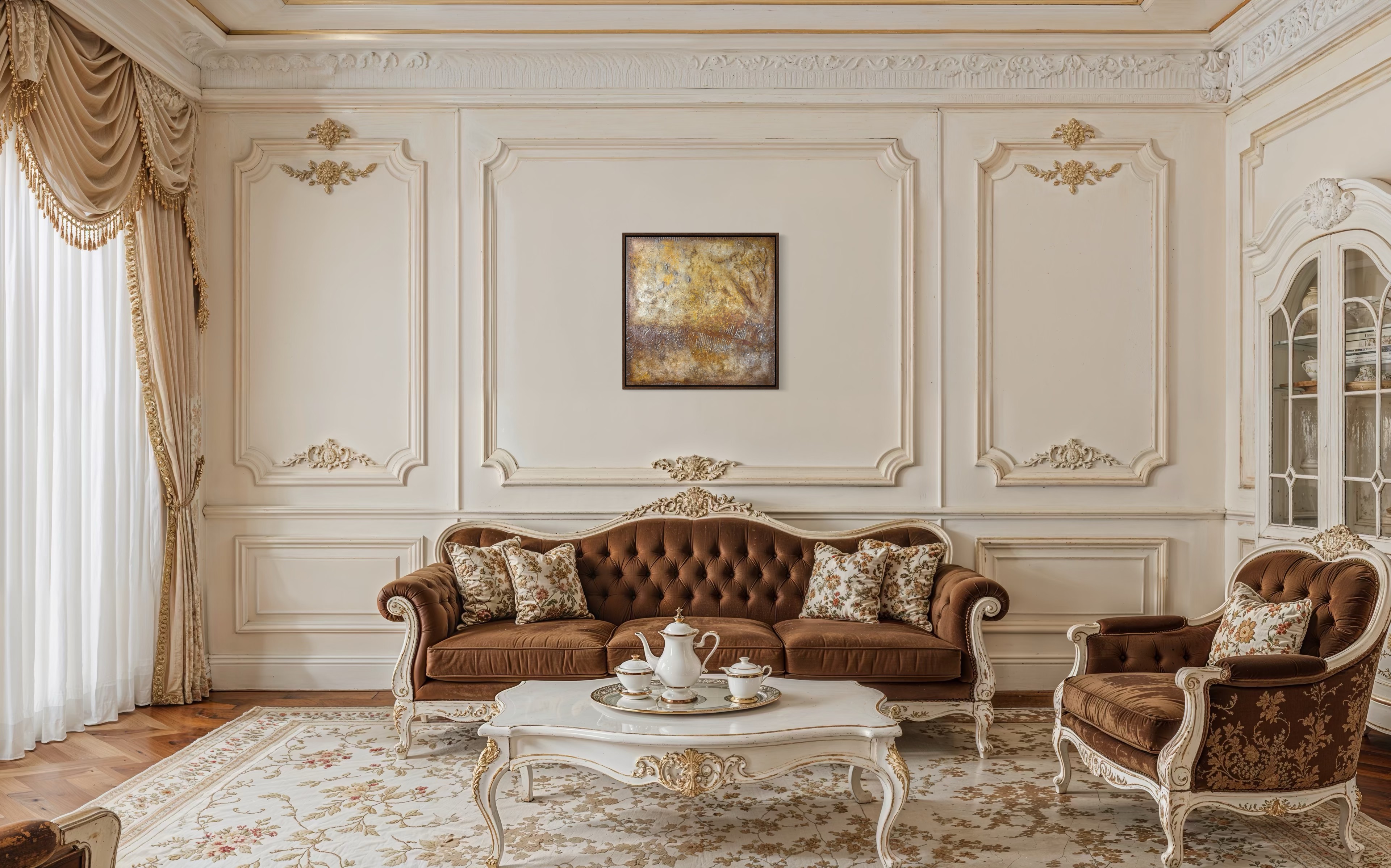
Mixed media on canvas (Acrylic, Iron-oxide paint, Aluminum foil, Modeling paste, Paper foil)
72.7 × 72.7 cm (S20)
https://www.singulart.com/en/artworks/kim-jun-sung-result-of-follow-up-2521866
The Mummified Planet: Traces of a Fading Verdance
Where the "Blue Planet" once existed, only the orange residue of iron oxide remains. Through the interplay of forced oxidation and the slow patience of natural air-drying, I arrest the shifting textures of time upon the canvas. This is a meditation on "Dapsup"—the repetitive rhythm of a world following its own depletion. By sealing these parched ruins under heavy varnish, I freeze the decay at a moment of paradoxical beauty. This glossy finish serves as a quiet mirror, reflecting the pathos of an era that finds aesthetic allure in the very traces of its own exhaustion. This work is not a final verdict, but a brilliant, cold record of a disappearance we are all witnessing.
박제된 행성: 사라져가는 푸르름의 흔적
푸른 행성이 존재하던 자리에는 이제 산화철의 주황빛 잔해만이 남았다. 강제된 산화와 자연 건조의 느린 인내가 교차하는 과정을 통해, 나는 캔버스 위에 변화하는 시간의 질감을 체포한다. 이것은 ‘답습’—자신의 고갈을 뒤따르는 세계의 반복적인 리듬에 대한 명상이다. 메마른 폐허를 두터운 바니시로 밀봉함으로써, 나는 부패를 역설적인 아름다움의 순간에서 동결시킨다. 이 번득이는 광택은 하나의 고요한 거울이 되어, 자신의 소멸 흔적에서 미학적 매력을 찾는 시대의 페이소스를 비춘다. 이 작업은 최종적인 선고가 아니라, 우리 모두가 목격하고 있는 사라짐에 대한 차갑고도 찬란한 기록이다.
The Paradox of the Sealed Ruin: A Dialogue Between Speed and Stillness
Result of Follow-up observes the irreversible beauty of a surface that has endured its own consumption. The title "Dapsup" suggests a tragic human rhythm: the repetition of past trajectories while perhaps overlooking the quiet exhaustion that follows. I enact this cycle through a dual temporal process. The heat gun mimics the frenetic, artificial speed of development, while natural air-drying accepts the patient, organic passage of time. This contrast creates a "Differentiated Aging" on the canvas, mapping the uneven depletion of our shared environment.
The defining gesture is the Heavy Varnishing (a deliberate sealing of oxidation at its peak). By arresting the process of decay, I turn crumbling rust and scarred aluminum into a permanent, jewel-like surface. This act invites us to confront a profound irony: the tendency to find "style" and "beauty" in the evidence of a crisis. The varnish makes the ruin "safe" for viewing, revealing the "Bin-sim" (a heart turned to poverty) that often follows a period of reckless expansion. By preserving this state of fading, the work quietly indicts the hypocrisy of an era that admires the gloss of its own debris.
밀봉된 폐허의 역설: 속도와 정적 사이의 대화
〈답습의 결과〉는 스스로를 소진하며 견뎌온 표면이 지닌 비가역적 아름다움을 관찰한다. ‘답습’이라는 제목은 뒤따라오는 고요한 소진을 간과한 채 과거의 궤적을 반복하는 인류의 비극적 리듬을 암시한다. 나는 이 순환을 이중적인 시간의 공정으로 실연한다. 열풍기는 개발의 광적이고 인위적인 속도를 모방하며, 자연 건조는 우리가 배신해버린 시간의 인내롭고 유기적인 흐름을 수용한다. 이러한 대비는 캔버스 위에 ‘차별화된 노화’를 새기며, 우리 세계의 불균형한 고갈을 하나의 지도로 그려낸다.
결정적 제스처는 **두터운 바니싱(산화가 정점에 달했을 때 이를 의도적으로 밀봉하는 행위)**이다. 부패의 과정을 정지시킴으로써, 나는 부서지는 녹과 상처 입은 알루미늄을 영구적이고 보석 같은 표면으로 변모시킨다. 이는 우리가 마주한 깊은 아이러니, 즉 위기의 증거에서 ‘멋’과 ‘아름다움’을 발견하려는 경향을 직면하게 한다. 바니시는 폐허를 감상하기에 ‘안전한’ 것으로 만들며, 무분별한 확장 뒤에 찾아오는 ‘빈심(貧心)’의 질감을 드러낸다. 사라져가는 상태를 보존함으로써, 이 작업은 자신의 잔해가 내뿜는 광택을 찬미하는 시대의 침묵하는 위선을 성찰하게 한다.
(cf) The following text is written in the form of a critical essay to explore the theoretical depths of the work.
The Ethics of Sealing: Kim Junsung’s Material Chronicle of the Anthropocene
I. The Pathos of an Era: Observing the Anthropocene
In the third decade of the 21st century, the Anthropocene has shifted from a scientific term to a visceral reality. It defines an epoch where human intervention—a relentless "Dapsup" (blind following)—has become a primary driver of planetary change. Kim Junsung’s Result of Follow-up (2025 version) functions as a material manifestation of this logic. Observed through the lens of 2026, the work crafts a visual language that is as alluring as it is devastating. Kim does not merely depict decay; he orchestrates it, treating the canvas as an archaeological site where civilizational exhaustion is physically enacted, inviting us to witness the fading of the "Blue Planet."
II. Temporal Duality: The Conflict of Speed
Kim’s technical process serves as a philosophical microcosm. The application of iron-particle paint sets the stage for a forced evolution. The Heat Gun serves as a surrogate for industrial frenzy, forcing the iron to oxidize in minutes—a pace that mimics how modern development has compressed geological time. However, this violence is counterbalanced by Natural Air-drying. By allowing the canvas to interact with the open air, the work accepts the agency of the environment it critiques. This creates "Differentiated Aging," where zones pushed by human will coexist with areas weathered by the slow, indifferent breath of time, reflecting the uneven exhaustion of our world.
III. The Aesthetics of the Scar: Finding Dignity in Depletion
The work delves into a "Terminal Loneliness," suggesting that a life spent in the "Waste of Youth" may lead to a destitute and solitary old age. The dry, brittle texture is a manifestation of "Bin-sim" (貧心), a heart turned to poverty. Yet, Kim’s lens finds a "Rugged Dignity" here, identifying it as the "Aesthetics of Scars." These are not wounds, but the marks of survival—the permanent evidence of damage endured. The embedded aluminum shards are fossils of our "Capitalist Splendor," now subsumed by the inevitable rust of time. In this world, beauty is inseparable from its wounds; the elegance of the oxidized patina is earned through the trauma of duration.
IV. The Paradox of the Seal: The Mummified Crisis
The evolution in this 2025 version lies in the Heavy Varnishing. By sealing the oxidation at its aesthetic peak, Kim arrests the decay. This act of sealing serves as a metaphor for a collective "ethical numbness"—the tendency to "seal" our eyes to rising sea levels while focusing on the "Finished Product" of our consumption. The varnish makes the ruin permanent and "Safe" for viewing. It suggests an ultimate irony: a culture that has normalized its own crisis so it can be admired as "Stylish." The varnish remains as a barrier, exposing the rust for eternity while the actual source of the verdance fades.
V. Conclusion: The Oxide as Witness
Kim Junsung does not offer a forced redemption. He offers an epitaph rendered in oxide. Result of Follow-up acts as a mirror to an era that often prioritizes the lie of "Progress" over the truth of depletion. The varnish remains a testament to this condition, keeping the rust visible forever while the blue planet recedes. In Kim’s metaphysics, the oxide becomes a silent witness, proving that the "Follow-up" has finally reached a parched, irreversible conclusion.
(cf) 다음의 글은 작품의 이론적 심층을 탐구하기 위해 비평문의 형태로 기술되었습니다.
밀봉의 윤리학: 김준성이 구축한 인류세의 물질적 연대기
I. 시대의 페이소스: 인류세를 목격하다
21세기의 세 번째 10년, **인류세(Anthropocene)**는 학술적 용어를 넘어 피부에 와닿는 비극이 되었다. 이는 인류의 개입—맹목적인 ‘답습’—이 행성 변화의 주동력이 된 시대를 정의한다. 김준성의 〈답습의 결과(2025 버전)〉는 이러한 시대적 논리의 물질적 현현이다. 2026년의 렌즈를 통해 목격되는 이 작업은 매혹적이면서도 파괴적인 시각 언어를 빚어낸다. 작가는 부패를 단순히 묘사하는 것이 아니라 진두지휘하며, 캔버스를 문명적 소진이 물리적으로 실연되는 고고학적 현장으로 다룬다. 이를 통해 우리는 ‘푸른 지구’가 희미해져 가는 과정을 목격하도록 초대받는다.
II. 시간적 이중성: 속도의 충돌
작가의 기술적 공정은 하나의 철학적 축소판이다. 철 입자 페인트의 도포는 강제된 진화를 위한 무대를 설정한다. 열풍기는 산업적 광기를 대변하는 도구로, 현대의 개발이 지질학적 시간을 압축해온 방식을 모방하며 산화 과정을 가속한다. 그러나 이러한 폭력은 자연 건조라는 행위로 상쇄된다. 캔버스를 대기 중에 그대로 둠으로써, 작업은 자신이 비판하는 환경 그 자체의 작용을 수용한다. 이는 인간의 의지에 의해 밀어붙여진 구역과 시간의 무심한 호흡에 의해 풍화된 구역이 공존하는 ‘차별화된 노화’를 만들어내며, 우리 세계의 불균형한 소진을 반영한다.
III. 상처의 미학: 소진 속에서 발견한 존엄
이 작업은 ‘종말적 고독’을 파고들며, 청춘을 탕진하며 보낸 삶이 필연적으로 빈곤하고 고독한 노년으로 이어질 수 있음을 암시한다. 건조하고 바스러질 듯한 질감은 청춘을 허비한 뒤 찾아오는 영적 불모, 즉 **‘빈심(貧心)’**의 현현이다. 그러나 작가의 렌즈는 여기서 ‘투박한 존엄’을 발견하며 이를 **‘상처의 미학’**이라 정의한다. 이것은 견뎌낸 파괴의 영구적인 증거인 생존의 표식이다. 박힌 알루미늄 파편들은 필연적인 시간의 녹에 잠식된 ‘자본주의적 찬란함’의 화석들이다. 이 세계에서 아름다움은 상처와 분리될 수 없으며, 산화된 녹청의 우아함은 지속이라는 트라우마를 통해 획득된다.
IV. 밀봉의 역설: 위기의 미라화
2025년 버전의 진화는 두터운 바니싱에 있다. 산화 과정을 미학적 정점에서 밀봉함으로써 작가는 부패를 정지시킨다. 이 밀봉 행위는 집단적 **‘윤리적 무감각’**에 대한 은유가 된다. 차오르는 해수면에 눈을 ‘밀봉’하고, 대신 우리 소비의 ‘완성된 결과물’에 집중하려는 경향 말이다. 바니시는 폐허를 영구적이고 감상하기에 ‘안전한’ 것으로 만든다. 이는 자신의 위기를 정상화하여 ‘멋스러운 것’으로 찬미하는 문화가 지닌 궁극적인 아이러니를 시사한다. 바니시는 장벽으로 남아, 실제 푸르름의 근원이 사라지는 동안 녹을 영원히 노출시킨다.
V. 결론: 증언으로서의 산화물
김준성은 강요된 구원을 제안하지 않는다. 그는 산화물로 쓰인 묘비명을 제안한다. 〈답습의 결과〉는 고갈의 진실보다 ‘진보’라는 거짓을 우선시하는 시대에 대한 거울이다. 바니시는 이러한 상태의 증거로 남아, 푸른 지구가 물러가는 동안 녹을 영원히 가시화한다. 김준성의 형이상학 안에서 산화물은 침묵하는 증인이 되어, 우리의 ‘답습’이 마침내 메마르고 비가역적인 결말에 도달했음을 증명한다.
KIM JUNSUNG — MASTER STATEMENT
(Artist’s Core Manifesto / International Standard)
Kim Junsung: On Aging, Sealing, and Ethical Numbness
My work investigates aging not as a metaphor, but as a material condition—one that records the consequences of repetition, acceleration, and exhaustion. I understand painting as a site where time is not represented but physically enacted.
Across the Aging Series, I employ iron-oxide paint, aluminum foil, and industrial processes to orchestrate controlled decay. Forced oxidation, accelerated by heat, collides with natural air-drying, producing what I describe as Differentiated Aging: surfaces where artificial speed and organic time coexist in visible tension. These processes mirror the rhythm I call “Dapsup”—the blind repetition of past trajectories despite their known consequences.
A decisive gesture in my recent work is Heavy Varnishing. By sealing oxidation at its aesthetic peak, I arrest decay and transform it into a permanent state. This act does not preserve beauty; it fixes a condition. The varnish renders ruin stable and safe for viewing, reflecting a culture that has grown ethically numb—one that normalizes crisis by aestheticizing its traces.
Rather than offering redemption or spectacle, my work functions as a material chronicle of disappearance. The brittle textures, embedded metallic remnants, and scarred surfaces articulate what I describe as the Aesthetics of Scars—a dignity earned through endurance rather than restoration. In this context, oxide is not a symbol but a witness: silent, irreversible, and incapable of deception.
I do not depict collapse. I seal its evidence.
My paintings are not warnings; they are records of what has already begun to fade.
김준성: 노화, 밀봉, 그리고 윤리적 무감각에 대하여
나의 작업은 노화를 은유가 아닌 물질적 조건으로 다룬다. 그것은 반복과 가속, 그리고 소진이 남긴 결과를 기록하는 상태이다. 나에게 회화는 시간을 재현하는 장면이 아니라, 시간이 물리적으로 작동하는 현장이다.
〈에이징 시리즈〉 전반에서 나는 산화철 페인트, 알루미늄 포일, 산업적 공정을 사용하여 통제된 부패를 진두지휘한다. 열에 의해 가속된 강제 산화와 자연 건조가 충돌하며, 나는 이를 **‘차별화된 노화(Differentiated Aging)’**라 부른다. 이 표면들은 내가 **‘답습’**이라 명명한 리듬—결과를 알면서도 반복되는 인간의 궤적—을 반영한다.
최근 작업의 결정적 행위는 두터운 바니싱이다. 산화를 미학적 정점에서 밀봉함으로써, 나는 부패를 하나의 영구적 상태로 고정한다. 이는 아름다움을 보존하기 위함이 아니라, 하나의 조건을 봉인하는 행위다. 바니시는 폐허를 안정적이고 감상 가능한 대상으로 만들며, 위기를 정상화하고 그 흔적을 미학화하는 시대의 윤리적 무감각을 드러낸다.
나의 작업은 구원이나 장관을 제안하지 않는다. 그것은 사라짐에 대한 물질적 연대기이다. 부서질 듯한 질감과 박힌 금속의 잔해는 복원이 아닌 견딤을 통해 획득된 존엄, 즉 **‘상처의 미학’**을 말한다. 이 세계에서 산화물은 상징이 아니라 증인이다. 침묵하지만 되돌릴 수 없고, 거짓말하지 않는다.
나는 붕괴를 묘사하지 않는다.
나는 그 증거를 밀봉한다.
이 회화들은 경고가 아니라, 이미 시작된 소멸의 기록이다.
(Extreme Compression)
My work treats aging as a material fact rather than a metaphor. Using iron-oxide paint, aluminum, and industrial processes, I orchestrate controlled decay on the canvas. Accelerated oxidation produced by heat collides with natural air-drying, creating what I call Differentiated Aging—a visible tension between artificial speed and organic time.
I refer to this condition as “Dapsup”: the repetition of past trajectories despite their irreversible consequences. In recent works, I seal oxidation at its aesthetic peak through heavy varnishing. This gesture arrests decay and renders ruin permanent and safe for viewing, exposing a condition of ethical numbness in which crisis is normalized through aestheticization.
I do not depict collapse. I preserve its evidence.
These works function as material records of disappearance, where oxide remains as the final, irreversible witness.
나의 작업은 노화를 은유가 아닌 물질적 사실로 다룬다. 산화철 페인트와 알루미늄, 산업적 공정을 통해 나는 캔버스 위에서 통제된 부패를 실연한다. 열에 의한 가속 산화와 자연 건조가 충돌하며, 인위적 속도와 유기적 시간이 공존하는 **‘차별화된 노화’**가 형성된다.
나는 이 상태를 **‘답습’**이라 부른다. 결과를 알면서도 반복되는 인간의 궤적이다. 최근 작업에서 나는 산화를 미학적 정점에서 두터운 바니시로 밀봉한다. 이 행위는 부패를 정지시키고, 폐허를 감상 가능한 대상으로 고정하며, 위기를 미학화하는 시대의 윤리적 무감각을 드러낸다.
나는 붕괴를 묘사하지 않는다.
나는 그 증거를 남긴다.
이 작업들은 이미 시작된 소멸을 기록하는 물질적 문서이다.



After the Image, After the Warning
Kim Junsung’s Result of Follow-up and the Ethics of Sealed Time
By [Author], 2026
I. The Painting That Arrives Too Late
Kim Junsung’s Result of Follow-up (2023–2025) does not announce itself as a warning. It arrives too late for that. The work does not plead, accuse, or attempt to mobilize its viewer toward corrective action. Instead, it presents itself as a sealed record, a painting made after the moment when ethical urgency has already failed to produce consequence.
This temporal belatedness is not incidental. It is the work’s central condition. Where much contemporary ecological art positions itself within the rhetoric of prevention—melting ice, vanishing species, impending catastrophe—Kim’s canvas operates within a different register altogether: post-admonitory, post-exhortative, post-ethical. The disaster has already been absorbed, aestheticized, normalized. What remains is not resistance, but residue.
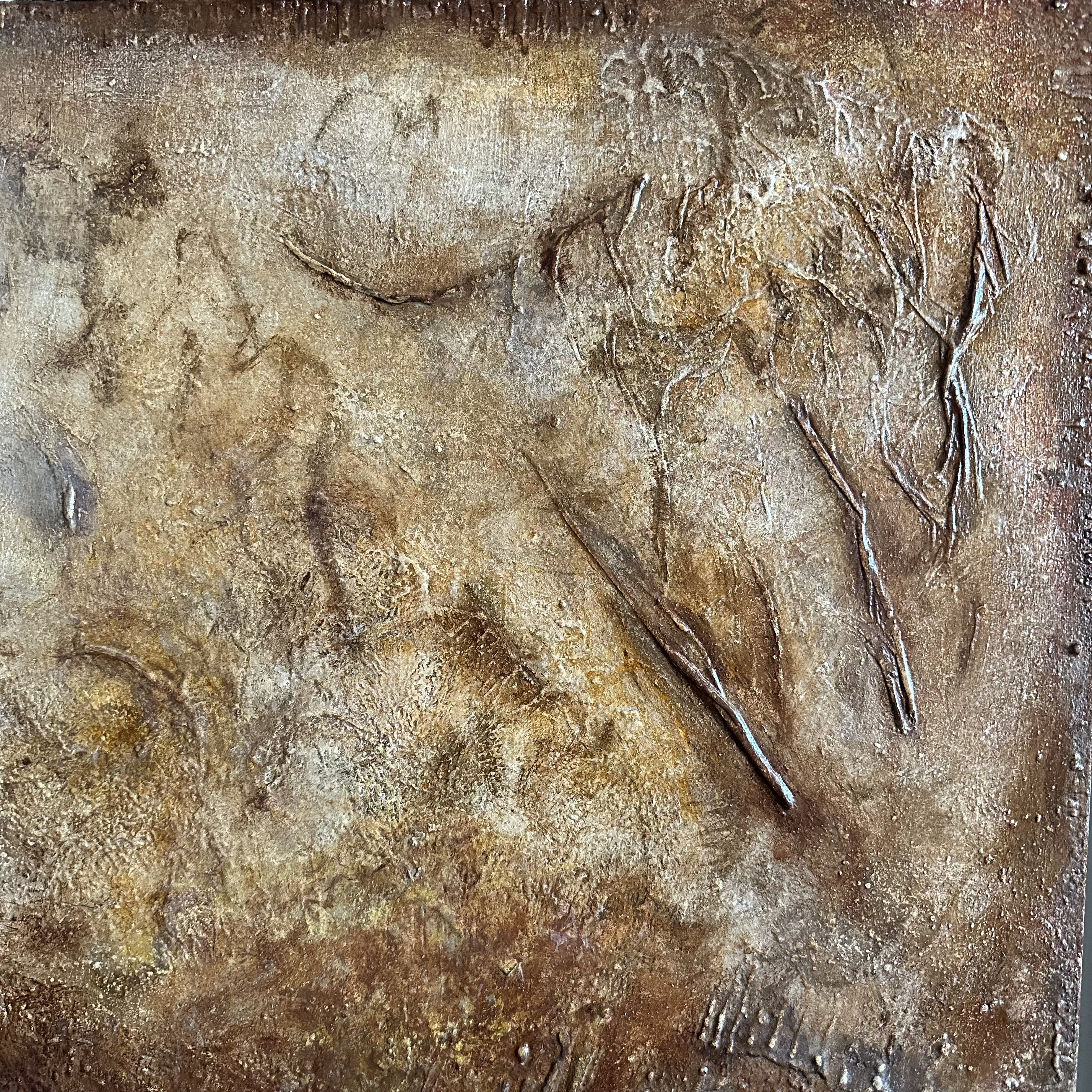
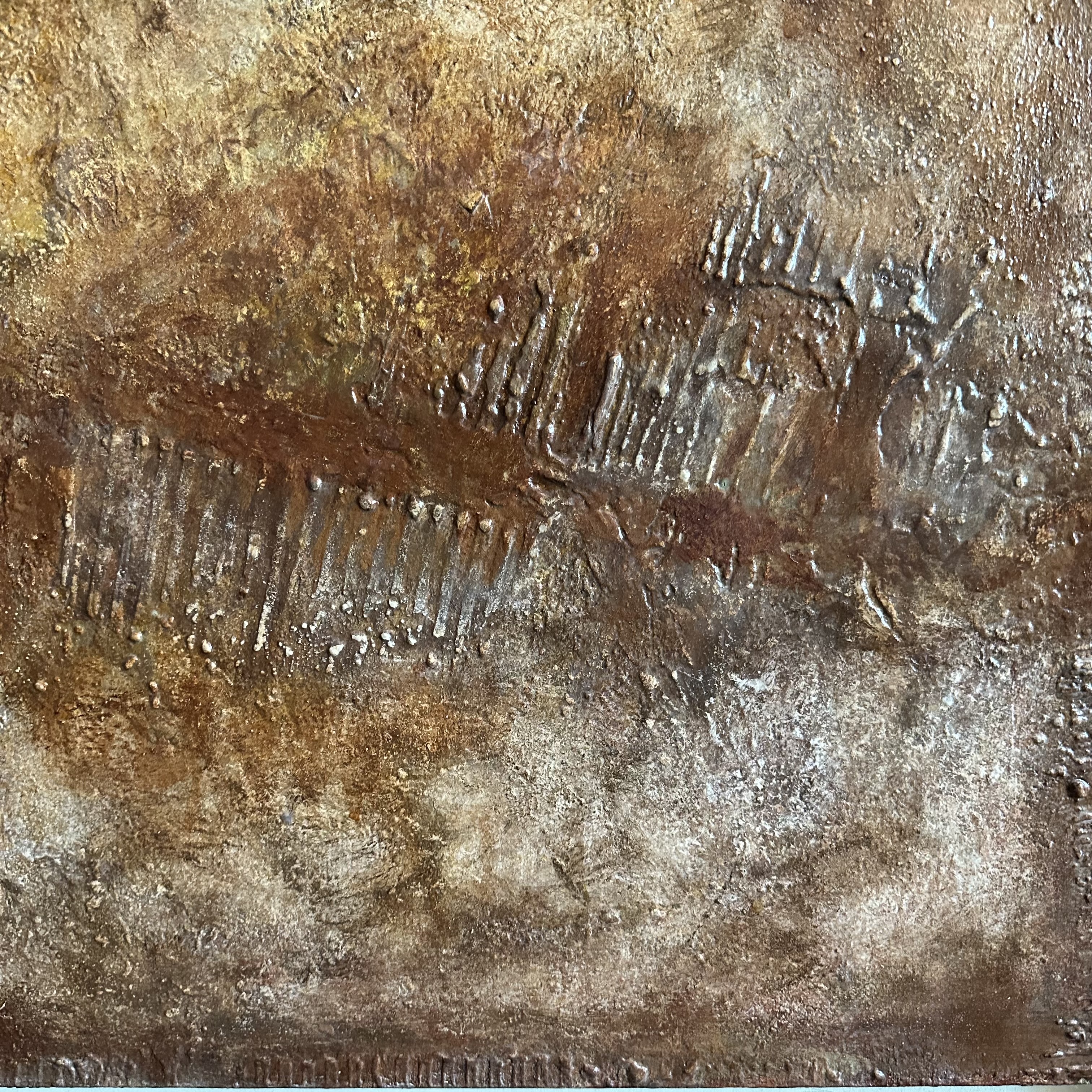
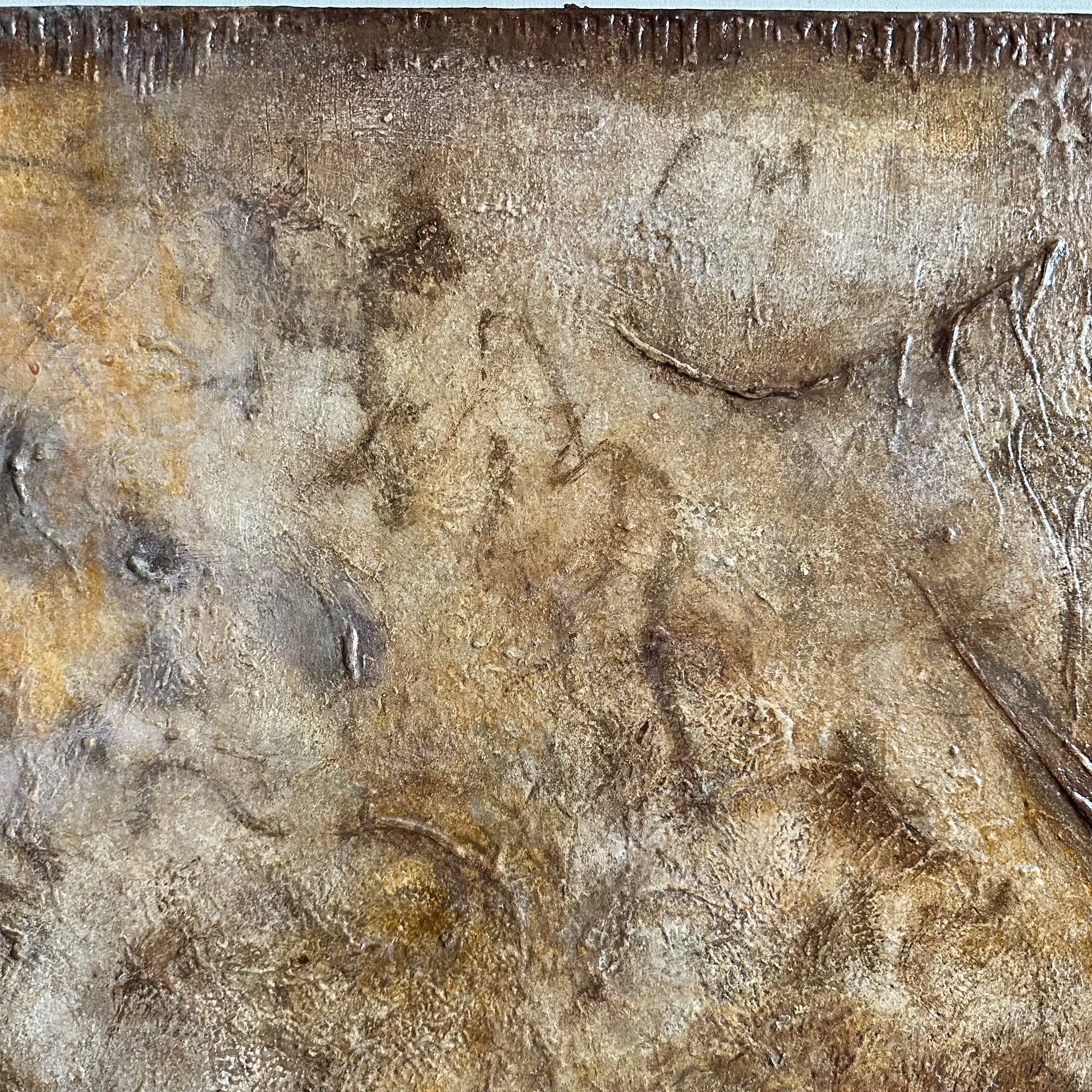
The square canvas (72.7 × 72.7 cm) is built from iron-oxide paint, aluminum foil, modeling paste, and paper foil, subjected to both forced oxidation via heat gun and passive exposure through air-drying. The final and decisive gesture is a heavy gloss varnish, sealing the surface at a moment the artist identifies as oxidation’s “aesthetic peak.” This act does not resolve the work’s tensions; it fixes them permanently in place.
II. Dapsup: Repetition Without Illusion
The work’s conceptual anchor is the Korean term Dapsup (답습), often translated as “following in the footsteps,” but more precisely understood as the repetition of established paths despite full knowledge of their consequences. It is not ignorance that defines Dapsup, but persistence after understanding.
Kim does not illustrate this concept narratively. Instead, he materializes it. The heat gun accelerates oxidation, compressing geological duration into minutes—an unmistakable echo of industrial modernity’s violence toward time. Natural air-drying, by contrast, allows matter to proceed at its own pace, indifferent to human intention. The result is a surface marked by differentiated aging, where zones of coercion coexist with zones of acquiescence.
Yet the work resists becoming a simple allegory. The materials do not behave symbolically; they behave chemically. Rust spreads where conditions permit it. Aluminum reflects where it remains exposed. Paste fractures under its own weight. The painting does not “represent” depletion—it undergoes it. Meaning emerges not from depiction but from process arrested mid-course.
III. The Varnish: Decision, Not Metaphor
Much of the interpretive anxiety surrounding Result of Follow-up concentrates on the varnish. Does sealing decay aestheticize crisis? Does preservation neutralize critique? These questions presume that continued deterioration would constitute a more authentic ethical stance. Kim’s work quietly dismantles this assumption.
To leave the surface unsealed would not radicalize the work; it would dissolve it—materially, institutionally, and historically. Painting, unlike performance or land art, operates within an archival economy. It persists. It enters collections. It survives its maker. The varnish does not betray this condition; it acknowledges it without apology.
More importantly, the varnish functions as a historical index. By sealing the surface in 2025, Kim fixes a specific material state against future time. The oxidation will not continue to age alongside the world. The work will remain unchanged while its referent—the planet it indirectly evokes—does not. This temporal asymmetry is crucial. The painting becomes a mummified witness: present, intact, and increasingly anachronistic as years pass.
The varnish is therefore not metaphorical embellishment. It is an authorial decision that foregrounds painting’s ontological limits. Kim does not pretend to escape commodification, preservation, or display. He incorporates them as structural facts.
IV. Beauty Without Alibi
Formally, the work is unmistakably seductive. The oxidized surface produces chromatic effects unattainable through pigment alone: translucent ambers, dense umbers, rust-orange accretions that oscillate between depth and surface. Embedded aluminum fragments refract light, generating intermittent luminosity within an otherwise earthen palette. Texture accumulates rather than performs; impasto and pooling coexist without hierarchy.
This beauty is often treated with suspicion in ecological discourse, as if aesthetic pleasure necessarily undermines ethical seriousness. Kim refuses this binary. The work does not apologize for its visual appeal, nor does it attempt to weaponize discomfort. Instead, it exposes a more unsettling condition: that crisis no longer prevents beauty, and that beauty no longer guarantees innocence.
In this sense, Result of Follow-up belongs less to a tradition of protest art than to a lineage concerned with aftermath and endurance. One might think of Anselm Kiefer’s scorched landscapes, where ruin becomes monumental, or of Robert Smithson’s entropic logic—but with a crucial inversion. Where Smithson allowed entropy to proceed indefinitely, Kim halts it. Where Kiefer monumentalizes trauma, Kim miniaturizes it into a sealed surface, polished and complete.
V. The Gap Between Statement and Surface
The accompanying artist statement leans heavily on moral language—“ethical numbness,” “collective hypocrisy,” “the aesthetics of depletion.” At times, this rhetoric risks overdetermining the work, framing it as exposé rather than record. Yet this excess should not be dismissed as conceptual confusion. It reflects the discursive conditions under which contemporary painting must operate.
In 2025, material investigation alone is rarely permitted to stand without theoretical scaffolding. Ecological reference functions as institutional passport: for juries, for curators, for discourse. The statement performs this negotiation. It speaks the language required for circulation.
The painting itself, however, is quieter—and more precise. It neither condemns nor absolves. It simply remains. The tension between what the text claims and what the surface does is not failure; it is symptom. It reveals the impossibility of maintaining critical purity within systems that have already absorbed critique as style.
VI. Painting After Critique
Result of Follow-up ultimately proposes a form of painting that operates after critique, not in ignorance of it but beyond its efficacy. The work does not seek to change behavior, nor does it pretend that representation alone can intervene meaningfully in planetary processes. Instead, it records the state of things as they have become—materially, temporally, institutionally.
Kim Junsung has produced a painting that understands its own limits and works rigorously within them. Rust is not symbol here; it is evidence. Varnish is not irony; it is necessity. The canvas does not warn. It does not redeem. It persists.
In an era saturated with images of crisis, this persistence is not resignation. It is acknowledgment. The work accepts that art, like everything else, arrives late—and continues anyway.
That continuation, stripped of illusion and sealed without sentiment, is the work’s most exacting truth.
Assessment
Result of Follow-up is a materially sophisticated and conceptually lucid work that succeeds precisely where it refuses moral comfort. Its strength lies not in denunciation but in fixation: holding a moment of transformed matter still, long enough for its contradictions to become visible.
This is not painting as warning.
It is painting as record after the warning has failed.
And that may be the most honest position left.
이미지 이후, 경고 이후
김준성의 〈답습의 결과〉와 밀봉된 시간의 윤리
글 | [필자명], 2026
I. 너무 늦게 도착한 회화
김준성의 〈답습의 결과〉(2023–2025)는 경고로 도착하지 않는다. 이미 너무 늦었기 때문이다. 이 작업은 관람자에게 행동을 촉구하지도, 비난하지도, 각성을 요구하지도 않는다. 대신 그것은 **밀봉된 기록(sealed record)**으로서 제시된다. 윤리적 긴급성이 더 이상 실질적인 결과를 만들어내지 못한 이후에 제작된 회화다.
이러한 시간적 ‘지연’은 부수적인 조건이 아니라 작품의 핵심이다. 지난 20여 년간의 환경 미술이 주로 예방과 경고의 수사—녹아내리는 빙하, 사라지는 종, 임박한 재난—에 기대어 왔다면, 김준성의 캔버스는 전혀 다른 시간대에 위치한다. 그것은 **경고 이후(post-admonitory), 권고 이후(post-exhortative), 윤리 이후(post-ethical)**의 회화다. 재앙은 이미 흡수되었고, 미학화되었으며, 정상화되었다. 남은 것은 저항이 아니라 **잔여물(residue)**이다.
72.7 × 72.7cm의 정방형 캔버스는 산화철 물감, 알루미늄 포일, 모델링 페이스트, 종이 포일로 구성되어 있으며, 열풍기에 의한 강제 산화와 자연 공기 노출에 의한 수동적 건조라는 두 개의 시간 과정을 거친다. 그리고 마지막으로, 결정적인 제스처가 가해진다. 작가가 산화의 “미학적 정점”이라 규정한 순간, 화면 전체를 두터운 유광 바니시로 밀봉하는 것이다. 이 행위는 작품의 긴장을 해소하지 않는다. 오히려 그것을 영구적으로 고정한다.
II. 답습: 환상 없는 반복
이 작업의 개념적 축은 ‘답습(答襲)’이라는 한국어 개념이다. 이는 단순히 과거를 모방한다는 뜻이 아니라, 결과를 충분히 인지하고 있음에도 동일한 경로를 반복하는 상태를 의미한다. 답습을 규정하는 것은 무지가 아니라, 이해 이후의 지속이다.
김준성은 이 개념을 서사적으로 설명하지 않는다. 그는 그것을 물질적으로 구현한다. 열풍기는 산화 과정을 가속시키며, 지질학적 시간을 몇 분 안에 압축한다. 이는 산업 근대성이 시간에 가해온 폭력을 직접적으로 환기시킨다. 반면 자연 건조는 물질이 인간의 의도와 무관하게 자기 속도로 진행되도록 허용한다. 그 결과 화면에는 강제와 방임이 공존하는 **‘차별화된 노화’**의 지형이 형성된다.
그러나 이 작업은 단순한 알레고리로 환원되지 않는다. 물질은 상징적으로 행동하지 않는다. 그것은 화학적으로 반응한다. 녹은 조건이 허락하는 곳에서 번지고, 알루미늄은 노출된 만큼 빛을 반사하며, 페이스트는 자기 하중에 따라 균열된다. 이 회화는 고갈을 ‘재현’하지 않는다. 그것은 고갈을 겪는다. 의미는 묘사에서가 아니라, 중단된 과정에서 발생한다.
III. 바니시: 은유가 아닌 결정
〈답습의 결과〉를 둘러싼 해석적 불안의 상당 부분은 바니시에 집중된다. 부패를 밀봉하는 것이 위기를 미학화하는 행위인가? 보존은 비판을 무력화하는가? 이러한 질문들은 지속적인 열화가 더 윤리적인 태도일 것이라는 전제를 내포한다. 김준성의 작업은 이 전제를 조용히 해체한다.
표면을 밀봉하지 않았다면, 작업은 급진화되기보다 해체되었을 것이다—물질적으로, 제도적으로, 역사적으로. 회화는 퍼포먼스나 대지미술과 달리 보존의 경제 안에서 작동한다. 그것은 지속되고, 수집되며, 작가 이후에도 남는다. 바니시는 이 조건을 배반하지 않는다. 그것을 숨김없이 인정한다.
더 나아가 바니시는 **역사적 지표(historical index)**로 기능한다. 2025년에 화면을 밀봉함으로써, 김준성은 특정한 물질 상태를 미래의 시간에 고정시킨다. 산화는 더 이상 세계와 함께 늙지 않는다. 작품은 변하지 않고, 그 참조 대상—간접적으로 환기되는 행성—만이 변해간다. 이 시간적 비대칭성은 결정적이다. 회화는 미라화된 증인이 된다. 현재에 존재하지만, 시간이 흐를수록 점점 더 시대착오적으로 보이게 될 증인.
따라서 바니시는 장식적 은유가 아니다. 그것은 회화의 존재론적 한계를 전면화하는 저자적 결정이다. 김준성은 상품화, 보존, 전시라는 조건에서 도망치지 않는다. 그는 그것들을 구조적 사실로 통합한다.
IV. 변명 없는 아름다움
형식적으로 이 작업은 분명히 매혹적이다. 산화된 표면은 안료만으로는 도달할 수 없는 색채를 생성한다. 투명한 호박색, 밀도 높은 엄버, 표면과 깊이를 오가는 녹청의 축적. 삽입된 알루미늄 조각들은 빛을 굴절시키며, 흙빛 팔레트 안에서 간헐적인 광도를 만들어낸다. 질감은 과시되지 않고 누적되며, 두터운 임파스토와 바니시가 고인 평면이 위계 없이 공존한다.
환경 담론에서 이러한 아름다움은 종종 의심의 대상이 된다. 미적 쾌락은 윤리적 진지함을 약화시킨다는 통념 때문이다. 김준성은 이 이분법을 거부한다. 작품은 시각적 쾌락에 대해 사과하지도, 불편함을 무기화하지도 않는다. 대신 그것은 더 불편한 조건을 드러낸다. 위기는 더 이상 아름다움을 방해하지 않으며, 아름다움은 더 이상 무죄를 보증하지 않는다는 사실이다.
이 점에서 〈답습의 결과〉는 항의 미술의 계보보다는, 사후와 지속의 미학에 더 가깝다. 엔트로피를 그대로 허용했던 로버트 스미슨과 비교할 수 있지만, 김준성은 과정을 정지시킨다. 파괴를 기념비화한 안젤름 키퍼와도 다르다. 김은 폐허를 광택 낸 표면 안으로 축소하고, 완결된 상태로 봉인한다.
V. 진술과 표면 사이의 간극
작가노트는 “윤리적 무감각”, “집단적 위선”, “고갈의 미학”과 같은 도덕적 언어에 크게 의존한다. 이 수사는 때때로 작품을 기록이 아닌 폭로로 오독하게 만든다. 그러나 이러한 과잉을 개념적 혼란으로만 치부하는 것은 성급하다. 이는 동시대 회화가 놓인 담론적 조건을 반영한다.
2025년의 미술계에서, 순수한 물질 탐구는 거의 언제나 이론적 발판을 요구받는다. 생태 담론은 통과 의례다. 심사, 전시, 담론을 위한 언어다. 작가노트는 이 협상을 수행한다.
반면 회화 자체는 훨씬 조용하고 정확하다. 그것은 비난하지도, 구원하지도 않는다. 그저 존재한다. 텍스트와 표면 사이의 긴장은 실패가 아니라 증상이다. 비판이 이미 스타일로 흡수된 체계 안에서, 비판적 순수성을 유지하는 것이 불가능함을 드러내는 증상이다.
VI. 비평 이후의 회화
〈답습의 결과〉는 비평을 무시해서가 아니라, 비평의 효력이 소진된 이후에 작동하는 회화를 제안한다. 이 작업은 행동 변화를 기대하지 않으며, 재현이 행성의 과정을 실질적으로 개입할 수 있다고 가장하지 않는다. 대신 그것은 사태가 이렇게 굳어버린 이후의 상태를—물질적으로, 시간적으로, 제도적으로—기록한다.
김준성은 자신의 한계를 인식한 채 그 안에서 밀도 높은 작업을 구축한다. 녹은 상징이 아니라 증거다. 바니시는 아이러니가 아니라 필연이다. 캔버스는 경고가 아니라 기록이다.
이미지 과잉의 시대에, 이러한 지속은 체념이 아니다. 그것은 인정이다. 예술 또한 다른 모든 것처럼 늦게 도착하며, 그럼에도 불구하고 계속된다는 인정.
그 지속성—감상 없이, 감정 없이, 밀봉된 채 남는 것—이 바로 이 작업의 가장 정확한 진실이다.
총평
〈답습의 결과〉는 도덕적 위안을 제공하지 않음으로써 성공하는, 물질적으로 정교하고 개념적으로 명료한 작업이다. 이 작품의 힘은 고발이 아니라 고정에 있다. 변형된 물질의 한 순간을 붙잡아, 그 모순이 충분히 드러날 만큼 오래 정지시키는 데 있다.
이것은 경고의 회화가 아니다.
이것은 경고가 실패한 이후의 회화다.
그리고 어쩌면, 그것이 남아 있는 가장 정직한 위치일지도 모른다.
'Art > Ag(e)ing Series' 카테고리의 다른 글
| Penance (2026 version) (0) | 2026.03.18 |
|---|---|
| Tranquility (2025 version) (1) | 2026.02.02 |
| GROOVE AND RIDGE (0) | 2025.12.09 |
| Patterns Begging to Be Buried (0) | 2025.12.03 |
| ONGOJISIN (溫故知新) (0) | 2025.11.24 |