2026. 6. 30. 13:03ㆍArt/PREX MEA Series
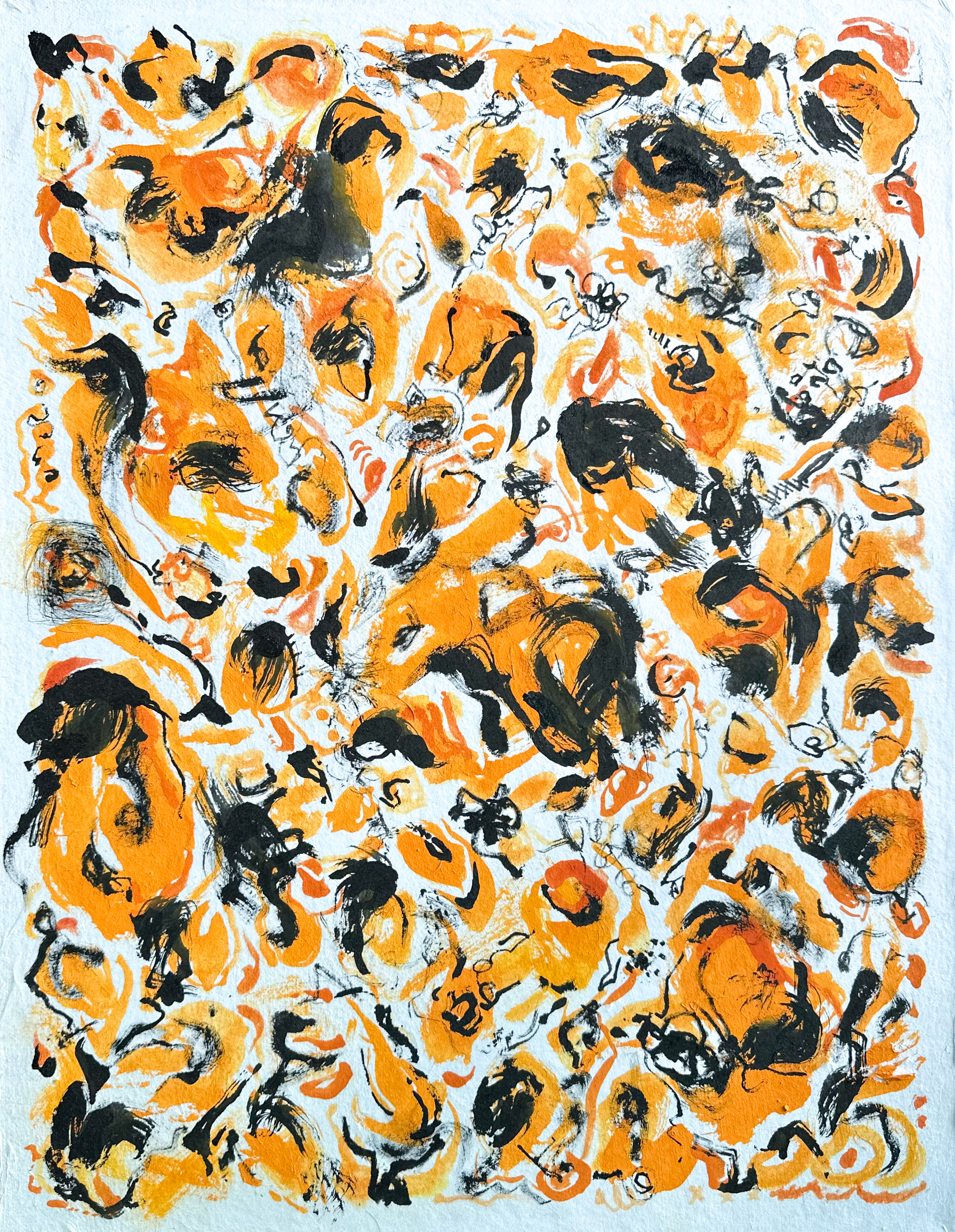
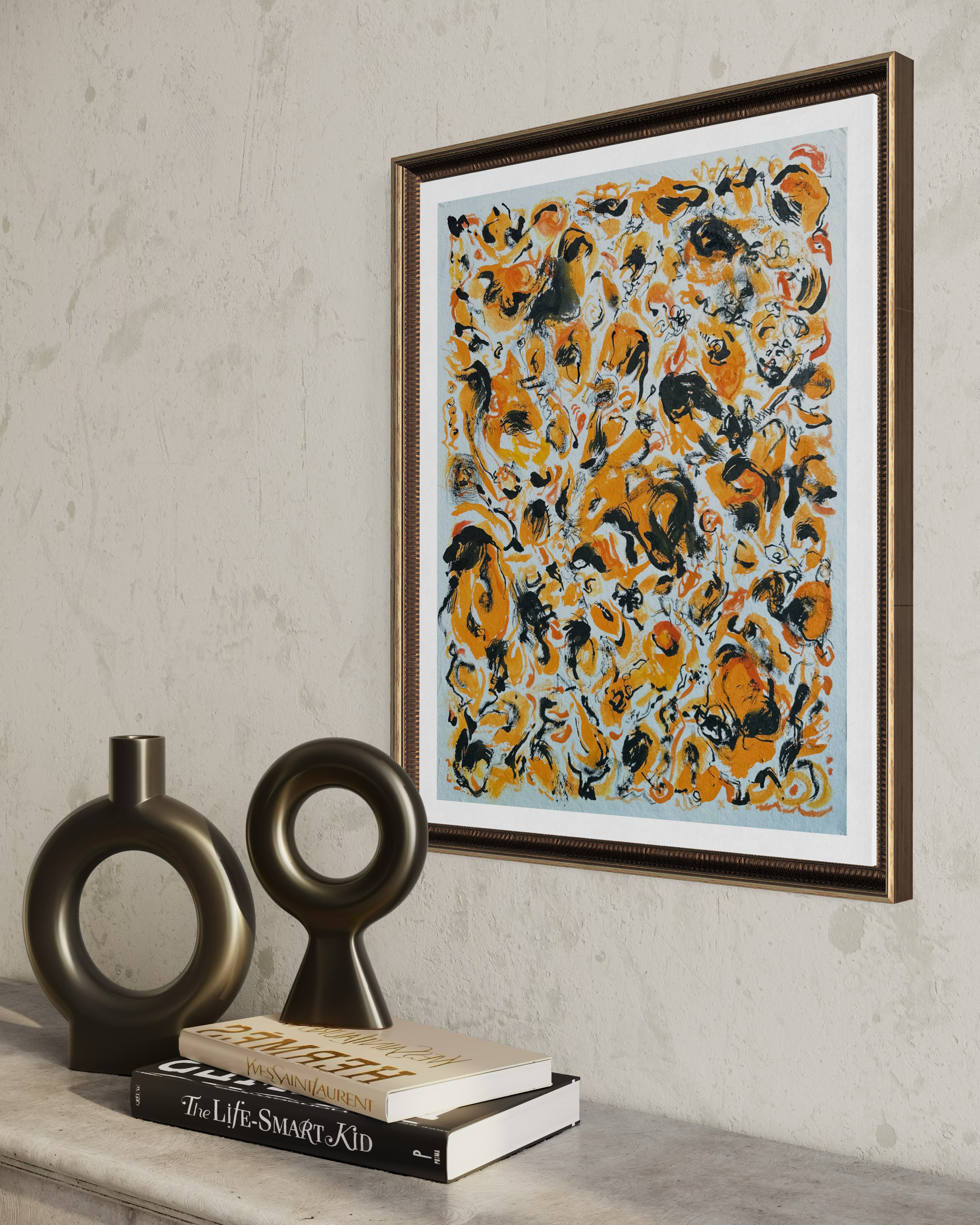
PREX MEA #6
灼中 (Jakjung) — Held in the Burn
灼 (to scorch, to burn) + 中 (within) — to remain, unmelted, inside the fire.
Oriental Pigments and Ink on Hanji, mounted on Cotton Canvas
53.0 × 40.9 cm (P10)
https://jonathank.tistory.com
https://www.singulart.com/en/artworks/kim-jun-sung-prex-mea-6-2731857
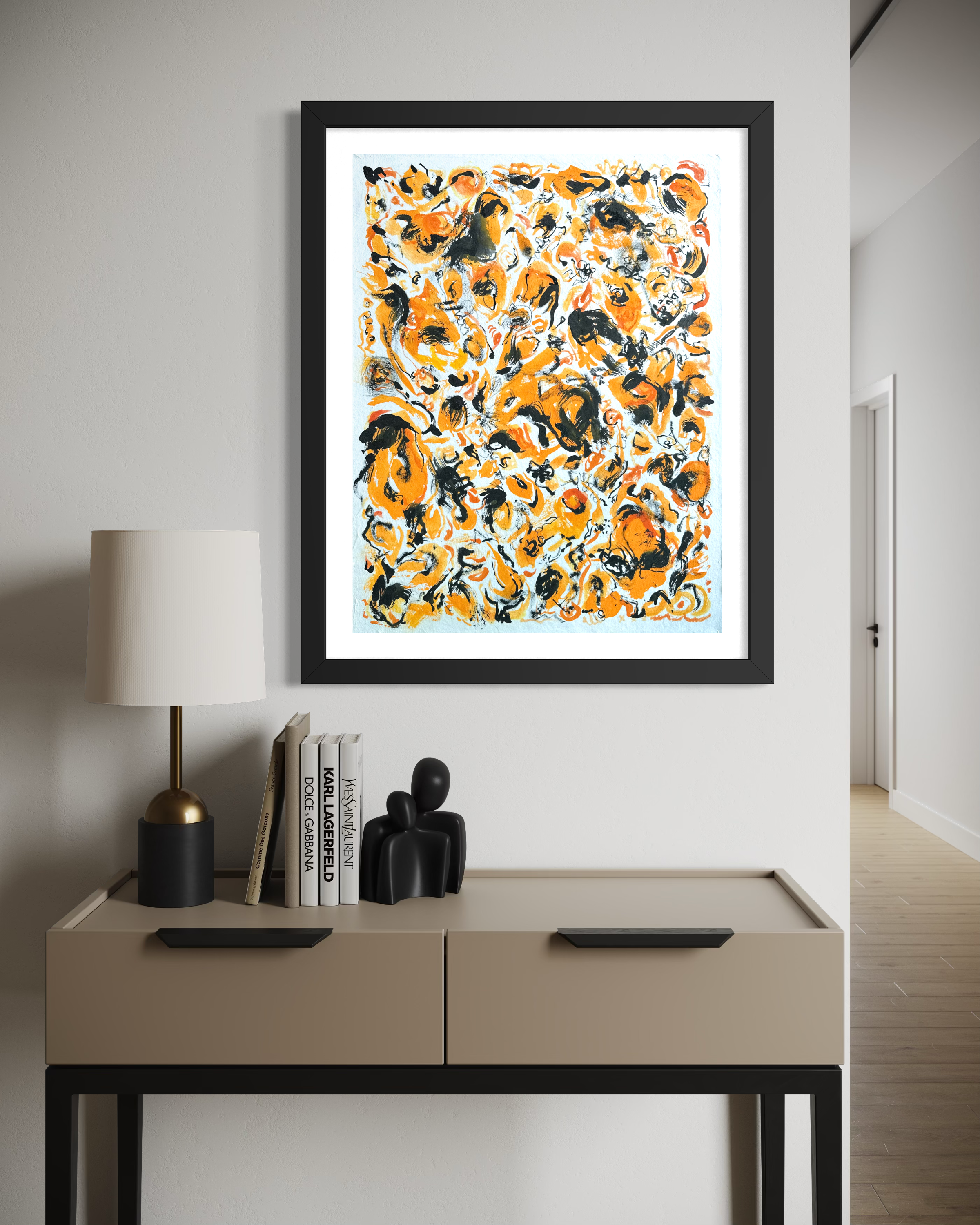
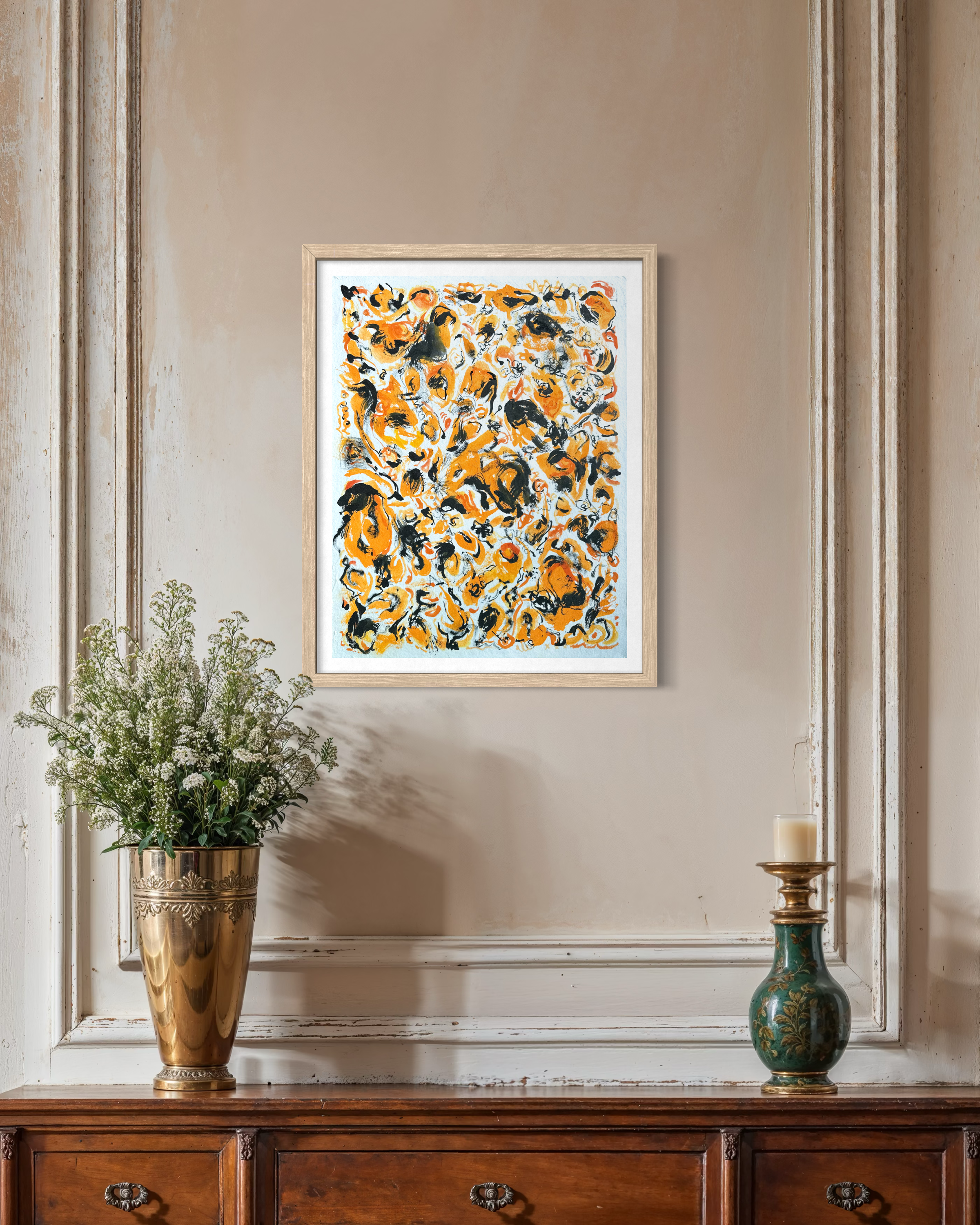
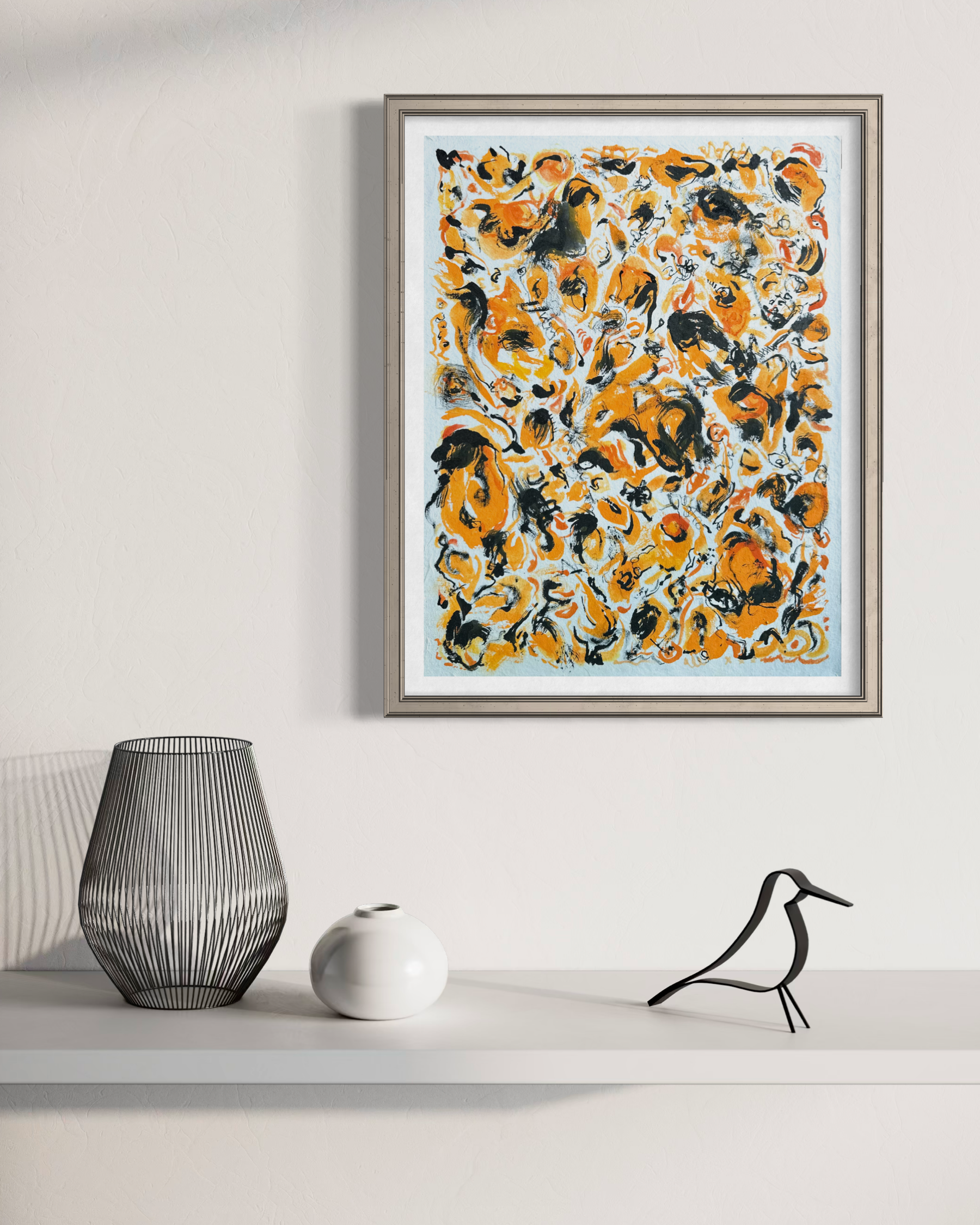
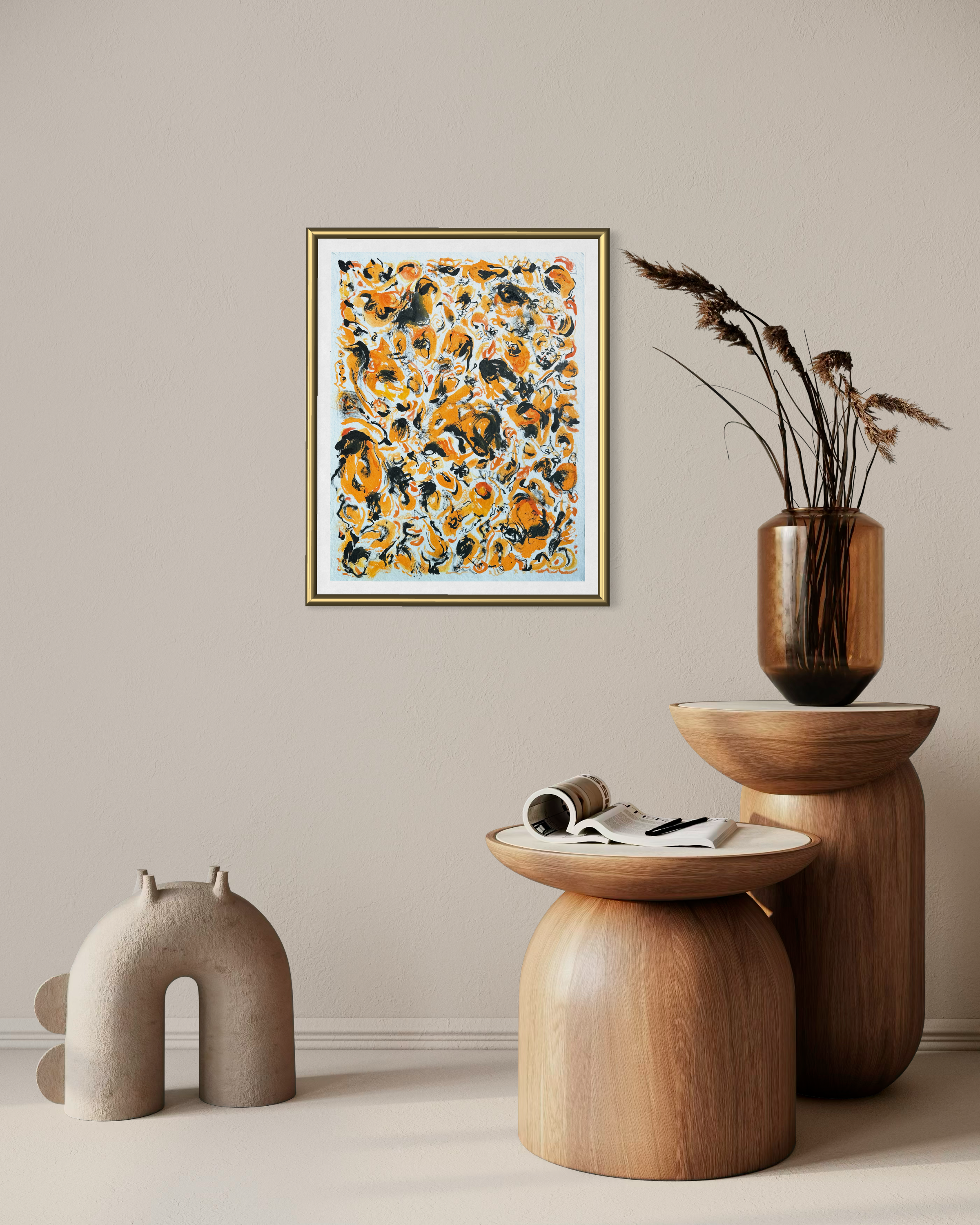
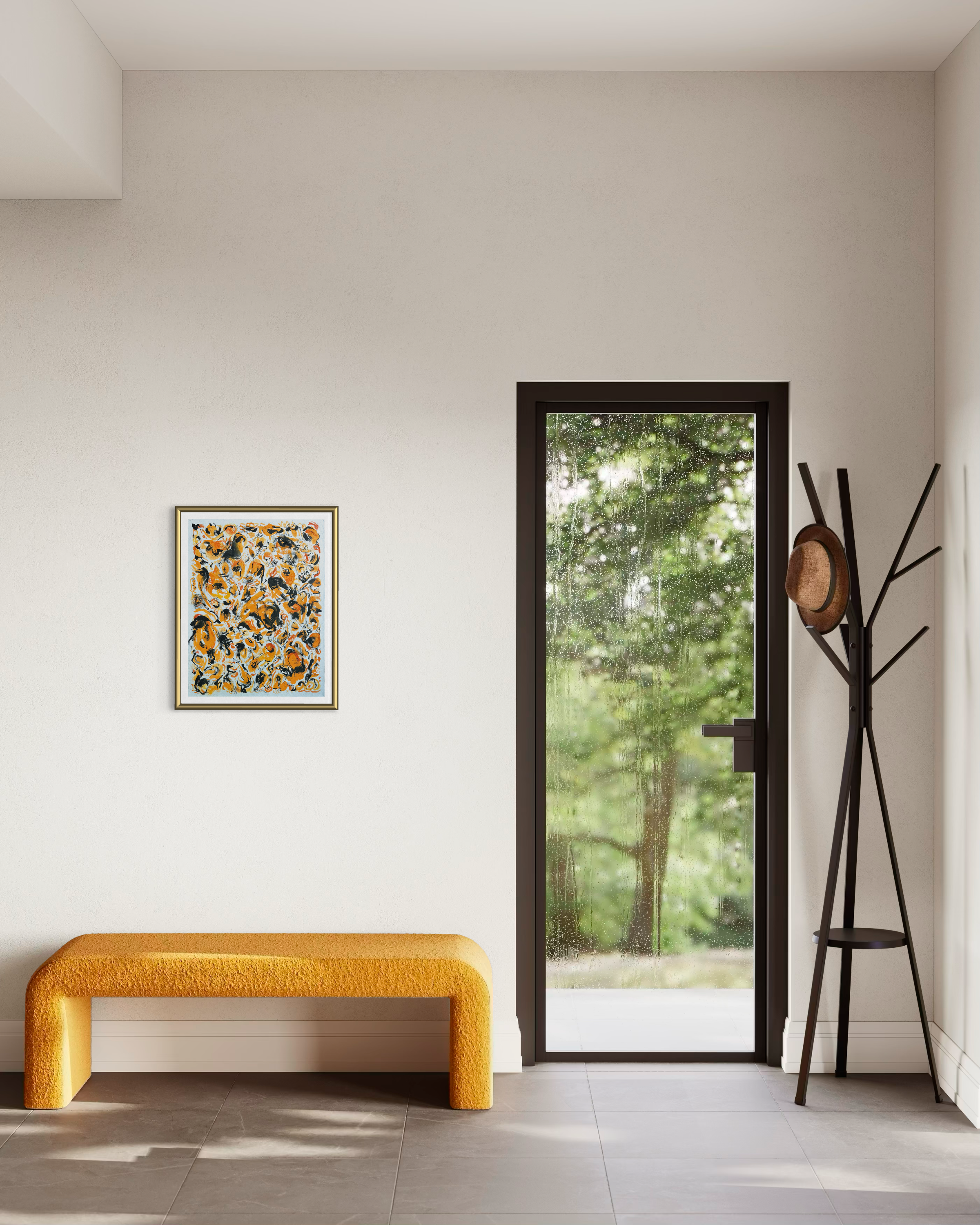
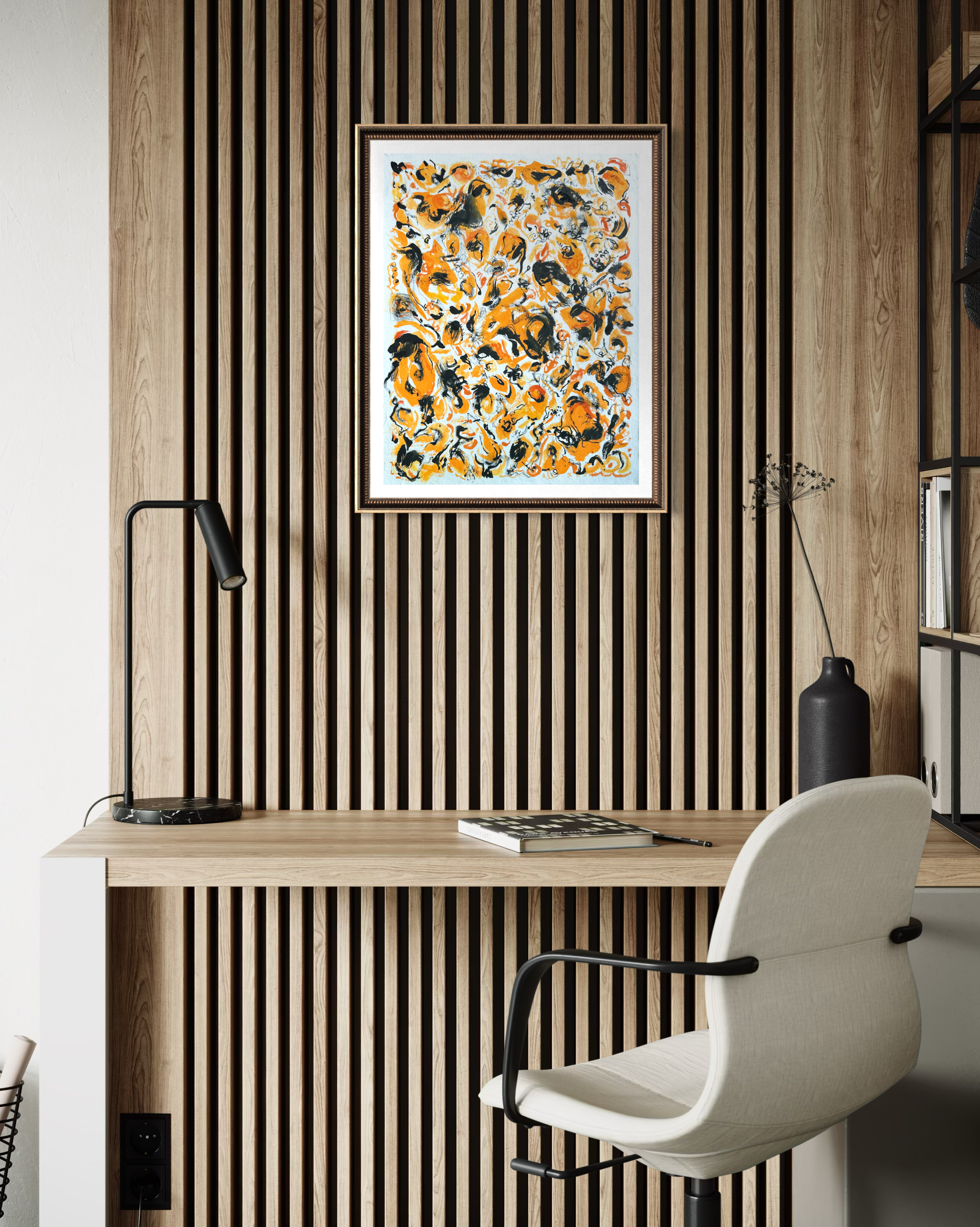
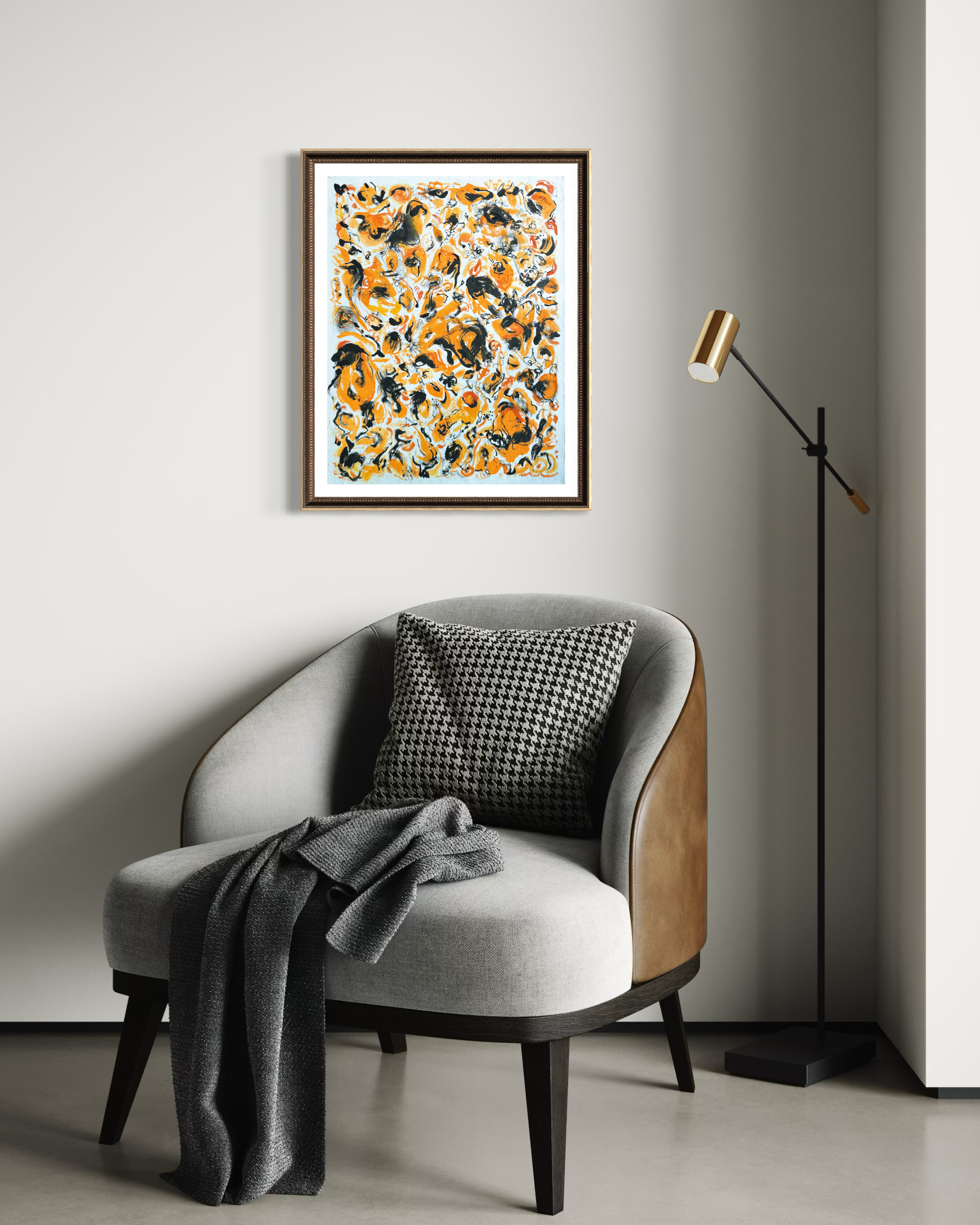
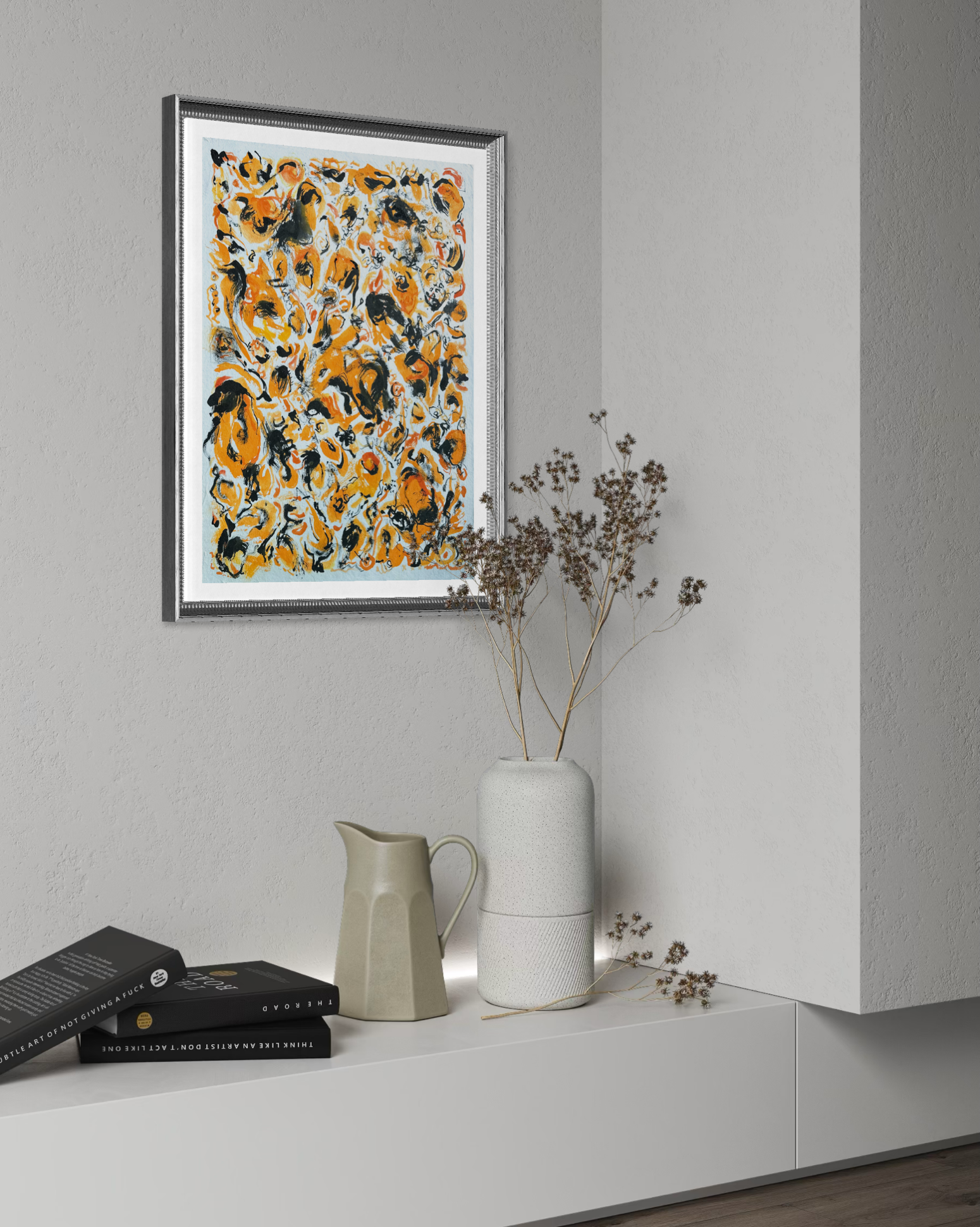
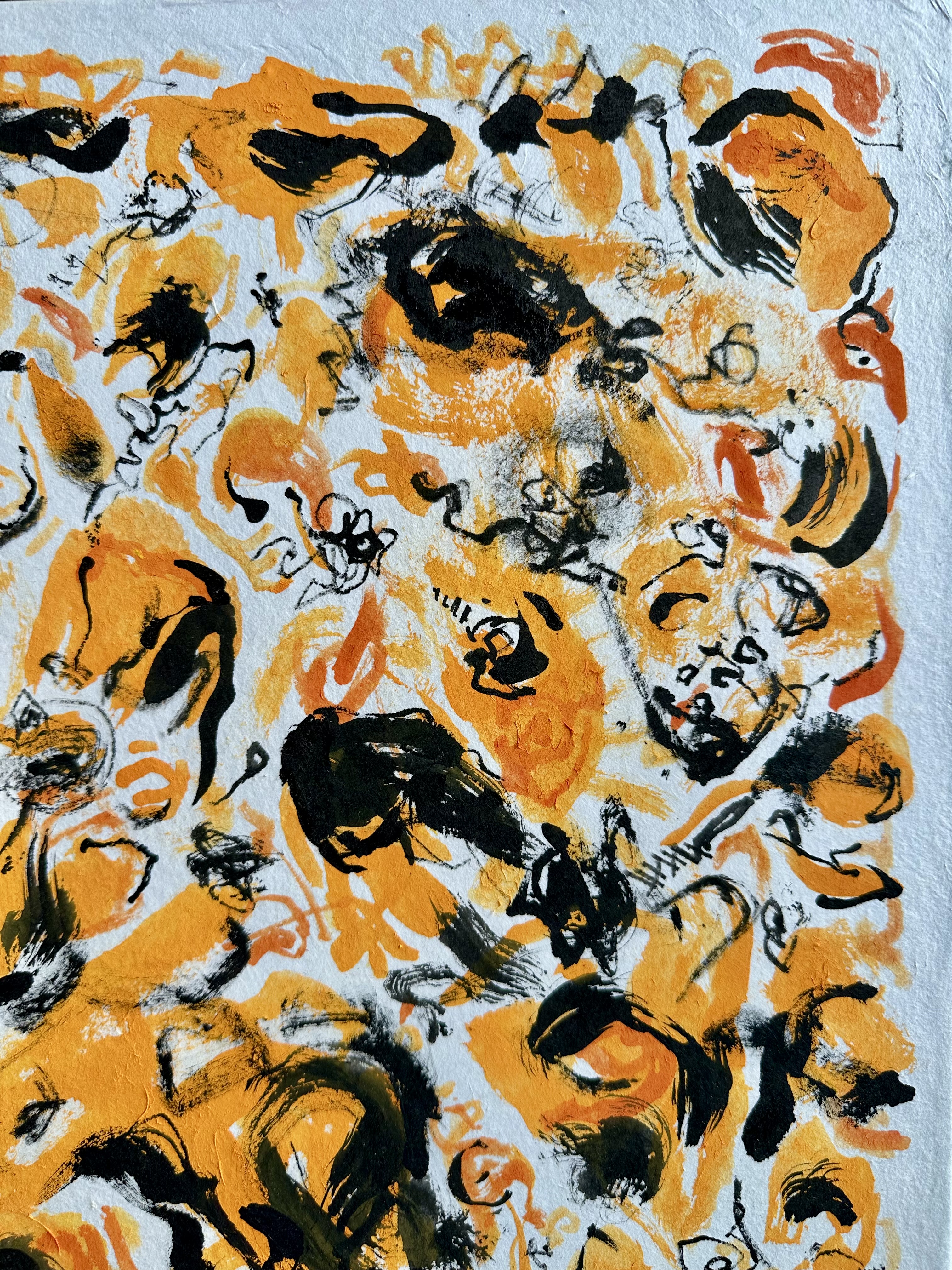
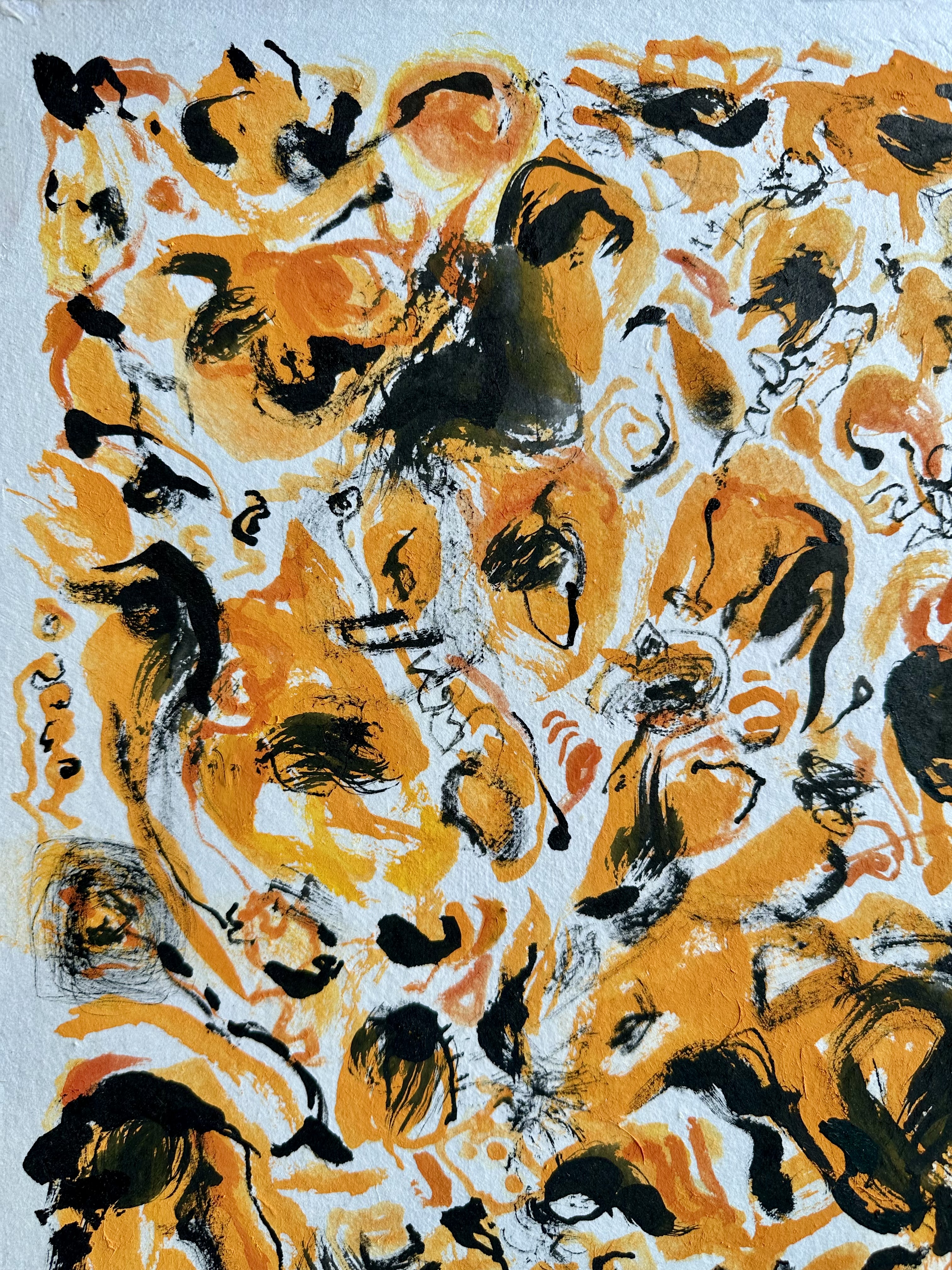
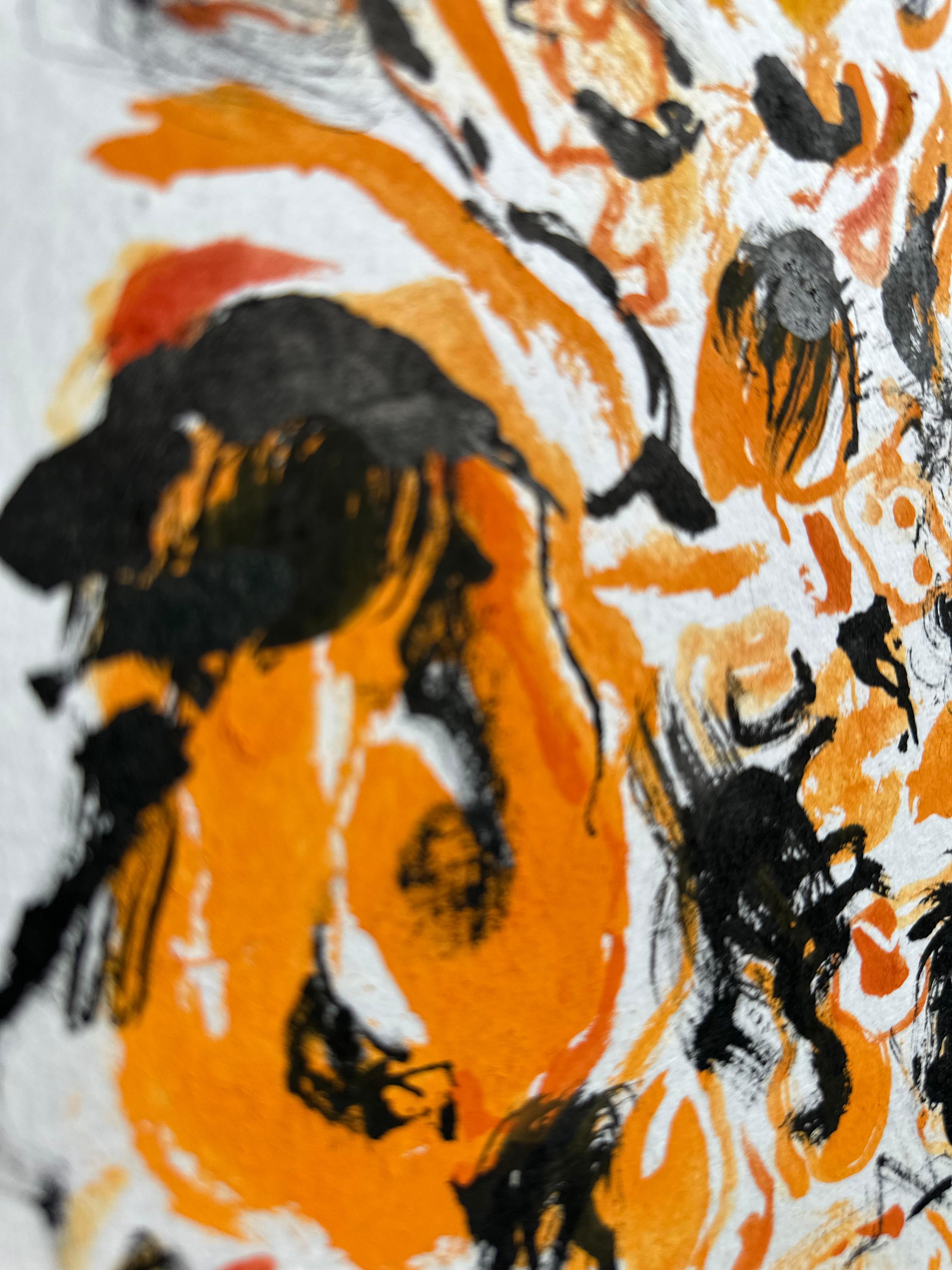
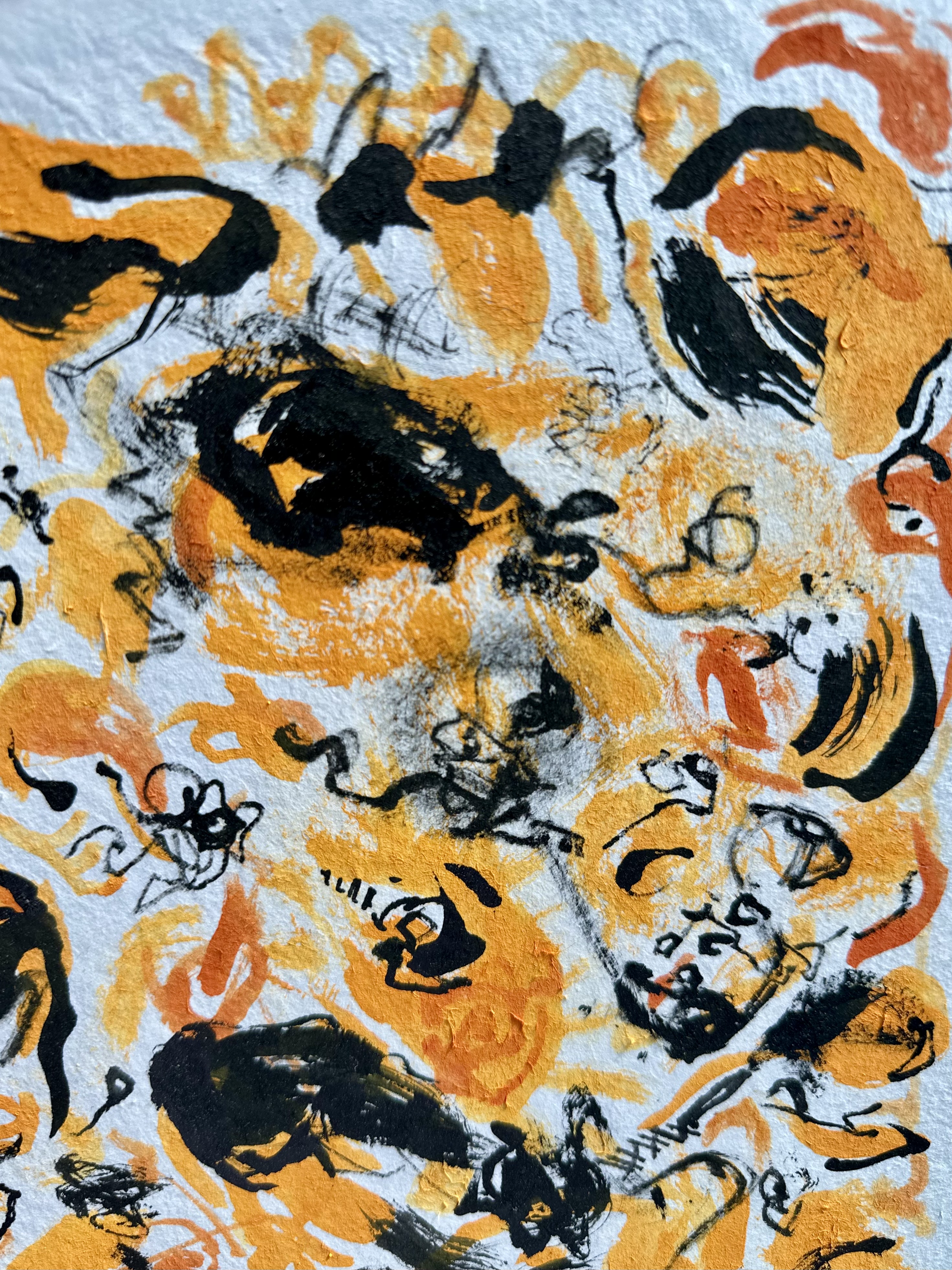
Orange, everywhere. Not the orange of fruit or sunset — closer to the orange of something still burning.
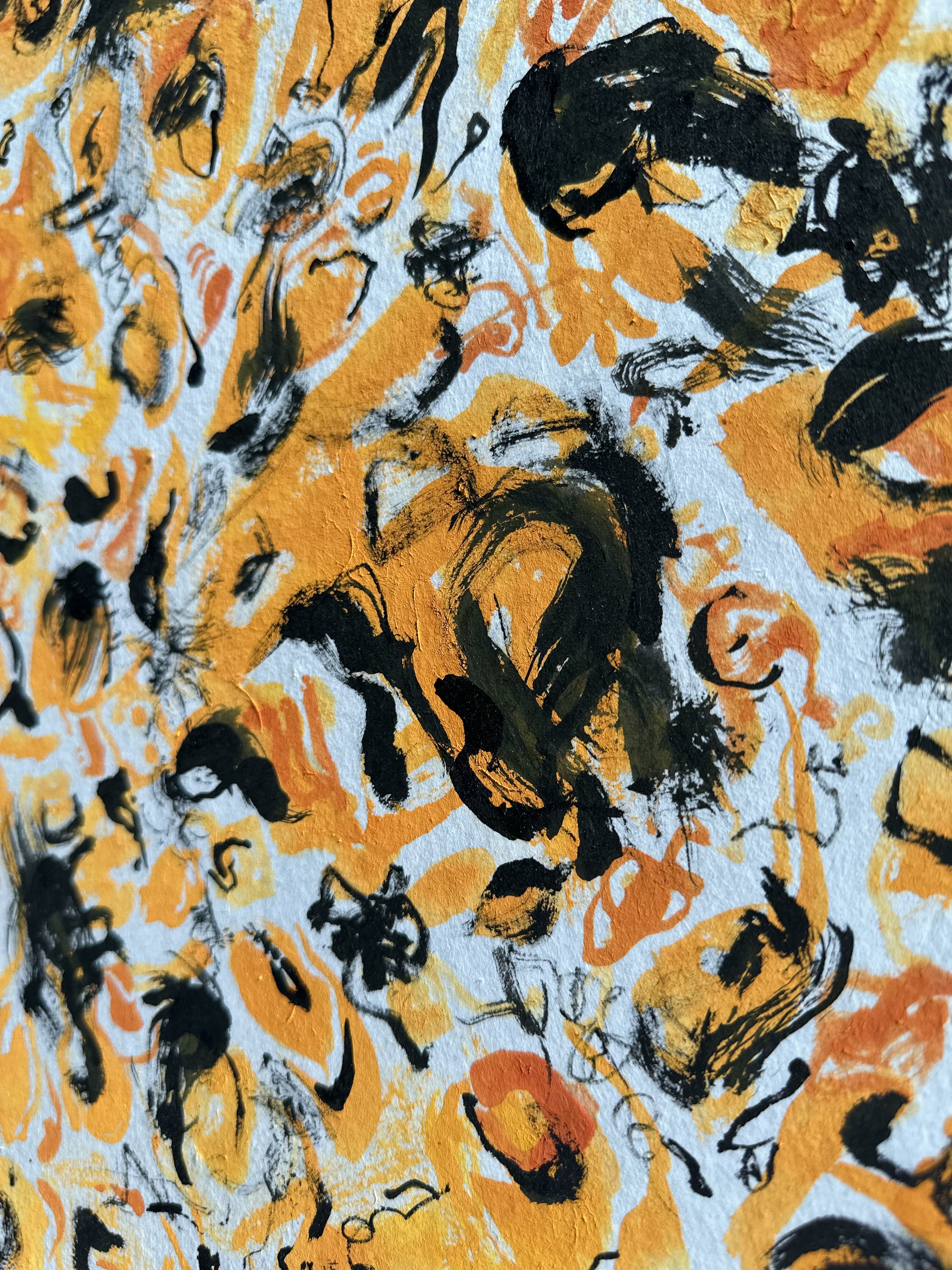
No room left for white. The field presses in from every side.
And there — black. Not one black. Many. Knots, smears, a few that almost become a line and stop. None of them retreats. None of them blurs into the heat around it.
Jakjung (灼中) — to burn, and to stay inside it.
Heat that doesn't soften what's inside it.
That's the whole prayer, maybe. Not asking the fire to go out.
Just this — something staying exactly itself, inside it.
주황, 사방에. 과일이나 노을의 주황이 아니다 — 아직 타고 있는 무언가의 주황에 더 가깝다.
흰빛이 남을 자리가 없다. 사방에서 화면이 밀려든다.
그리고 거기 — 검다. 하나의 검음이 아니다. 여럿이다. 매듭, 뭉개짐, 선이 되려다 멈춘 몇 개의 흔적. 어느 것도 물러나지 않는다. 어느 것도 주위의 열기 속으로 흐려지지 않는다.
灼中 — 타오르되, 그 안에 그대로 머무는 것.
안의 것을 무르게 만들지 않는 열기.
기도란 어쩌면 그런 것인지도 모른다. 불이 꺼지길 바라는 게 아니라.
그저 이것 — 그 안에서도 정확히 자기 자신으로 남아있는 것.
First, the heat. Before anything else registers, the orange does — dense, almost overripe, pushing toward red at the edges as if the color itself had a fever.
Then the eye starts finding the black. Scattered, not centered. A thick knot here, a thin trailing mark there, one that curls back on itself like it changed its mind mid-stroke. They don't agree on a shape. They agree on something else — none of them dissolves.
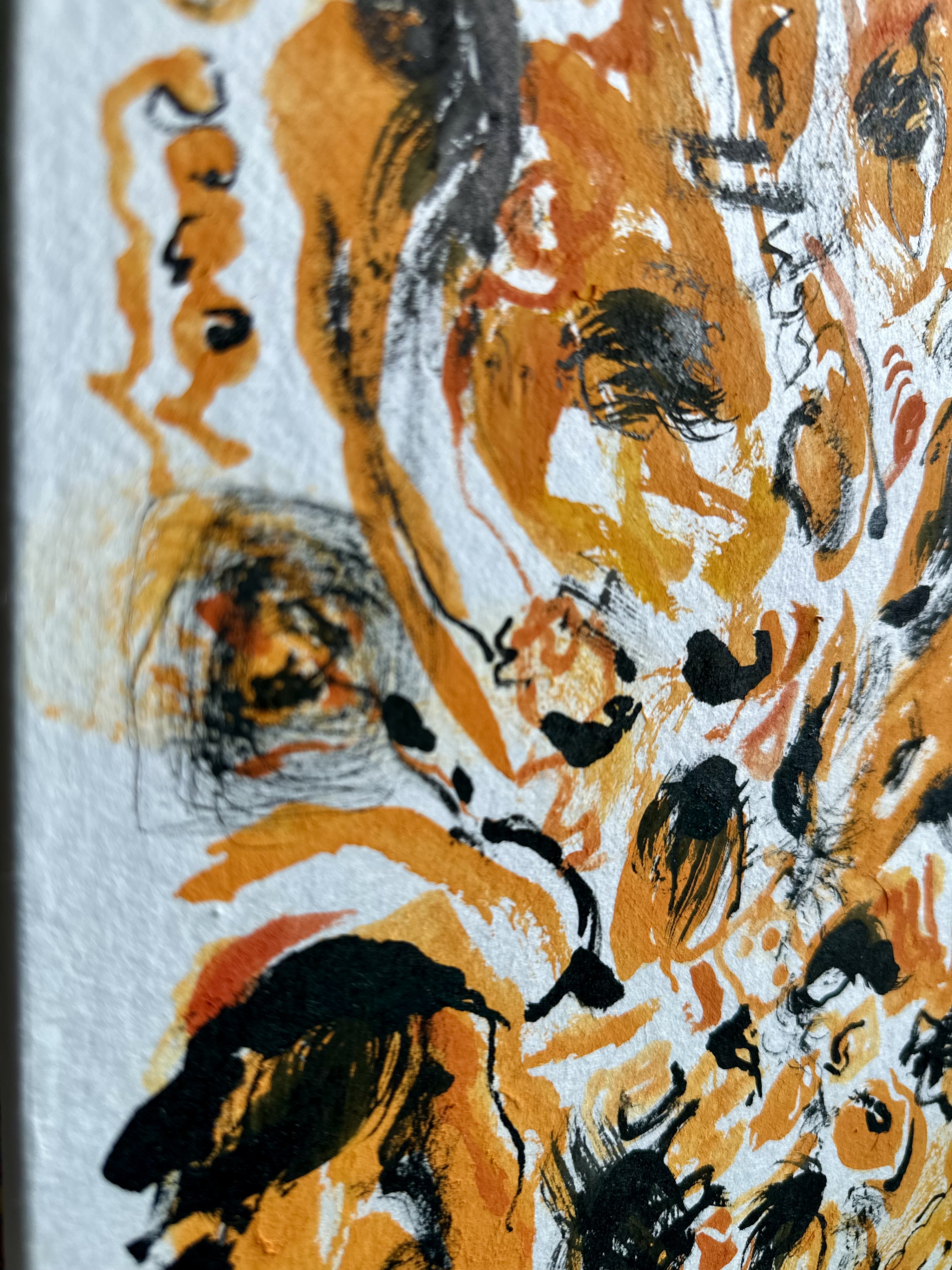
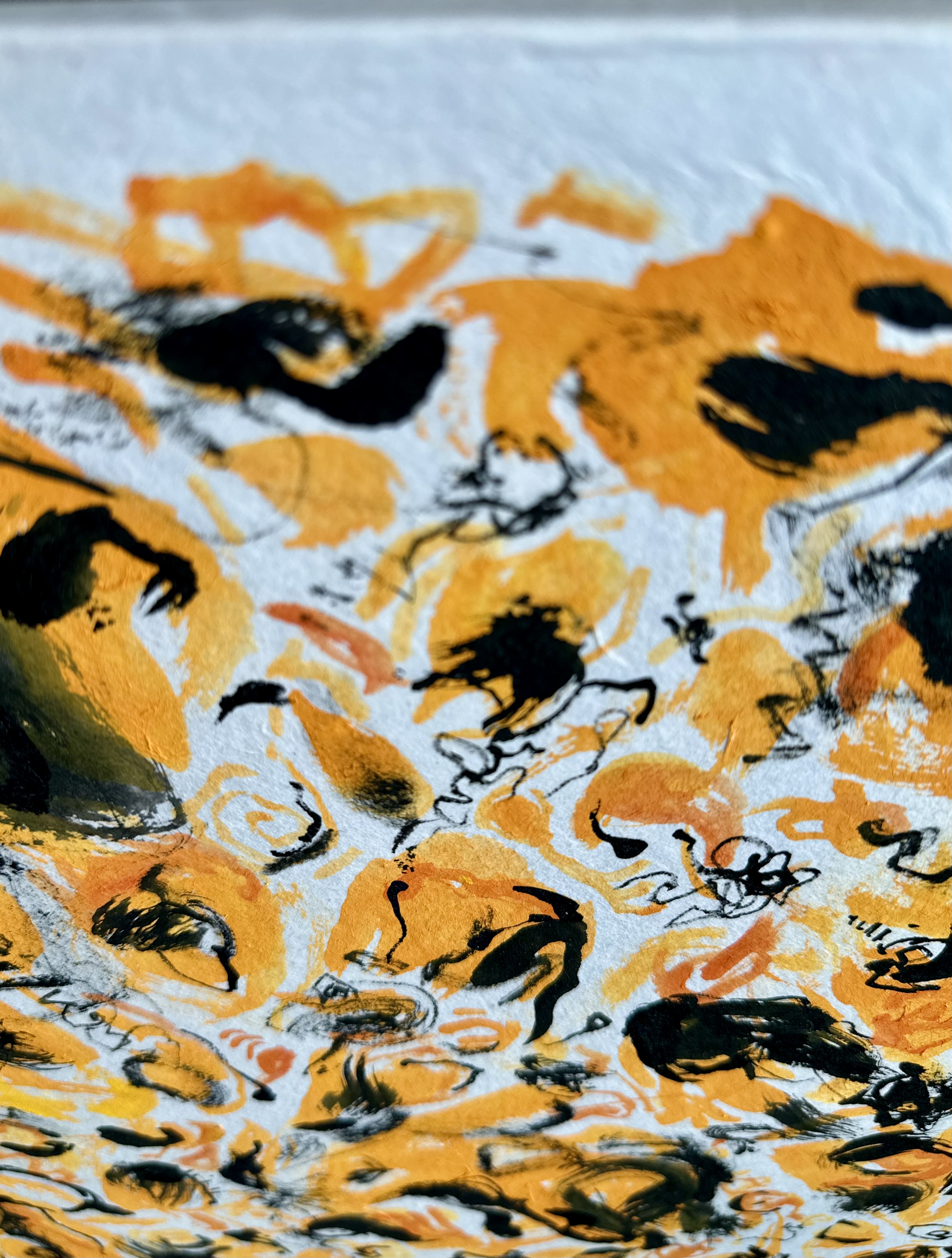
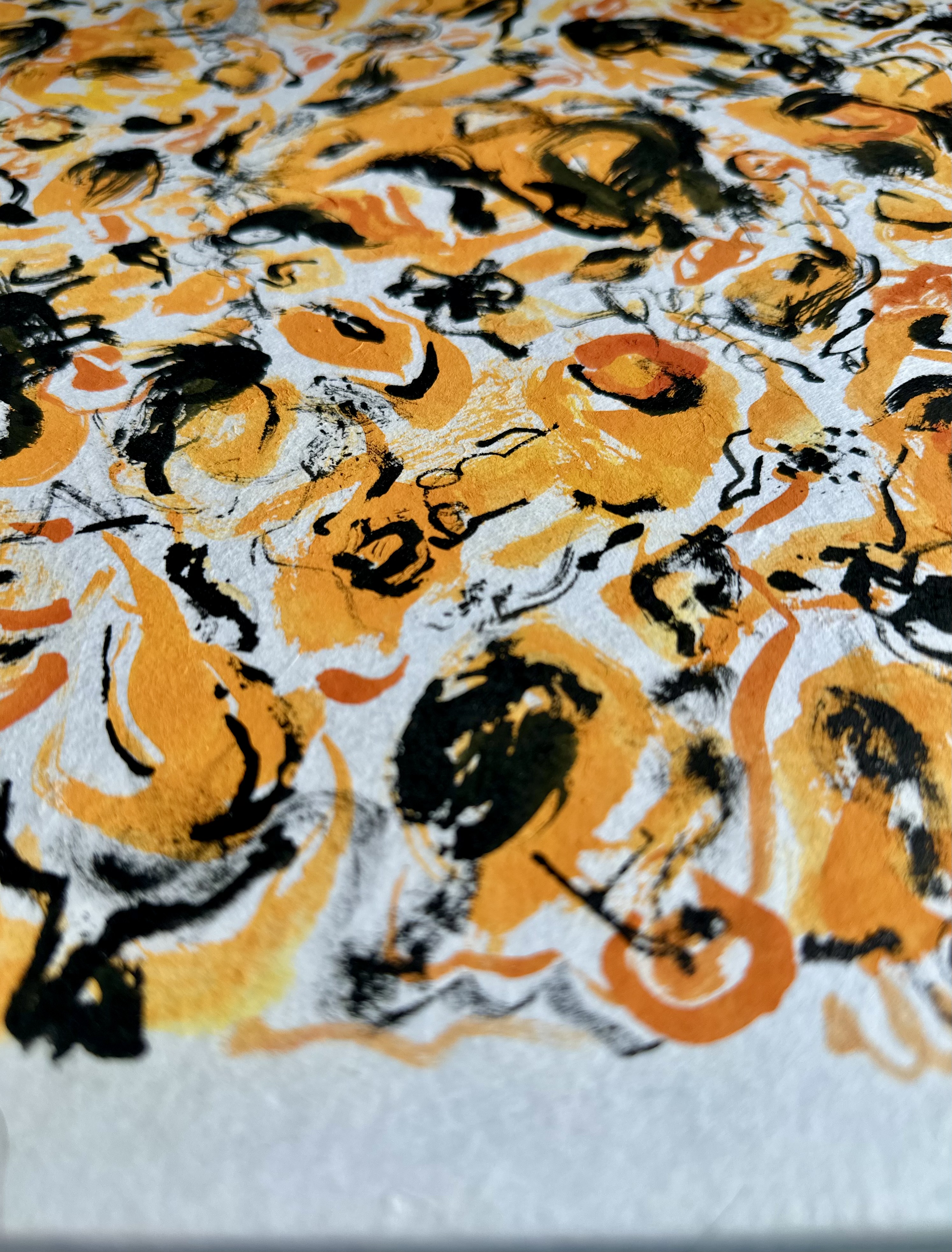
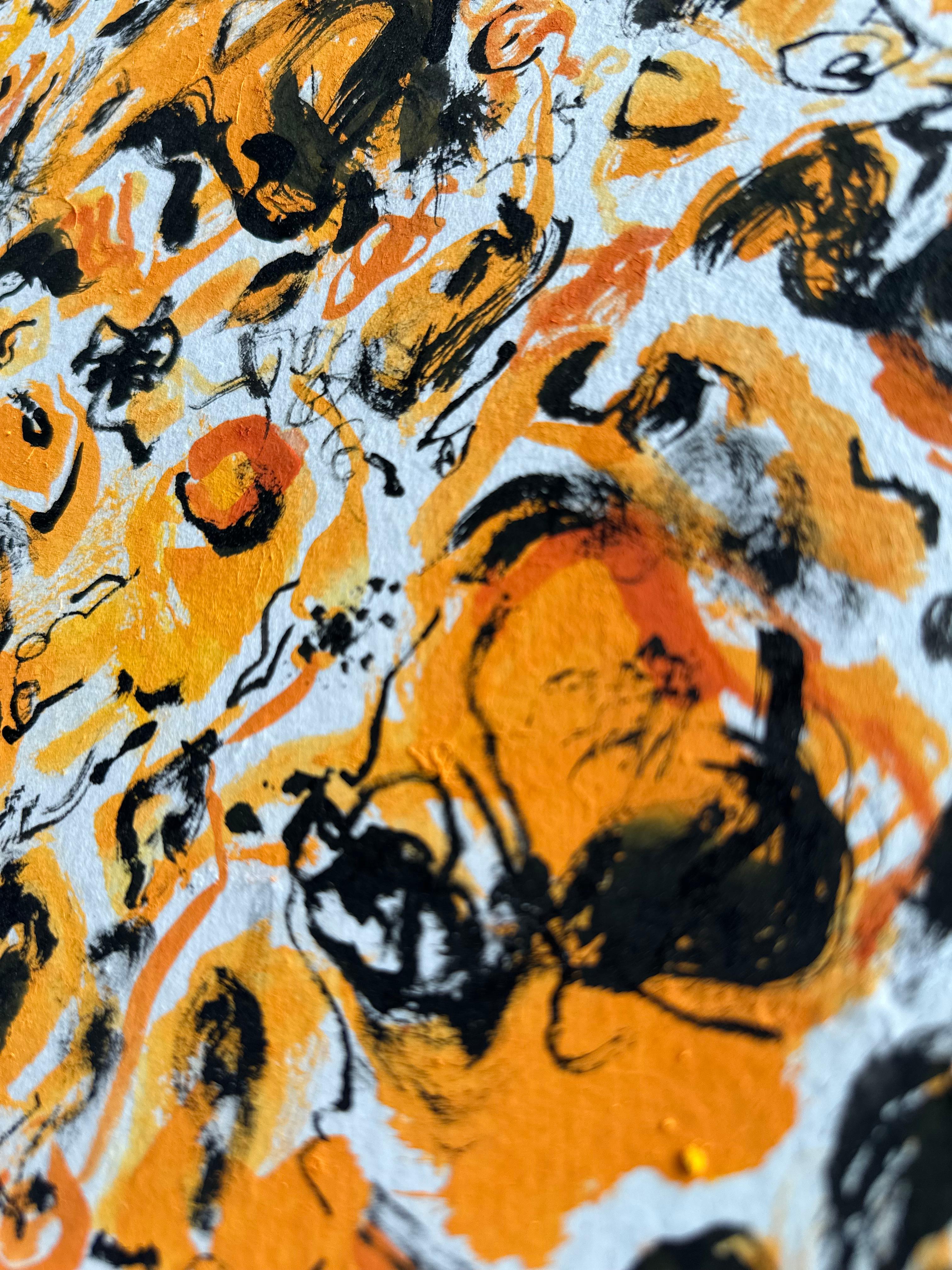
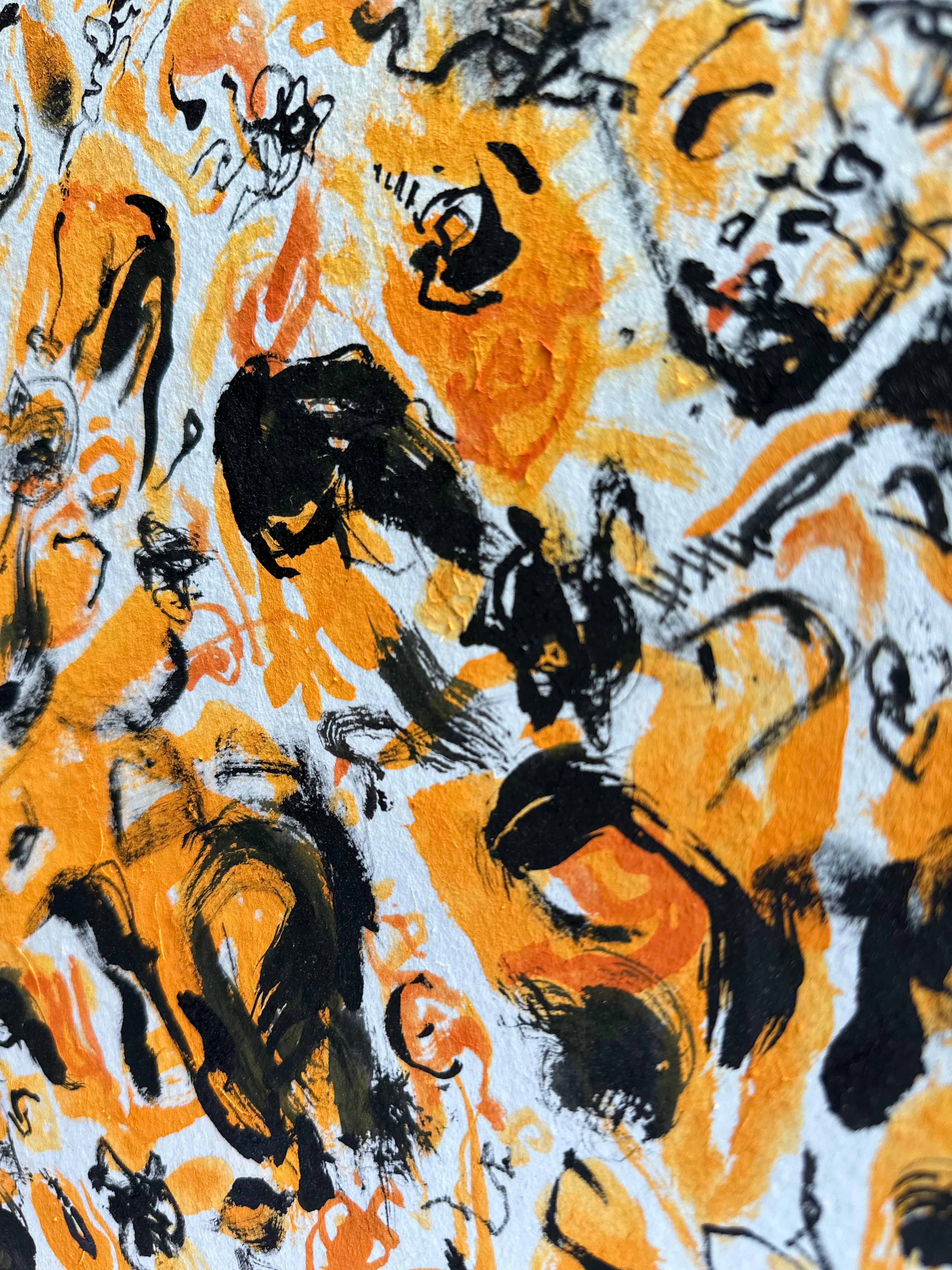
Up close, the orange looks unstable, almost liquid, like it could still spread. The black looks like it arrived after, and refused to be absorbed.
Jakjung (灼中): two characters, scorch and within. Not surviving the fire by stepping outside it. Staying exactly where the burning is, and not changing shape because of it.
From a distance, the whole field reads as a single temperature. Up close, it's a hundred small refusals.
I don't know if this is what prayer looks like. But it might be what staying looks like — not staying calm, staying exactly what you are, mark after mark, while everything around you keeps getting hotter.
먼저, 열기다. 다른 무엇보다 먼저 주황이 박힌다 — 짙고, 거의 과숙한, 가장자리에서는 적색 쪽으로 밀려가며 마치 색 자체가 열을 앓는 것처럼.
그다음 눈은 검음을 찾기 시작한다. 흩어져 있다, 중심에 모이지 않은 채. 여기 굵은 매듭, 저기 가느다란 끌림, 붓질 중간에 마음을 바꾼 듯 스스로에게 말려드는 하나. 그것들은 형태에 합의하지 않는다. 다른 것에는 합의한다 — 어느 것도 흐려지지 않는다는 것에.
가까이서 보면 주황은 불안정하다, 거의 액체처럼, 여전히 번질 수 있을 것처럼. 검음은 그 다음에 도착해서, 흡수되기를 거부한 것처럼 보인다.
灼中 — 타다, 그리고 그 안. 불 밖으로 나가서 살아남는 것이 아니다. 타오름이 있는 바로 그 자리에 그대로 머물며, 그것 때문에 형태를 바꾸지 않는 것.
멀리서 보면 화면 전체가 하나의 온도로 읽힌다. 가까이서 보면 백 개의 작은 거부들이다.
이것이 기도가 어떻게 생겼는지는 모르겠다. 그러나 머무름이 어떻게 생겼는지는 보여주는 것 같다 — 고요하게 머무는 게 아니라, 주위가 계속 뜨거워지는 동안에도 흔적 하나하나가 정확히 자기 자신으로 머무는 것.
PREX MEA #6: 灼中 (Jakjung) — Held in the Burn
What follows is written as a critical essay — an outside reading of the surface, not the artist's account of making it.
The first thing the eye registers is temperature, not image.
Orange — but not a single orange. Some patches sit close to gold, almost sweet. Others have slid toward red, closer to something scorched than something ripe. There is no cool place to rest the eye. Even the thin slivers of untouched hanji feel warm by proximity, as if the white itself had been standing too close to a fire.
Density follows close behind. The field is nearly full, with less air in it than in anything before this work in the series. Looking at it produces something almost physical — a slight pressure behind the eyes, the sense of a room with no open window.
Then, black.
Not one shape repeated. A dozen different tempers. Here a thick, round knot, pressed down hard enough to flatten its own edges. There a thinner stroke, almost calligraphic, curling halfway through as if changing direction mid-gesture. In one corner, something close to a scribble, fast and unconcerned. None of these marks matches the one beside it. And yet none dissolves, either — every black form holds its edge against the orange pressing in from all sides.
The title, Jakjung (灼中), names this directly. The two characters mean, roughly, to scorch, and within. Not a place safe from the fire. The fire itself, and something staying unmelted inside it.
That refusal to blur is the most interesting fact in the painting, and it is not conceptual — it is optical. Standing close, the boundary between black and orange reads as sharp enough to seem almost engineered, though nothing else on the surface looks engineered at all. Everything else here moves fast, even recklessly. Only the edges hold still.
One passage near the painting's lower register draws attention more than the rest — a black form denser than most, sitting inside the deepest red-orange pooling on the surface. This would be the obvious place for the color to finally win: to creep into the black, lighten it, soften its outline. It doesn't happen. If anything, the black there is the most stubborn mark in the entire field — heavier, more closed, more fully itself than anywhere else on the canvas.
There is no tidy formal reason this passage should feel like the painting's center of gravity. It is not centrally placed. It is not larger than the marks around it. But the contrast there — heat at its most extreme, black at its most unwilling to give ground — reads less like a compositional climax and more like a held breath, the place where the painting's argument, if it has one, is made most plainly.
Distance changes the experience considerably. From several feet back, the orange stops behaving as separate passages and becomes one continuous field, almost a single note sustained without variation. The black marks lose their individual character too, no longer distinct knots and lines but something closer to a scattered constellation — irregular, yet evenly distributed, as though something had insisted on spreading them across the whole surface rather than letting them gather safely into one corner.
That distribution may be the real subject here, more than any single mark. Nothing in this painting is permitted to settle into shade, into a corner where the heat lets up. Black appears everywhere orange does — never escaping it, never sheltering from it, simply persisting inside it, mark by separate mark.
Whatever prayer means in this context, it appears to have less to do with what is being asked, and more to do with what refuses to dissolve.
PREX MEA #6: 灼中 (작중) — 타오름 속에 붙들린
다음 글은 비평에세이로 쓰였다 — 화면에 대한 외부의 독해이며, 제작 과정에 대한 작가 자신의 진술이 아니다.
눈이 가장 먼저 포착하는 것은 온도다, 이미지가 아니다.
주황 — 그러나 단 하나의 주황이 아니다. 어떤 부분은 금색에 가깝게, 거의 달큰하게 앉아 있다. 다른 부분은 적색 쪽으로 미끄러져, 잘 익은 것보다는 그슬린 것에 더 가깝다. 눈이 쉴 만한 차가운 자리가 없다. 손대지 않은 한지의 얇은 틈조차 근접한 열기로 데워진 듯 느껴진다, 마치 그 흰빛 자체가 불 가까이 너무 오래 서 있었던 것처럼.
밀도가 그 뒤를 바로 따른다. 화면은 거의 가득 차 있다. 이 연작의 이전 어떤 작품보다도 공기가 적다. 그것을 바라보는 일은 거의 신체적인 무언가를 일으킨다 — 눈 뒤쪽의 약한 압박감, 창문 하나 열려있지 않은 방의 감각.
그리고, 검음.
하나의 형태가 반복되는 게 아니다. 십여 개의 다른 기질들이다. 여기 굵고 둥근 매듭, 자기 자신의 가장자리를 짓누를 만큼 단단히 눌린. 저기 더 가는 획, 거의 서체 같은, 몸짓 중간에 방향을 바꾼 듯 말려든. 한쪽 모서리에는, 빠르고 무심한, 거의 낙서에 가까운 무언가. 이 흔적들 중 어느 것도 옆의 것과 일치하지 않는다. 그런데도 어느 것도 흐려지지 않는다 — 모든 검은 형태가 사방에서 밀려드는 주황에 맞서 자신의 경계를 붙든다.
제목 灼中(작중)은 이것을 직접 명명한다. 이 두 글자는 대략, 타다와 그 안을 뜻한다. 불에서 안전한 장소가 아니다. 불 그 자체, 그리고 그 안에서 녹지 않고 머무는 무언가.
흐려지지 않으려는 그 거부가 이 그림에서 가장 흥미로운 사실이며, 이것은 개념이 아니다 — 시각적인 것이다. 가까이 서면, 검음과 주황 사이의 경계는 거의 정교하게 계산된 것처럼 또렷하게 읽힌다. 화면의 다른 어떤 부분도 전혀 그렇게 보이지 않는데도. 여기 다른 모든 것은 빠르게, 심지어 무모하게 움직인다. 오직 경계만이 가만히 있다.
화면 하단부 근처의 한 부분이 다른 곳보다 더 강하게 시선을 끈다 — 화면 전체에서 가장 깊은 적주황이 고인 자리 안에 앉아 있는, 다른 것들보다 더 짙은 검은 형태. 거기야말로 색이 마침내 이겨야 할 명백한 자리일 것이다. 검음 속으로 스며들어 그것을 옅게 만들고, 외곽을 무르게 할. 그런 일은 일어나지 않는다. 그곳의 검음은, 오히려, 화면 전체에서 가장 완강한 흔적이다 — 더 무겁고, 더 닫혀 있으며, 캔버스의 다른 어디에서보다 더 그 자신이다.
이 부분이 왜 이 그림의 무게중심처럼 느껴지는지에 대해 깔끔한 형식적 이유는 없다. 그것은 중심에 놓여있지 않다. 주위의 흔적들보다 크지도 않다. 그러나 그곳의 대비 — 가장 극단적인 열기, 가장 물러나지 않으려는 검음 — 는 구성적 정점보다는 멈춰진 숨처럼 읽힌다. 이 그림이 어떤 주장을 가지고 있다면, 가장 명백하게 그것이 발화되는 자리.
거리는 이 경험을 상당히 바꾼다. 몇 발짝 물러서면 주황은 개별 부분들로 행동하기를 멈추고 하나의 연속된 장(場)이 된다, 거의 변주 없이 길게 지속되는 단 하나의 음처럼. 검은 흔적들도 개별적 성격을 잃는다. 더는 분리된 매듭과 선이 아니라 일종의 흩어진 별자리에 더 가까워진다 — 불규칙하지만 고르게 분포된, 마치 무언가가 그것들을 한쪽 모서리에 안전하게 뭉치도록 두지 않고 화면 전체에 흩어지도록 고집한 것처럼.
그 분포가 어쩌면 여기서 진짜 주제일 것이다, 어떤 개별 흔적보다도. 이 그림에서는 아무것도 그늘 속에, 열기가 누그러지는 모서리 속에 자리잡도록 허락되지 않는다. 검음은 주황이 있는 곳이면 어디든 나타난다 — 결코 거기서 벗어나지 않고, 결코 거기서 피신하지 않으며, 그저 그 안에서, 흔적마다 따로따로, 버틸 뿐이다.
이 맥락에서 기도가 무엇을 뜻하든, 그것은 무엇을 청원하는가보다 무엇이 녹아 사라지기를 거부하는가에 더 관련이 있는 것으로 보인다.








'Art > PREX MEA Series' 카테고리의 다른 글
| PREX MEA. #5 : 동류 同流 — Adrift, Together (0) | 2026.06.20 |
|---|---|
| Prex Mea. #4 : 침잠(沈潛) - Submergence (0) | 2026.06.16 |
| Prex Mea. #3 : 수색 (守色) : Keeping the Color (0) | 2026.06.10 |
| Prex Mea. #2 (Gwan-jo: Between Event and Density) (0) | 2026.06.07 |
| Prex Mea. #1 (Floating between Image and Gesture) (0) | 2026.06.04 |